Anker MindBase: A Powerful New Brain for Your Smart Home
The Anker MindBase is shaping up to be one of the company’s most ambitious smart home products yet. Unveiled at IFA 2026 in Berlin, the new hub combines smart home control, local artificial intelligence, security-camera management and NAS-style storage in one device.
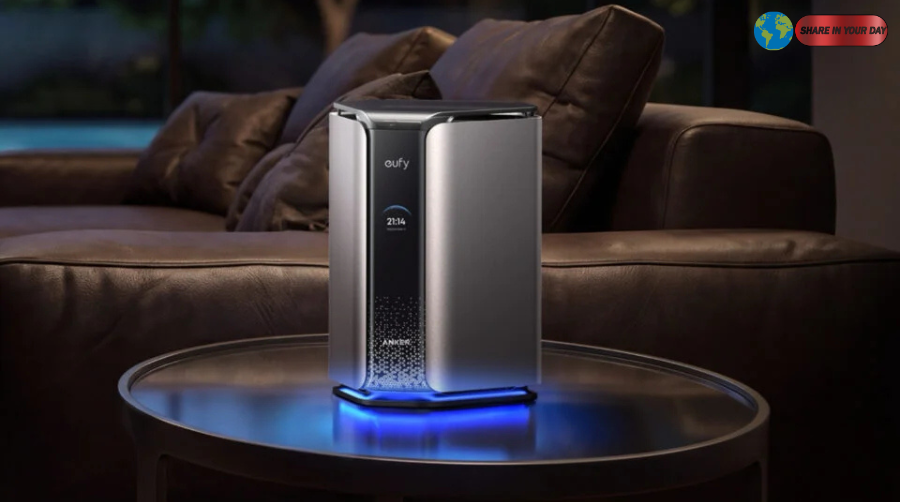
Instead of functioning as just another controller for smart lights and sensors, Anker wants MindBase to become the central brain of an entire household.
The concept is straightforward. Connect compatible devices to one hub, keep important data inside the home and use on-device AI to analyze information without constantly relying on cloud servers.
That approach puts MindBase directly into the growing conversation around private, locally processed AI.
Anker has also made a major branding announcement alongside the product. The company says its previously separate brands, including Eufy, Soundcore, SOLIX and eufyMake, will gradually be unified under the Anker name.
Anker MindBase Brings AI to the Smart Home
At the center of the Anker MindBase is its on-device AI system, which Anker calls the TrueSmart Agent.
According to Gizmodo, the system uses an in-house large language model and a dedicated AI processor capable of up to 26 TOPS of computing performance. The goal is to allow MindBase to evaluate security events in real time rather than sending everything to a remote cloud service for processing.
That could make a meaningful difference for security cameras.
Instead of simply recording video, the system is designed to interpret what is happening around the home. It can evaluate events, determine potential risks and potentially respond using connected devices.
For example, Anker says its AI agent can react through observation, lighting, verbal warnings or active deterrence.
This turns the traditional smart home hub into something closer to an automated security assistant.
The company also plans to expand the AI capabilities beyond security. Future AI agents are expected to focus on areas such as home energy management and smart cleaning devices.
That broader ambition explains why Anker describes MindBase as a central brain rather than simply another security accessory.
Matter 1.5 Makes Anker MindBase More Versatile
One of the most important features of the Anker MindBase is its support for Matter 1.5.
Matter is designed to make smart home products from different manufacturers work together more easily. For consumers, that can reduce some of the compatibility headaches that have traditionally affected connected-home devices.
Anker says MindBase will support more than 40 Matter device categories. That includes products such as smart lights, sensors and HVAC equipment.
The hub can also work alongside several major smart home platforms.
Compatibility includes:
- Apple Home
- Google Home
- Amazon Alexa
- Home Assistant
- Matter-compatible devices
The Verge reports that MindBase includes Wi-Fi, Bluetooth, Thread and Zigbee connectivity, giving the hub several ways to communicate with smart home hardware.
This is important because Anker is not positioning MindBase as a closed system.
Instead, the company appears to want it to serve as a central layer connecting Anker products with compatible third-party hardware.
Anker MindBase Doubles as a Massive Local Storage Hub
Another feature that separates Anker MindBase from many conventional smart home hubs is its storage capability.
The device comes with 64GB of internal flash storage, but Anker says users can expand its storage capacity by as much as 48TB using additional hard drives.
That effectively turns MindBase into a small home NAS alongside its smart home and AI functions.
Users could potentially store photographs, videos, security recordings and documents locally.
More importantly, Anker says users will be able to search stored information using natural language.
That means the same AI approach used for security footage could eventually make a large personal archive easier to navigate.
Imagine having thousands of photos, videos and documents stored at home and being able to search them using ordinary questions rather than manually opening folders.
That is the broader vision Anker is presenting.
Privacy Is a Major Part of the Anker MindBase Pitch
The decision to process information locally is not just about performance.
Privacy is one of the most important selling points surrounding the Anker MindBase.
Anker says personal information does not need to be offloaded to the cloud for the hub’s local AI functions. That could be particularly attractive for security-camera footage, which can contain extremely sensitive information about people’s homes and daily routines.
The company is therefore trying to position MindBase as an alternative to smart home systems that depend heavily on remote servers.
There is also a financial advantage.
Anker says MindBase’s AI and storage capabilities will not require a monthly subscription.
That could make the device more appealing to consumers who are increasingly frustrated by subscription fees attached to smart security products.
However, the actual hardware price has not yet been announced.
That remains one of the biggest unanswered questions about the product.
Anker MindBase Can Handle Multiple Security Cameras
Security is currently the clearest use case for the Anker MindBase.
The hub can support up to 16 wireless cameras and four additional cameras connected through Ethernet when used with an external PoE network switch.
That makes it suitable for homes that have several cameras covering different areas.
Anker also says existing HomeBase S380 users will be able to transfer their footage to MindBase, giving current customers a potential upgrade path.
The AI system can recognize different types of activity, including people, cars, pets and strangers.
Facial recognition is also part of the system’s feature set.
This could reduce the number of unnecessary alerts generated by conventional security cameras.
Instead of receiving notifications for every detected movement, users could potentially receive more specific alerts based on what the AI believes is happening.
Smart Security Shield Adds Another Layer
Anker is also introducing a new security sensor designed to work with MindBase.
The Smart Security Shield uses radar-based detection to monitor movement around a property. According to Gizmodo, it can detect strangers from up to 15 meters away.
The system also incorporates a digital credential called DSKey.
Anker says this can allow MindBase to recognize family members from up to 30 meters away.
The concept could help reduce false alarms when household members arrive home.
Instead of treating every person approaching a property as a potential intruder, MindBase could use the credential system to distinguish known household members from strangers.
Exactly how the system handles identity recognition in different situations remains an area that deserves closer examination when the product becomes available.
The Anker MindBase Security Kit Expands the Ecosystem
MindBase will launch alongside a broader collection of security products.
Anker is preparing a MindBase Security Kit that includes the new TrackLight Cam S1, Video Doorbell S4 and additional security sensors.
The TrackLight Cam S1 is designed to combine camera surveillance with active deterrence.
The upcoming Video Doorbell S4 is another major part of the ecosystem. The Verge reports that it features a 180-by-180-degree field of view, AI-powered tracking and auto-zoom, while supporting 3K recording. It is priced at $299.99.
Anker has also announced the E10 Window Camera, which is designed to sit inside a window while recording the area outside.
The company says the camera will provide full-color night vision and on-device detection.
These products demonstrate how Anker sees MindBase fitting into a much larger connected-home strategy.
Anker Is Moving Beyond Eufy With MindBase
The launch of Anker MindBase comes at an interesting moment for the company.
Anker has historically used separate names for different categories.
Eufy became closely associated with smart home and security products, while Soundcore focused on audio and SOLIX handled energy products.
Now Anker is preparing to bring those brands together.
The company announced that its five brands will be unified under the Anker name, although the transition will happen gradually.
That could make MindBase even more significant.
Rather than becoming only the center of a security ecosystem, it could eventually become the control point for several types of Anker products.
The company has already discussed AI agents for home energy and cleaning.
That means the long-term vision could involve a single hub coordinating security cameras, lights, appliances, robotic cleaners and energy systems.
Why Local AI Could Make MindBase Different
Cloud-based AI remains extremely common in smart home technology.
A camera can capture an event, upload relevant footage to a server, process it remotely and then send the result back to the user.
That system can work well, but it introduces questions about privacy, internet dependence and recurring costs.
The Anker MindBase takes a different approach.
By processing AI workloads locally, the hub can potentially respond without waiting for a remote server.
It also means sensitive information can remain inside the home.
For security applications, that is particularly compelling.
However, local AI also comes with hardware requirements. Running AI models directly on a home hub requires dedicated processing power and sufficient storage.
Anker’s decision to include a dedicated AI chip and expandable storage suggests the company is building MindBase specifically around those demands.
Anker MindBase Could Become More Than a Security Hub
Security is clearly the starting point, but it may not be the final destination.
Anker’s plans suggest MindBase could eventually become an operating center for the entire home.
A future version of the ecosystem could coordinate electricity usage, robotic cleaning, appliances, security and other connected devices.
The company has already said it plans to introduce additional AI agents for different household tasks.
That approach could make the hub more useful over time.
Instead of buying a different smart device for every task, consumers could rely on a central system capable of coordinating multiple products.
The success of that strategy, however, will depend heavily on compatibility, reliability and pricing.
When Will Anker MindBase Be Available?
For now, the biggest missing pieces are the price and release date.
Anker has introduced the MindBase concept at IFA 2026, but the company has not yet announced how much the hub will cost or exactly when consumers can purchase it.
That makes it difficult to determine how competitive the product will be.
The hardware has an impressive feature list, including local AI, Matter 1.5, NAS functionality, multiple connectivity standards and support for numerous security cameras.
But the final price will determine whether consumers view it as an attractive all-in-one platform or an expensive niche product.
Anker MindBase: What It Means for the Smart Home
The Anker MindBase represents a significant shift in how Anker wants consumers to think about its products.
It is not simply a security-camera base station.
It is designed to be a smart home controller, AI processing center, local storage server and security hub at the same time.
Its combination of Matter 1.5 support, local AI and up to 48TB of expandable storage gives it a broader role than many conventional smart home hubs.
The privacy-focused approach could also become one of its biggest advantages.
As consumers become more aware of where smart home data goes, processing information locally could become increasingly attractive.
Still, MindBase has something to prove.
Anker must demonstrate that its AI can reliably understand real-world events, that third-party compatibility works smoothly and that the hardware is priced reasonably.
If it can deliver on those promises, MindBase could become an important part of Anker’s push to transform itself from a company known primarily for chargers and accessories into a much broader consumer technology ecosystem.
For now, the product remains one of the more intriguing smart home announcements from IFA 2026.
And if Anker’s larger vision becomes reality, the Anker MindBase may eventually be less like another gadget in the home and more like the system that connects all of them.
Image
Featured Image ALT Text:
Anker MindBase smart home hub with local AI and 48TB storage
Image Caption:
Anker MindBase is designed to serve as a central AI-powered hub for smart home devices, security cameras and local storage.