Trump and Xi Face High-Stakes Talks as U.S.-China Tensions Persist
WASHINGTON — President Donald Trump and Chinese President Xi Jinping are preparing for a closely watched meeting in Washington as the world’s two largest economies attempt to stabilize a relationship strained by trade disputes, technology competition, Taiwan and broader geopolitical tensions.
Xi arrived in the United States on Wednesday for a three-day state visit, marking his first trip to the country in nearly three years. Trump personally welcomed the Chinese leader at Joint Base Andrews, setting an unusually ceremonial tone ahead of formal discussions scheduled for Thursday.
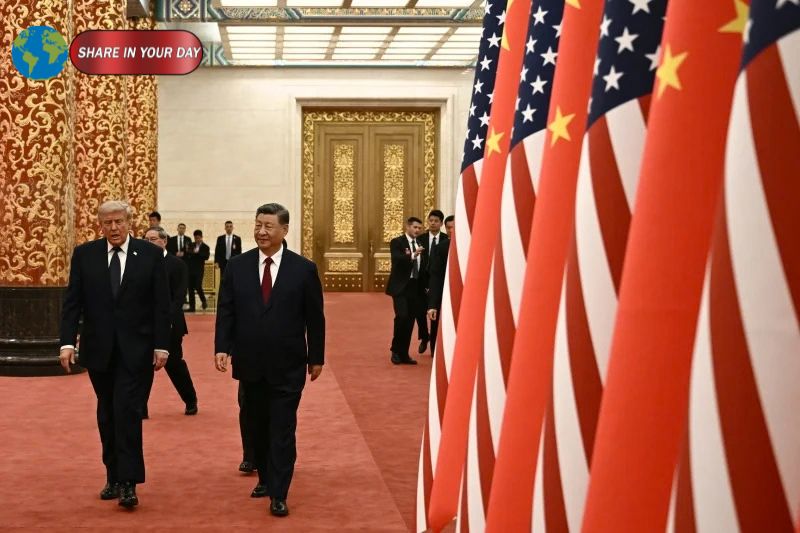
The meeting is the second face-to-face encounter between Trump and Xi this year. Their previous summit in Beijing produced agreements intended to create greater stability in the relationship, but several commitments remain unfinished, leaving both governments with difficult issues to resolve.
Despite the elaborate welcome, expectations for a major breakthrough remain limited. Instead, officials are concentrating on preserving the fragile economic truce between Washington and Beijing while looking for progress in several areas where cooperation remains possible.
Trade Truce Extended
Trade is expected to be one of the most immediate issues on the agenda.
U.S. Treasury Secretary Scott Bessent said Wednesday that Washington and Beijing had agreed to extend their existing trade truce for two additional months. The arrangement, which had been scheduled to expire on Nov. 10, will now run through Jan. 10.
The extension is intended to give negotiators more time to pursue a broader economic agreement rather than allowing the current arrangement to expire while major disputes remain unresolved.
Bessent said American and Chinese officials had discussed whether the two countries could move beyond a series of limited agreements and work toward a larger deal. Potential areas include tariffs, agricultural purchases and financial services.
The progress comes as both sides continue to scrutinize whether earlier commitments are being fulfilled. U.S. officials have raised concerns about Chinese purchases of American agricultural products and the delivery of rare-earth materials, while Beijing continues to object to American restrictions on Chinese technology.
The trade relationship therefore remains one of both cooperation and competition, with neither government appearing ready to abandon its broader economic strategy.
Technology and Artificial Intelligence
Artificial intelligence is another increasingly important part of the U.S.-China relationship.
Washington and Beijing are competing aggressively to develop advanced AI systems and control the technologies, computer chips and supply chains needed to support them. At the same time, officials in both countries have acknowledged that increasingly powerful AI systems could create risks that cross national borders.
Discussions between American and Chinese officials have included the possibility of establishing channels for communicating about serious AI incidents. Such a mechanism could provide a way for the two governments to exchange information during an emergency, even while they continue competing over technological leadership.
The prospect of cooperation is complicated by deep mistrust. Washington has imposed restrictions on certain advanced technologies exported to China, citing national security concerns. Chinese officials have criticized those measures and accused the United States of attempting to restrict China’s development.
As a result, the AI discussions are likely to focus more on managing risks than resolving the broader technological rivalry.
Taiwan Remains a Major Point of Tension
Taiwan is expected to be among the most sensitive subjects in the Trump-Xi meeting.
Beijing considers Taiwan part of China and has repeatedly demanded that Washington stop arms sales to the island. The United States, meanwhile, maintains unofficial relations with Taiwan and is required under American law to provide the island with the means to defend itself.
Chinese Ambassador to the United States Xie Feng described Taiwan, along with other issues including human rights and China’s development interests, as matters Beijing considers fundamental.
Chinese officials have also pressed Washington to respect previous U.S.-China agreements concerning Taiwan. American policy remains complicated by its longstanding commitment to helping Taiwan maintain its defensive capabilities.
The issue presents a difficult balance for the summit. Even if Trump and Xi avoid a major public confrontation over Taiwan, the subject is likely to remain central to the private discussions surrounding the future of bilateral relations.
Rare Earths and Supply Chains
Critical minerals are another area where economic interests and national security increasingly overlap.
China plays a dominant role in the refining of rare-earth materials used in electronics, vehicles, industrial equipment and military systems. Washington has been seeking assurances that supplies will remain available, while Beijing has used its influence over critical-mineral supply chains as part of its broader economic leverage.
American officials have said China has not fully met some commitments connected to an earlier rare-earth arrangement. The issue demonstrates how trade disputes can quickly become national-security concerns for both countries.
A Fragile Relationship
The Trump-Xi meeting comes at a time when both governments have reasons to avoid a sharp deterioration in relations.
For Washington, stabilizing economic ties could reduce the risk of renewed tariff escalation and provide greater predictability for American businesses. For Beijing, maintaining access to major international markets remains important even as China continues expanding trade relationships elsewhere.
Yet disagreements extend far beyond commerce. Taiwan, technology controls, human rights, critical minerals and geopolitical conflicts all complicate efforts to build a lasting understanding.
The two leaders may therefore emerge from Thursday’s discussions with a series of limited agreements rather than a comprehensive settlement.
The significance of the summit could ultimately lie in whether Trump and Xi can maintain direct communication while managing disputes that have the potential to escalate. For the United States and China, preventing individual disagreements from turning into a broader confrontation may prove just as important as reaching new agreements.
With the trade truce extended into January, both sides now have additional time to negotiate. The coming months will show whether that extra space produces a larger economic agreement or simply postpones the next confrontation between Washington and Beijing.