
Mark Carney Says Canada Prepared for Extreme Risk of U.S. Military Action
Canadian Prime Minister Mark Carney has revealed that his government considered how Canada would respond to the extreme possibility of military action by the United States, as relations between the two longtime allies have deteriorated under President Donald Trump.
Carney made the disclosure during an interview with The New York Times while attending the United Nations General Assembly in New York. He did not provide details about what preparations were made, but said that a government would be acting irresponsibly if it failed to consider even highly unlikely scenarios involving national security.
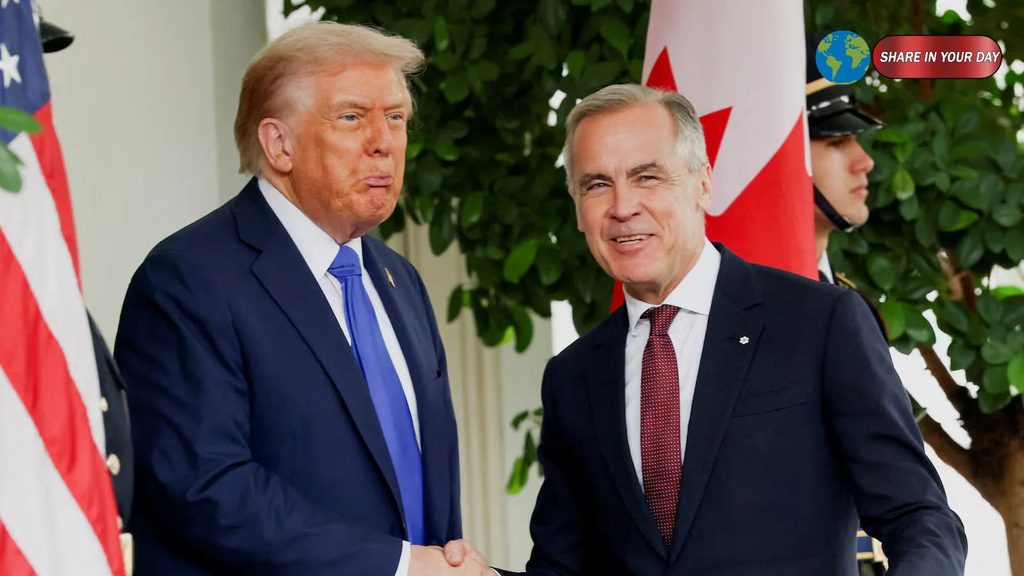
“I think you have a responsibility in these roles to look at extreme tail risk,” Carney said, describing the exercise as risk management rather than an indication that an American attack was expected.
“That’s not a base case, but it would be irresponsible not to” prepare, he added.
The comments highlight the extraordinary deterioration in relations between Washington and Ottawa. Canada and the United States have traditionally been among the world’s closest economic and security partners, with extensive cooperation across trade, defense, energy and border security.
That relationship has come under growing strain since Trump returned to the White House.
Trump’s 51st-state comments raised concerns
Trump has repeatedly suggested that Canada should become part of the United States, referring to the country as a potential “51st state.” His comments have generated strong reactions in Canada and prompted Ottawa to reconsider aspects of its long-standing dependence on its southern neighbor.
Trump has previously ruled out using military force to annex Canada. In 2025, however, he said he could use what he described as “economic force” to pursue his vision of closer integration between the two countries.
Carney’s comments indicate that Canadian officials nevertheless considered the possibility of a far more serious confrontation.
The prime minister did not say that Canada believed an invasion was imminent, nor did he describe specific military plans. Instead, he characterized the exercise as preparation for an extreme scenario that responsible governments should examine.
The distinction is significant because Ottawa’s response to Washington has largely focused on economic and diplomatic measures rather than preparations for an expected military conflict.
Trade dispute has intensified tensions
The relationship has become particularly strained over trade.
After negotiations between the two countries broke down in August, Trump imposed 50 percent tariffs on billions of dollars worth of Canadian goods. Canada responded with retaliatory tariffs on selected American products.
The trade dispute has pushed Carney’s government to reconsider how heavily Canada depends on the U.S. economy.
Carney has argued that Canada needs to broaden its international partnerships and reduce vulnerabilities created by relying too heavily on a single trading partner.
That strategy has increasingly brought Canada closer to Europe.
Canada looks toward Europe
Canada has been pursuing deeper economic and political ties with the European Union as tensions with Washington continue.
European Commission President Ursula von der Leyen recently suggested that Canada could become the EU’s first associate member, an idea that would create a new framework for cooperation without making Canada a full member of the European bloc. Carney has welcomed closer ties with Europe as part of a broader effort to diversify Canada’s international relationships.
The possibility has drawn a sharp response from Trump.
The U.S. president has warned that a closer Canada-EU relationship could result in additional American tariffs if Washington viewed the arrangement as hostile. European officials, meanwhile, have pushed back against the idea that the United States should determine the direction of European foreign policy.
For Carney, the European relationship is part of a larger effort to build alternatives to American markets, technology and strategic infrastructure.
Ottawa also reassesses defense and technology
Carney has also indicated that Canada is examining its reliance on American technology and defense systems.
During the New York Times interview, he discussed reducing Canada’s dependence on Elon Musk’s Starlink satellite internet network. He also addressed Canada’s review of its planned purchase of F-35 fighter aircraft, an issue that has become more politically sensitive as relations with Washington have deteriorated.
The review does not necessarily mean Canada will abandon the F-35 program, but it demonstrates how the trade dispute and broader political tensions are influencing decisions that previously would have been considered primarily through a defense and military-readiness lens.
Canada’s government is simultaneously attempting to strengthen domestic capacity and establish deeper relationships with countries outside the United States.
Carney says communication with Trump continues
Despite the increasingly difficult relationship, Carney said his personal communication with Trump remains functional.
The Canadian prime minister said he and Trump continue to speak regularly, even after trade negotiations broke down. Carney has previously said that the two leaders can separate disagreements over trade from other international issues where cooperation remains necessary.
That continuing communication underscores the complicated nature of the U.S.-Canada relationship.
Canada remains deeply connected to the American economy and shares one of the world’s longest international borders with the United States. At the same time, Trump’s repeated comments about Canada’s political status, along with tariffs and other economic measures, have encouraged Ottawa to seek greater independence.
Carney’s disclosure about contingency planning therefore represents more than a discussion of military preparedness. It reflects how dramatically the assumptions underlying the Canada-U.S. relationship have changed.
For now, Carney has emphasized that an American military attack is not considered the expected outcome. His government nevertheless believes that responsible national security planning requires officials to examine even highly improbable possibilities.
The result is a Canadian strategy increasingly centered on diversification: maintaining communication with Washington while simultaneously strengthening relationships with Europe and other international partners.