
Trump-Xi Summit: Trade, AI, Iran and Taiwan Take Center Stage
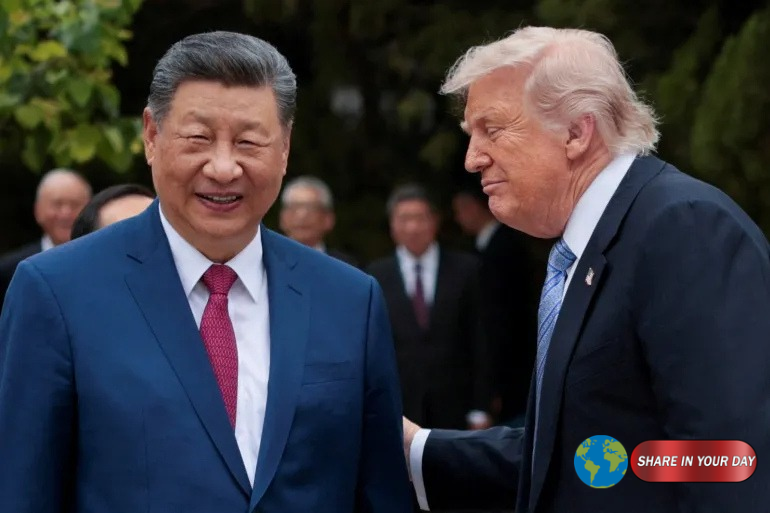
US President Donald Trump and Chinese President Xi Jinping are meeting in Washington for talks that could shape the direction of relations between the world’s two largest economies at a time of growing economic and geopolitical uncertainty.
The September 24 summit is the leaders’ second major meeting of 2026 and comes after months of efforts by Washington and Beijing to prevent their rivalry from developing into another damaging escalation. Trade, critical minerals, artificial intelligence, Iran and Taiwan are among the issues expected to dominate discussions.
Rather than focusing on a single dispute, the meeting brings together several of the most sensitive areas in the US-China relationship. Both governments have reasons to seek greater stability, even as significant disagreements remain.
Trade Remains a Central Issue
Economic relations are expected to be one of the most important subjects at the summit.
Washington and Beijing have spent much of the past year dealing with tariffs, export restrictions and disagreements over market access. A trade truce has helped prevent another sharp escalation, but the underlying disputes have not disappeared.
The two sides are seeking to extend that period of relative calm while discussing ways to increase trade in selected goods. Critical minerals are particularly important because China remains a major supplier of materials essential to industries ranging from electronics to advanced manufacturing.
The United States has pressed China to maintain and accelerate supplies of critical minerals, while Beijing has its own demands concerning American trade restrictions and technology controls.
Reuters reported that maintaining the trade truce is expected to be a major priority at the meeting. The broader goal is to prevent tariffs and export restrictions from once again becoming the dominant feature of the bilateral relationship.
Artificial Intelligence Adds a New Dimension
Artificial intelligence has emerged as another major area of competition between Washington and Beijing.
Both countries are investing heavily in AI and seeking advantages in computing power, advanced models, semiconductor technology and research. The competition has increasingly become connected to national security, making cooperation more complicated.
Ahead of the summit, US and Chinese officials held discussions about creating mechanisms for communicating about serious AI-related incidents. Washington has proposed greater information sharing around potentially dangerous AI events, including the possibility of a dedicated communication channel.
However, the two countries remain divided over technology restrictions. US controls on advanced semiconductor technology have limited China’s access to some high-end computing equipment, while Chinese officials have sought greater space for the country’s technology sector to develop.
The summit therefore presents two competing possibilities: limited cooperation on AI safety while the wider technological rivalry continues.
Iran Is Another Complicated Issue
The war involving Iran has also become part of the wider US-China diplomatic equation.
Washington and Beijing have different interests in the conflict and in the international pressure surrounding Tehran. China has historically maintained significant economic ties with Iran, including energy relationships, while the United States has used sanctions and other measures to pressure the Iranian government.
The conflict has also affected global energy markets. China is one of the world’s largest energy consumers, meaning prolonged disruption in the Middle East can have significant economic consequences for Beijing.
Experts cited by Al Jazeera said China has little incentive to take steps that would directly assist Washington in the conflict. At the same time, Beijing has an interest in preventing instability from producing severe or prolonged disruption to energy supplies.
That creates room for discussion but also illustrates how difficult it may be for the two governments to find common ground.
Taiwan Remains the Most Sensitive Security Question
Taiwan is likely to be among the most difficult subjects at the summit.
China considers Taiwan part of its territory and opposes American military support for the island. Taiwan’s government rejects Beijing’s sovereignty claims and maintains its own democratic political system.
Washington has continued to provide security support to Taiwan, while Beijing has repeatedly called for the United States to reduce military cooperation with Taipei.
Reuters reported before the summit that Chinese officials were expected to raise US arms sales to Taiwan and press Washington over its interpretation of previous bilateral agreements.
For both governments, Taiwan carries implications beyond trade or diplomacy. It is closely connected to military planning, regional security and the broader strategic competition between the United States and China.
What the Summit Could Signal
The significance of the Trump-Xi meeting may ultimately depend less on one dramatic announcement than on whether the two governments can maintain direct communication while managing their disagreements.
The countries continue to compete over technology, trade and strategic influence, but both also face economic and geopolitical incentives to avoid uncontrolled escalation.
Analysts cited by Al Jazeera have described the meeting primarily as an effort to stabilize relations rather than produce a comprehensive settlement of the countries’ disputes.
The summit therefore places particular importance on practical areas such as the trade truce, critical-mineral supplies and communication over emerging technologies.
At the same time, unresolved questions involving Taiwan, Iran and advanced technology demonstrate how broad the US-China relationship has become.
Whatever agreements emerge from Washington, the meeting is unlikely to eliminate the rivalry between the two powers. Instead, the immediate focus is on whether Trump and Xi can establish enough stability to keep disagreements from turning into another major confrontation.
With trade, technology and security increasingly intertwined, the outcome of the summit could influence not only US-China relations but also global markets, supply chains and diplomatic calculations well beyond Washington and Beijing.