
Venezuela Oil Reserves: Trump’s Shocking 65B Deal
The world’s largest concentration of proven crude resources is at the center of a dramatic new US-Venezuela energy agreement. President Donald Trump announced on August 28 that the United States had secured majority control of more than 65 billion barrels of proven Venezuelan oil reserves, describing the arrangement as a historic victory for both countries.
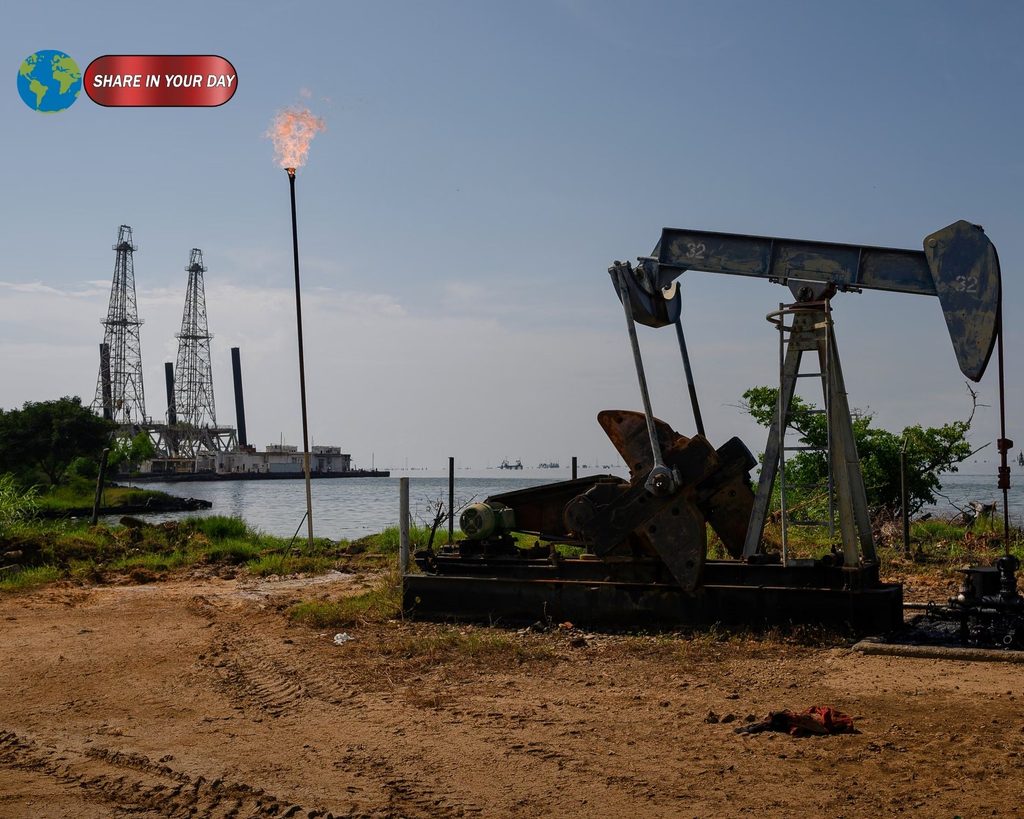
The announcement represents a potentially enormous shift in the global energy market. Venezuela has an estimated 303 billion barrels of proven oil reserves, more than any other country. Yet its petroleum industry has struggled for years with declining production, damaged infrastructure, sanctions and chronic underinvestment.
Trump said the agreement was reached through a partnership involving private businesses and Venezuela’s interim government, led by Delcy Rodríguez. He also claimed the deal would come at no cost to American taxpayers and would more than double US oil reserves.
However, the announcement has immediately raised questions about what “majority control” actually means, which oilfields are covered and how the agreement will work under Venezuelan law.
Venezuela Oil Reserves Become the Center of a Historic Deal
The scale of the reported agreement is what makes it so significant.
Trump said the United States would obtain majority control over more than 65 billion barrels of proven Venezuelan oil reserves. That represents more than one-fifth of Venezuela’s total proven reserves.
The US president presented the agreement as a major boost to American energy security. According to Trump, increased Venezuelan production could expand the supply of crude available to US refiners while helping bring down gasoline prices over the longer term.
The announcement follows months of growing American involvement in Venezuela’s energy sector.
Washington has been seeking to stabilize Venezuelan oil production and encourage major international companies to return to the country. Venezuela currently produces only a fraction of what its enormous resource base might theoretically support.
The Guardian reported that earlier negotiations had involved US officials seeking significant stakes in Venezuelan oil and gas fields, with reports suggesting that some proposals could involve extremely long-term leases. Those reports generated anger among Venezuelan opposition figures, who accused Washington of seeking excessive control over the country’s natural resources.
The latest announcement appears to take the issue to another level.
Why Venezuela Oil Reserves Matter So Much
Venezuela’s petroleum wealth has always been one of its greatest strategic assets.
The country possesses approximately 303 billion barrels of proven crude reserves, according to figures cited by major news organizations. Much of the country’s oil is extremely heavy crude that requires specialized technology, infrastructure and refining capacity.
Having enormous reserves, however, does not automatically translate into enormous production.
Years of economic crisis, political instability, sanctions and underinvestment have damaged Venezuela’s oil industry. Production is currently around 1.25 million barrels per day, according to reporting cited by The Guardian, far below the country’s historical potential.
That gap between reserves and production is central to the new US strategy.
American companies could potentially provide capital, technology, management expertise and equipment needed to rehabilitate aging fields and infrastructure.
If production rises substantially, Venezuela could become a much more important supplier in the international oil market.
Trump Says the Deal Could Transform US Energy Supply
Trump has framed the agreement primarily as an energy-security measure.
The president said the transaction would more than double America’s oil reserves and increase the country’s oil supply. He also argued that expanded production could substantially reduce gasoline prices for American consumers.
The timing is politically important.
US gasoline prices have been a major domestic concern, while the Trump administration is also looking toward the November midterm elections. Lower energy prices could provide an economic and political benefit if additional Venezuelan crude reaches US refineries.
The administration is also seeking ways to replenish the US Strategic Petroleum Reserve, the country’s emergency crude stockpile. Greater access to Venezuelan oil could potentially contribute to that broader energy strategy.
However, increasing Venezuelan production will not happen overnight.
Oilfields require investment. Pipelines, refineries, ports, drilling equipment and electricity infrastructure also need to function reliably.
Therefore, even if the agreement is implemented quickly, its biggest effects on production could take years to materialize.
Nearly $100 Billion in Private Investment Expected
US Secretary of State Marco Rubio has described the agreement as a major opportunity for private investment.
According to reporting by CBS, Rubio said the arrangement could bring nearly $100 billion in private investment into Venezuela, create thousands of jobs and support reconstruction of the Venezuelan economy.
That investment would be crucial because Venezuela’s oil industry requires enormous amounts of capital.
The country’s reserves are concentrated in resources that can be technically challenging and expensive to develop. Bringing production back toward previous levels would require sustained investment rather than a short-term injection of cash.
Private companies are therefore expected to play a major role.
Yet questions remain over exactly which companies will participate and how ownership, profits and operational control will be divided.
Trump said the agreement was made through a partnership with private business. But the US administration had not released a complete explanation of the fields covered by the agreement or the precise legal structure when the announcement was made.
That lack of detail is likely to become one of the biggest issues surrounding the deal.
Venezuela Opposition Raises Sovereignty Concerns
The economic opportunity has been accompanied by fierce political opposition.
Venezuelan opposition figures have criticized the reported US role in the country’s petroleum sector, arguing that the interim government does not have sufficient democratic legitimacy to negotiate agreements of such enormous strategic importance.
The Guardian reported that opposition figures described the proposed arrangements as a form of land grab and questioned whether Venezuelans themselves would ultimately benefit from the country’s natural resources.
The criticism goes beyond the question of who receives the oil revenues.
At its heart is a debate over Venezuelan sovereignty.
Oil is deeply connected to Venezuela’s national identity and political history. The country’s petroleum industry has traditionally been controlled through the state, making a major foreign role politically sensitive.
A long-term arrangement giving US interests substantial control could therefore become a central issue in Venezuela’s future political debate.
What Does “Majority Control” Actually Mean?
Perhaps the most important unanswered question is the meaning of Trump’s phrase “majority control.”
It does not necessarily mean that the US government has simply taken ownership of 65 billion barrels of oil.
Oil reserves remain underground. Control can involve many different arrangements, including production rights, joint ventures, operating agreements, leases or ownership stakes in companies developing particular fields.
The precise legal structure matters enormously.
Reuters reported that details about the legal framework, the specific fields involved and the companies expected to participate remained unclear following Trump’s announcement.
This means the headline figure should be treated carefully.
A majority stake in companies operating particular oilfields is different from direct ownership of the underlying natural resources. Likewise, a long-term production agreement can provide substantial economic control without transferring sovereign ownership of the reserves themselves.
Those distinctions will become increasingly important as the agreement moves from political announcement to implementation.
Venezuela Oil Reserves Could Reshape the Global Market
If the agreement results in significantly higher Venezuelan production, the consequences could extend well beyond the United States and Venezuela.
More Venezuelan crude entering the international market could increase global supply.
That could put downward pressure on oil prices, particularly if production expands at the same time as other supply disruptions ease.
However, the effect would depend on how quickly Venezuela can increase output and how much additional crude actually reaches global markets.
The quality of Venezuelan crude also matters.
Much of the country’s production consists of heavy oil that is not equally suitable for every refinery. US Gulf Coast refineries have historically been configured to process heavier crude grades, making Venezuelan supplies particularly relevant to the American market.
A closer US-Venezuela energy relationship could therefore have a strategic advantage beyond simply increasing the number of barrels available.
China and Russia Face a New Challenge
The agreement also has geopolitical implications.
Venezuela has historically maintained close relationships with countries including China and Russia. Greater US involvement in the Venezuelan energy industry could reduce the influence of those powers in one of the world’s most resource-rich countries.
That makes the oil deal more than a commercial transaction.
It could become part of a wider American effort to reshape political and economic relationships across Latin America.
The reported negotiations have already prompted comparisons with older US approaches to the region, particularly because critics fear that Washington could gain disproportionate influence over Venezuela’s most valuable natural resource.
For Washington, however, the calculation may be straightforward: secure reliable access to oil, encourage American corporate investment and reduce the influence of strategic competitors.
For Caracas, the calculation is more complicated.
The country needs investment and technology, but Venezuelan leaders must also convince the public that the nation’s enormous resource wealth will not simply benefit foreign interests.
The Biggest Test Will Be Implementation
The political announcement is only the beginning.
The real test will be whether companies are willing to invest billions of dollars in Venezuela and whether the country’s oil infrastructure can support a major production increase.
ExxonMobil and other major energy companies have historically approached Venezuela cautiously because of political, legal and commercial risks. Other companies, including Chevron, have shown greater willingness to operate in the country.
That difference highlights the challenge facing Washington and Caracas.
Investors need predictable rules, reliable contracts, access to capital and confidence that agreements will remain enforceable.
Without those conditions, even the world’s largest proven oil reserves cannot guarantee a successful energy revival.
What Happens Next?
The coming months are likely to reveal the details hidden behind the headline figure.
Officials will need to clarify:
- Which Venezuelan oilfields are included.
- Which American companies will participate.
- How the majority-control structure will operate.
- How investment costs will be recovered.
- How oil revenues will be divided.
- What role Venezuela’s state oil company will retain.
- Whether the agreement complies with Venezuelan constitutional requirements.
- How quickly production can increase.
Each question could influence the eventual economic value of the agreement.
For the United States, the biggest prize is potentially greater access to a huge nearby oil resource.
For Venezuela, the opportunity is the possibility of rebuilding an industry that has suffered years of decline.
But the political risks are equally substantial.
A New Era for Venezuela’s Oil Industry?
The reported agreement could mark one of the biggest changes in Venezuela’s petroleum industry in decades.
Trump has presented the deal as a historic win for both nations. Rubio has emphasized investment, employment and economic reconstruction. Meanwhile, Venezuelan opposition figures warn that the country could be surrendering control over its most valuable resource.
Both sides cannot be fully understood without recognizing the enormous economic stakes.
Venezuela needs investment to transform its reserves into actual production. The United States wants additional oil supplies and greater strategic influence. International energy companies want access to potentially lucrative fields, but they also need legal and political certainty.
The question is whether those interests can coexist.
For now, the exact terms remain incomplete.
What is clear is that Venezuela oil reserves have once again become a major geopolitical asset, and the United States is positioning itself to play an unprecedented role in determining how those resources are developed.
If the agreement succeeds, Venezuela could eventually return as a much larger force in global oil markets. If political and legal disputes derail the plan, the enormous reserves may remain largely untapped.
Either way, the 65-billion-barrel figure announced by Trump has changed the conversation around Venezuela’s energy future.
The next phase will determine whether it becomes a genuine transformation of the global oil landscape—or simply another dramatic chapter in Venezuela’s long and turbulent petroleum history.
External Sources
- The Guardian — Venezuelan opposition up in arms over reports US wants big stake in oil and gas
- The Guardian — Trump announces new US oil agreement with Venezuela
- Reuters — Trump announces sweeping US grab for control of Venezuela’s vast oil reserves
- CBS News — Trump says US now has majority control over Venezuelan oil reserves
Image Recommendation
Suggested image: Venezuelan flag with an oil tanker or Venezuelan oil infrastructure.
Image ALT Text: Venezuela oil reserves and US control of Venezuelan oil
Suggested image caption: The US-Venezuela oil agreement could reshape investment and production in one of the world’s largest petroleum reserves.