Rays Stadium: Historic $2.3B Deal Wins Approval
The Rays stadium saga has reached a decisive turning point. The Hillsborough County Commission voted 5-2 on Friday to approve a massive public-private agreement that will bring a new Tampa Bay Rays ballpark to Tampa, clearing the final major local-government hurdle for the project.
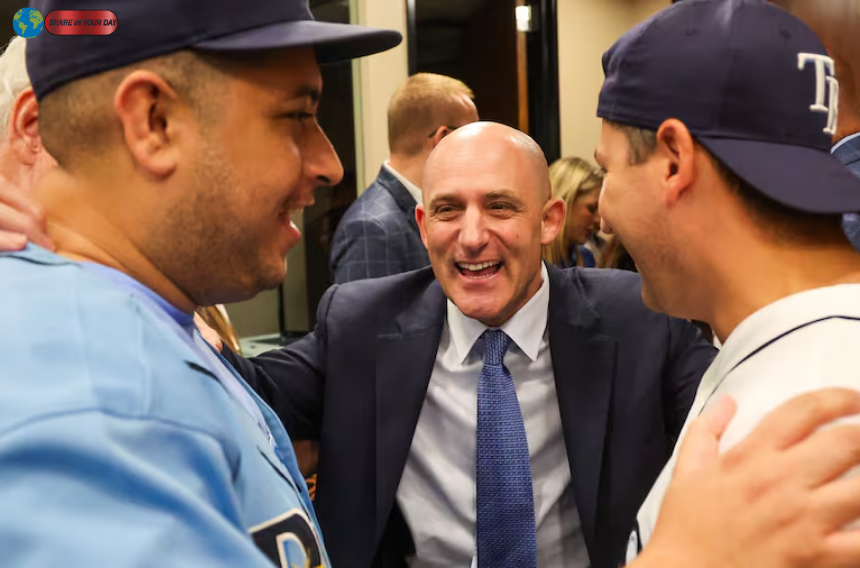
The vote follows Tampa City Council’s narrow 4-3 approval on Thursday. Together, the decisions give the Rays a path toward building a new fixed-roof ballpark on Hillsborough College’s Dale Mabry campus, near Raymond James Stadium and George M. Steinbrenner Field.
The proposed development is valued at approximately $2.36 billion. The Rays are expected to invest about $1.37 billion and cover construction cost overruns, while Hillsborough County will provide $796 million and the city of Tampa will contribute $80 million.
For a franchise that has spent years searching for a permanent home, Friday’s decision represents a potentially historic moment.
Rays Stadium Deal Clears Final Major Vote
The Hillsborough County Commission’s 5-2 vote was the key decision needed after Tampa’s city government approved its portion of the agreement one day earlier.
Commissioners Ken Hagan, Harry Cohen, Gwen Myers, Christine Miller and Chris Boles voted in favor. Donna Cameron Cepeda and Joshua Wostal voted against the proposal.
The county’s approval means the Rays can now move toward the next stages of financing, bond validation and development.
The project is designed to give the franchise a long-term home in Tampa after years of uncertainty surrounding its future.
Rays managing partner Patrick Zalupski described finding a permanent ballpark as his ownership group’s first major priority. Nearly 11 months after the ownership group introduced itself, the project has received the approvals needed to move forward.
The agreement is also being presented as more than a baseball stadium.
The larger development is expected to combine baseball, business, entertainment, education and mixed-use construction in a major redevelopment of the Dale Mabry area.
How Much Will the Rays Stadium Cost?
The total projected cost of the Rays stadium is approximately $2.36 billion.
The financing structure divides responsibility among the Rays, Hillsborough County and the city of Tampa.
The Rays are expected to contribute roughly $1.37 billion. They will also be responsible for cost overruns, shifting a significant portion of construction risk away from taxpayers.
Hillsborough County will provide $796 million.
Much of that county contribution will come from existing public revenue sources, including approximately $360 million from the Community Investment Tax and around $303 million from Tourist Development Tax revenue.
Tampa’s contribution is $80 million.
The structure represents a significant change from earlier versions of the proposal. During negotiations, local officials pushed for changes designed to reduce direct public exposure and increase the Rays’ financial commitment.
The revised agreement ultimately placed a larger share of the project cost on the team.
Tampa Bay Rays Commit to a Long-Term Home
One of the biggest questions surrounding the project has always been whether the Rays would remain in Tampa Bay for the long term.
The new agreement provides a major answer.
The county will own the ballpark, while the Rays will lease it. The team will pay $4 million per year in rent, and the initial use agreement will run for 35 years. The deal also includes a non-relocation agreement.
That commitment is particularly significant because the Rays have spent much of their history dealing with stadium uncertainty.
The team currently plays at Tropicana Field in St. Petersburg. However, the Rays’ existing use agreement there expires after the 2028 season.
The new Tampa project is intended to be ready for the 2029 season.
That creates a clear timeline.
The Rays now have a defined future beyond their current arrangement in St. Petersburg, assuming the remaining development and construction milestones stay on schedule.
Where Will the New Rays Stadium Be Built?
The new Rays stadium will be located on Hillsborough College’s Dale Mabry campus in Tampa.
The site has several major advantages.
It sits across from Raymond James Stadium, home of the Tampa Bay Buccaneers, and next to George M. Steinbrenner Field, the New York Yankees’ spring-training facility. It is also close to Tampa International Airport and downtown Tampa.
That location could make the stadium more accessible to a larger portion of the Tampa Bay region.
For years, the Rays have played in St. Petersburg at Tropicana Field. Although the stadium is within the Tampa Bay metropolitan area, its location has been a major part of the long-running debate over attendance, accessibility and the team’s long-term future.
The new location puts the Rays closer to Tampa’s major transportation and sports infrastructure.
It also creates an opportunity to develop a much larger entertainment district around the ballpark.
A Stadium and Mixed-Use Development
The project is not limited to the ballpark.
Plans call for a broader mixed-use district built around the concept of “work, live, learn, play.” The development is expected to include businesses, hospitality, entertainment and other facilities.
Hillsborough College is also a major part of the plan.
The college campus will be modernized as part of the redevelopment. In the meantime, the school is expected to use a temporary on-site campus known as “The Nest” while the larger transformation takes place.
The Rays have promoted the district as a destination that could attract people even when baseball games are not taking place.
That is important because modern sports developments increasingly rely on year-round activity.
A baseball stadium might host roughly 81 regular-season home games, but a broader entertainment district can operate throughout the year.
The Rays have also highlighted the possibility of hosting concerts and other non-baseball events at the new venue.
Why the Rays Stadium Vote Was So Divisive
Despite the final approval, the stadium deal was never universally popular.
The Tampa City Council’s 4-3 vote showed how divided local officials were. Several council members raised concerns about the use of public money, while supporters argued that the project could produce long-term economic benefits for the region.
Those concerns continued into the county debate.
Critics questioned whether hundreds of millions of dollars in public funding should be committed to a professional sports facility.
Supporters countered that the project is much larger than a stadium.
They pointed to the private investment from the Rays, the redevelopment of Hillsborough College, potential new businesses and the broader transformation of an underused site.
The debate reflects a familiar question in American sports: how much public money should governments commit to professional stadium projects?
There is no universal answer.
Supporters believe the investment can help attract jobs, development and private capital.
Opponents worry that projected economic benefits can be overstated and that public funds could be used for other priorities.
Those disagreements are unlikely to disappear simply because the vote has passed.
Rays Take on Construction Risk
One of the most important changes in the final deal is the Rays’ commitment to cover cost overruns.
The club is expected to invest approximately $1.37 billion and take responsibility for construction costs that exceed the agreed budget.
That provision was important to officials who wanted stronger taxpayer protections.
The project’s public contribution was reduced compared with earlier versions of the proposal, while the Rays’ private investment increased.
The result is a structure in which the team carries more financial responsibility for completing the ballpark.
For local taxpayers, that could reduce some of the financial risk associated with construction inflation or unexpected expenses.
However, the project remains a major public investment.
Hillsborough County’s $796 million contribution means taxpayers will still have a substantial financial stake in the stadium’s success.
What Happens to Tropicana Field?
The approval does not mean the Rays will immediately leave Tropicana Field.
The team is expected to continue using its existing St. Petersburg arrangement through the 2028 season.
The new Tampa ballpark is targeted for completion in time for Opening Day 2029.
That gives the Rays roughly two years to complete the most important construction work after the current agreement expires.
The timeline is ambitious.
According to the project’s preliminary schedule, site preparation and mobilization are expected to begin soon, with substantial completion targeted for the end of 2028 and final completion by March 31, 2029.
That schedule leaves little room for major delays.
If construction remains on track, Rays fans could be preparing for a completely new home when the 2029 MLB season begins.
What the New Rays Stadium Could Mean for Tampa
The economic argument surrounding the project extends beyond baseball.
The planned development could reshape a significant section of Tampa.
The stadium will be positioned in an area with access to major highways, the airport, existing sports facilities and established business districts.
Supporters believe the combination could create a powerful sports and entertainment hub.
The location near Raymond James Stadium is particularly notable.
Tampa already has a major NFL venue in the area. Adding an MLB ballpark nearby could make the district one of the most concentrated professional sports areas in Florida.
The presence of Steinbrenner Field adds another baseball connection.
That creates opportunities for sports tourism, events and commercial development.
At the same time, officials will need to ensure that the surrounding infrastructure can handle increased traffic and activity.
The Rays’ Future Is Finally Taking Shape
The latest approval represents a major change for a franchise that has faced repeated uncertainty about its stadium situation.
For years, proposed Rays stadium projects have been announced, debated and abandoned.
A previous redevelopment plan connected to the team’s existing St. Petersburg home collapsed, leaving the franchise’s long-term future uncertain. The change in ownership also brought a renewed focus on finding a permanent solution.
Now, the Rays have approvals from both Tampa and Hillsborough County.
The project still has work ahead.
Financing must proceed. Construction must begin. The development must remain on schedule.
But the biggest political hurdle has been cleared.
For the first time in years, there is a concrete path toward a new home for the Rays.
Why 2029 Could Become a Defining Year
If construction proceeds as planned, the 2029 season will mark the beginning of a new era for the franchise.
The Rays would move into a fixed-roof ballpark with at least 28,000 seats. The venue would also be designed to accommodate events beyond baseball.
The move would end the team’s long relationship with Tropicana Field and establish Tampa as the permanent center of its future.
That could also change the identity of baseball in the region.
The Rays have struggled at times to build consistent attendance despite periods of strong on-field performance. A more centrally located stadium could help address some of the geographic challenges that have surrounded the franchise.
However, a new stadium alone will not guarantee success.
The Rays will still need competitive teams, strong fan engagement and effective marketing.
The facility can provide the foundation.
The franchise will have to build the rest.
A New Chapter for Tampa Bay Baseball
The Hillsborough County vote has transformed the Rays stadium project from a long-running proposal into an approved development plan.
The final vote was 5-2.
Tampa had already approved its portion of the agreement 4-3 one day earlier. With both governments on board, the Rays can now proceed toward financing validation and construction.
The numbers are enormous.
The total project is expected to cost about $2.36 billion. The county will provide $796 million, Tampa will contribute $80 million, and the Rays will invest approximately $1.37 billion while accepting responsibility for cost overruns.
But the significance extends beyond the dollar figures.
The project represents a long-term commitment to keeping Major League Baseball in Tampa Bay.
It also creates a major redevelopment opportunity around Dale Mabry Highway and Hillsborough College.
For Rays fans, the biggest message is simple: the team finally has a clear path forward.
The organization is expected to remain at Tropicana Field through the 2028 season before targeting a move into its new Tampa home for 2029.
After years of uncertainty, the finish line is finally visible.
The Rays stadium project still has plenty of challenges ahead, but Friday’s vote marked the moment when the franchise’s long-term future became much more concrete.
For Tampa Bay baseball, the next chapter is no longer just a proposal.
It is officially moving toward construction.