
Elon Musk Says Boring Company Is Working on Austin-San Antonio Hyperloop
Elon Musk has revived one of his most ambitious transportation ideas, saying The Boring Company is working on a high-speed tunnel that could connect Austin and San Antonio in less than 30 minutes.
Musk made the claim on September 20, describing the proposed project as a “simple precursor Hyperloop” between the two Texas cities. The statement came in response to an artificial-intelligence-generated video depicting a futuristic world and followed Musk’s declaration that such a future should be brought into reality.
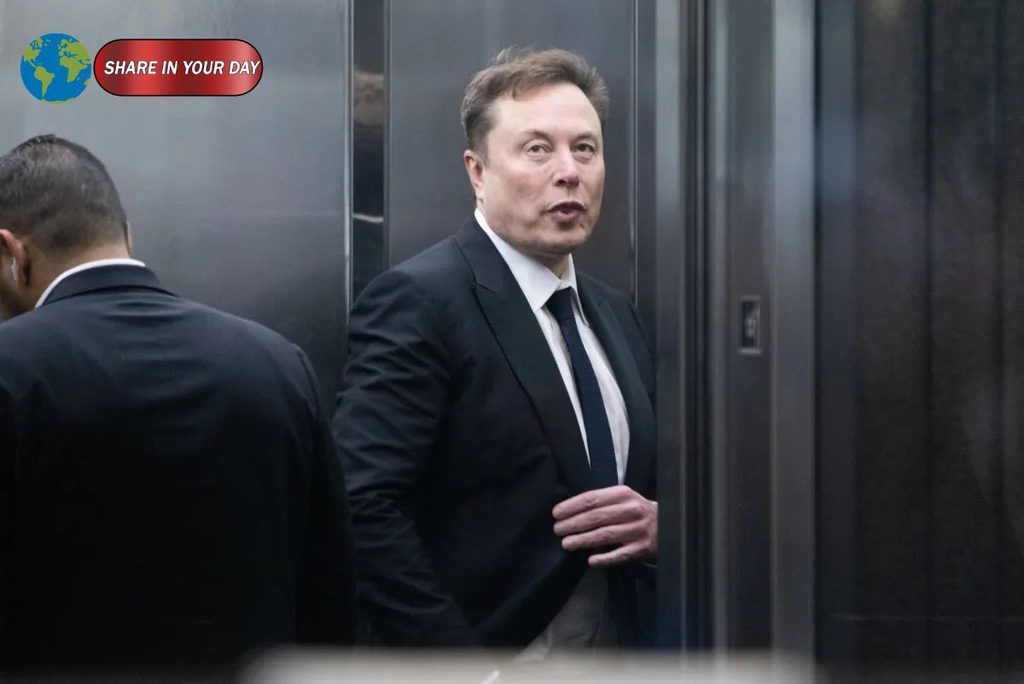
The Boring Company subsequently amplified the idea, saying it would be excited to build what would be a major infrastructure project for the rapidly growing Texas corridor.
The proposal would represent a significant expansion of The Boring Company’s transportation ambitions. While the company has built and operates tunnels in Las Vegas, an intercity system capable of carrying passengers at very high speeds would be substantially more ambitious than its existing operations.
Musk Targets a Sub-30-Minute Journey
Austin and San Antonio are separated by roughly 80 miles, with Interstate 35 serving as the primary road connection between the two metropolitan areas. Traffic can make the journey considerably longer than the distance alone would suggest.
Musk said the proposed system would be designed to provide a consistent trip of less than 30 minutes. Other reports citing his comments have described the proposed system as capable of speeds exceeding 200 mph.
That target would put the proposed tunnel firmly in a different category from conventional underground transportation systems.
Rather than simply moving vehicles beneath congested roads, Musk’s concept is tied to the broader Hyperloop vision, in which specially designed electric vehicles travel through controlled tunnel environments at extremely high speeds.
The exact technology planned for Austin and San Antonio has not yet been publicly detailed. Musk referred to it as a precursor rather than a fully developed Hyperloop system, suggesting that the project could serve as an intermediate step toward the technology he has promoted for years.
The Boring Company Already Has a Hyperloop Test Facility
The company is not starting completely from scratch when it comes to Hyperloop-related technology.
The Boring Company operates a Hyperloop test tunnel in Bastrop, Texas. According to the company, the test facility was completed and is in use, with the tunnel originally constructed to test vacuum-pump systems.
The company says its Hyperloop concept involves autonomous electric pods capable of traveling at speeds above 600 mph. Student teams participating in earlier Hyperloop competitions also demonstrated pod speeds of up to 288 mph on test tracks.
A commercial system connecting two major Texas cities would nevertheless introduce challenges far beyond those involved in testing a prototype.
A full-scale project would require extensive engineering, construction, safety planning and regulatory approvals. It would also have to address land acquisition, station locations, passenger operations and the practical requirements of building an underground transportation network over a long distance.
No detailed construction schedule or route for the Austin-San Antonio project has been announced.
Boring Company Has a Mixed Record of Announced Projects
The Austin-San Antonio proposal also arrives with considerable history behind The Boring Company.
Musk established the company with the goal of using underground tunnels to address road congestion. Over the years, it has announced plans for transportation systems in several cities, including Chicago and Los Angeles, as well as a proposed connection between New York City and Washington, D.C.
Several of those projects have not moved forward as originally envisioned. The company has, however, completed operational infrastructure in Las Vegas, where its transportation system uses underground tunnels alongside surface routes to move passengers around major destinations.
The company has also continued expanding its financial resources.
Earlier in September, The Boring Company announced a $3 billion Series D funding round led by the United Arab Emirates. The financing valued the company at approximately $23 billion and was accompanied by plans to build more than 150 kilometers of tunnels in the UAE.
That new funding provides the company with additional capital as it pursues large-scale tunnel projects, although it does not establish that the Austin-San Antonio Hyperloop has been formally funded or approved.
A New Transportation Challenge for Texas
The proposed Hyperloop comes as Central Texas continues to experience substantial population growth and increasing transportation pressure.
Austin and San Antonio are major economic centers, while the corridor connecting them includes rapidly developing communities. Improving travel between the cities has long been a subject of transportation planning, particularly as congestion on I-35 continues to create challenges for commuters and commercial traffic.
A system capable of making the trip in less than half an hour could significantly change how people move through the region if it were ultimately built and operated at the speeds Musk has described.
However, the proposal remains at an early stage.
There is currently no publicly announced completion date, detailed route map or comprehensive technical plan for the project. The Boring Company’s public response signals interest in pursuing the idea, but the available information does not establish that construction is imminent.
Musk Returns to a Longstanding Vision
The Austin-San Antonio announcement also demonstrates Musk’s continuing interest in futuristic transportation.
His original Hyperloop concept attracted worldwide attention more than a decade ago, promising dramatically faster ground transportation through low-pressure tubes. The technology has since been pursued in different forms by several companies and research groups, while large-scale commercial deployment has remained difficult.
The Boring Company has taken a somewhat different approach by concentrating on tunneling and electric vehicles while continuing to experiment with Hyperloop technology.
For now, the Austin-San Antonio proposal appears to be the latest expression of that vision.
Whether it becomes a functioning transportation system will depend on technical development, financing, government approvals, construction and numerous other factors. For Texas commuters, the idea of traveling between Austin and San Antonio in under 30 minutes is striking. But turning that promise into a daily transportation service would be a much larger undertaking than announcing the concept.
For The Boring Company, the proposed route could eventually become an important test of whether its underground transportation ambitions can move beyond individual city projects and into long-distance, high-speed travel.