Trump Economy Faces a Crucial Midterm Test
The Trump economy is entering a politically important period as Americans prepare to vote in the 2026 midterm elections, with inflation, energy costs, interest rates and employment among the economic issues drawing attention from voters and policymakers.

The economic debate comes at a complicated moment for the Trump administration. The White House has highlighted economic growth, tariff revenue and employment as evidence of progress. At the same time, surveys show that many Americans remain dissatisfied with prices and their broader assessment of the economy.
The New York Times has examined the political challenge facing President Donald Trump as his administration seeks to make the economy a central part of its case heading into the November elections. Recent reporting and polling show that economic conditions are likely to remain closely connected to how voters evaluate the administration.
The situation is not defined by a single economic indicator. Instead, several factors are moving at once, creating a complicated picture for households and businesses.
Here are five major pressure points shaping the Trump economy ahead of the 2026 midterms.
1. Trump Economy and Persistent Inflation
Inflation remains one of the most visible economic issues for American households.
According to recent reporting, the Consumer Price Index rose 3.4% over the year ending in August. That was the same annual increase recorded in July, keeping inflation above the Federal Reserve’s longer-term 2% target. Energy costs have been an important contributor to the recent increases.
For consumers, the inflation debate is about more than whether the rate of price increases is slowing. The level of prices matters too.
Even when inflation declines, prices generally do not return to their previous levels. That means households can continue to feel financial pressure after the inflation rate has moderated.
This distinction has become particularly important in the political discussion surrounding the Trump economy.
The administration has emphasized areas where prices have fallen. For example, egg prices declined substantially from their 2025 peak. FactCheck.org reported that a dozen eggs cost about $2.19 in July, compared with a peak of $6.23 in March 2025.
However, other categories have continued to become more expensive.
FactCheck.org reported that average grocery prices increased between January 2025 and July 2026, while energy prices also rose over the year.
That creates a challenge for economic messaging. Government statistics can show improvements in particular categories while consumers may continue to experience higher overall household expenses.
2. Energy Costs Add Pressure
Energy prices are another important part of the economic discussion.
Higher fuel costs can affect households directly through gasoline and utility bills. They can also increase transportation and production costs for businesses, potentially affecting the prices consumers pay for other goods and services.
Recent reporting has linked higher energy costs to disruptions associated with the conflict involving Iran. The Washington Post reported that energy prices contributed significantly to inflation and created additional pressure for Republicans heading into the midterms.
The issue is especially significant because gasoline prices are highly visible.
Consumers see fuel prices frequently, making changes at the pump easier to notice than changes in many other economic indicators. Higher transportation costs can also affect companies that depend heavily on trucking, shipping and other forms of transportation.
As a result, energy prices can influence both household budgets and business costs.
For the Trump economy, this creates another complicated policy environment. Measures intended to promote domestic production or generate government revenue can interact with global energy markets in ways that are difficult to control from Washington.
3. The Jobs Market Sends a Mixed Signal
Employment data provides another important part of the economic picture.
The August jobs report showed that the U.S. economy added 162,000 jobs, according to FactCheck.org. The report was stronger than some expectations and offered evidence that the labor market continued to create jobs.
At the same time, broader labor-market measures tell a more nuanced story.
FactCheck.org reported that the employment-population ratio was 59.1% in August, while the labor-force participation rate stood at 61.6%. Both measures were lower than their January 2025 levels.
That distinction matters because the total number of people employed can increase simply as the population grows.
For that reason, economists often examine employment rates, participation rates and unemployment alongside the headline job-creation figure.
The unemployment rate has also moved during the Trump administration. According to the same analysis, it rose from 4.0% in January 2025 to 4.5% in November before declining to 4.1% in August 2026.
The result is an economy that cannot easily be described using one number.
Job creation continues, but hiring has been less rapid than during parts of the previous administration. At the same time, unemployment remains relatively low by historical standards.
For voters, however, the important question may be whether employment opportunities and wages are keeping pace with household expenses.
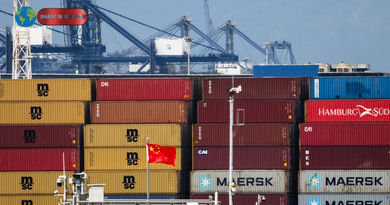
4. Tariffs Remain Central to the Trump Economy
Trade policy is another defining feature of the Trump economy.
The Trump administration has relied heavily on tariffs as part of its economic strategy. The policy is intended to generate government revenue and influence international trade, while also encouraging production in the United States.
Tariff revenue has increased significantly.
FactCheck.org reported that the U.S. collected $264 billion in net tariff revenue during 2025, compared with $79 billion in 2024, based on an analysis of Treasury statements by the Bipartisan Policy Center. However, the organization noted that refunds related to tariffs later found to exceed presidential authority changed the calculation for 2026.
The economic impact of tariffs remains a major point of debate.
Supporters of the policy argue that tariffs can protect domestic industries and encourage companies to manufacture more goods in the United States. Critics have argued that tariffs can also increase costs for businesses that import materials and products, with some of those costs potentially passed on to consumers.
The effects can vary significantly by industry.
A manufacturer that competes directly with imported products may experience a different impact from a retailer that relies on imported merchandise. Businesses can also respond by changing suppliers, adjusting prices or absorbing some of the additional costs.
This makes tariffs one of the most important areas to watch as voters assess the administration’s economic record.
5. Voters Are Paying Close Attention to the Economy
Economic statistics are only one part of the political picture. Public perception also matters.
A Pew Research Center survey published in July found that roughly six in 10 Americans said Trump’s economic policies had made the economy worse. Only about one-quarter of respondents described current economic conditions as excellent or good, while 41% called conditions only fair and 35% described them as poor.
More recent polling has shown similar concerns.
An Emerson College survey conducted September 21-22 among 1,000 likely voters found that 60% believed Trump’s economic policies were making the economy worse, while 28% said they were making it better. The economy was identified as the top concern by 41% of respondents.
A separate Reuters/Ipsos poll conducted in September also found low approval ratings for Trump’s handling of economic issues. Reuters reported that only 32% of respondents approved of his overall performance, while 17% approved of his handling of cost-of-living issues.
Polls should be interpreted carefully. Individual surveys represent specific populations and dates, and results can change as economic conditions and political events develop.
Still, the collection of recent surveys shows that economic concerns are a prominent part of the 2026 political environment.
Trump Economy Faces a Difficult Messaging Challenge
The central challenge for the administration is that different economic indicators can tell different stories.
Employment remains substantial. Inflation is lower than during the most intense period of the post-pandemic inflation surge, but prices remain elevated. Some food prices have fallen, while other household expenses have increased.
Tariff revenue has grown, but tariffs also affect businesses and consumers in different ways.
Meanwhile, interest rates and borrowing costs remain important for households considering mortgages, vehicle purchases and other major expenses.
The Washington Post reported earlier in September that 10-year Treasury yields had climbed alongside concerns about inflation and government finances. The New York Times also reported that the 10-year Treasury yield had exceeded 5% earlier in the month.
Higher long-term Treasury yields can influence other borrowing costs across the economy.
That means economic conditions can remain difficult even when headline employment figures are relatively positive.
The $5,000 “Trump Dividend” Adds Another Economic Debate
The administration’s economic message has also included a proposal for a $5,000 payment to American adults if Republicans retain control of Congress.
Trump described the proposal as a dividend that would be funded through tariff revenue. Treasury Secretary Scott Bessent has also discussed the idea while acknowledging that the administration was examining how such a payment could work.
The proposal has generated questions about its cost and financing.
FactCheck.org estimated that providing $5,000 to roughly 245 million U.S. citizens aged 18 and older would cost approximately $1.2 trillion. The organization also reported that existing tariff revenue would not be sufficient to finance a payment of that size on its own.
The proposal therefore adds another dimension to the economic debate surrounding the midterms.
Rather than focusing only on current inflation and employment, voters and policymakers are also considering how future spending, tax policy and tariff revenue could affect federal deficits and prices.
What to Watch Before the 2026 Midterms
Several economic indicators will remain important as Election Day approaches.
Inflation: Future Consumer Price Index reports will show whether price growth is accelerating, slowing or remaining elevated.
Energy prices: Changes in gasoline, diesel and other energy costs could affect both consumers and businesses.
Employment: Monthly jobs reports will provide additional information about hiring, unemployment and labor-force participation.
Interest rates: Treasury yields and Federal Reserve policy will continue to influence borrowing costs.
Consumer confidence: Surveys can show whether Americans believe their financial situation is improving or deteriorating.
Tariff revenue: Government collections and the broader effects of trade policy will remain closely watched.
These indicators will not necessarily move together. A strong jobs report, for example, can coexist with persistent inflation. Lower inflation can also occur while the overall price level remains high.
That is why the economic debate heading into the midterms is likely to remain multifaceted.
Trump Economy and the Road to Election Day
The Trump economy is being evaluated against a backdrop of competing economic signals.
The administration can point to continued job creation, increased tariff collections and declines in selected prices. At the same time, inflation remains above the Federal Reserve’s target, energy costs have created additional pressure and surveys show substantial public concern about the cost of living.
The New York Times’ reporting on the administration’s economic position comes as the midterm campaign enters a critical stage. The broader economic data show why the issue is unlikely to be reduced to a single measure.
For American households, the practical questions are straightforward: How much does it cost to buy groceries? What does it cost to fill a vehicle? Can families afford housing? Are wages and employment opportunities keeping pace with expenses?
For policymakers, the questions are broader: Can inflation continue to moderate? What will tariffs mean for consumers and businesses? How will energy prices evolve? And how will the government finance its spending commitments?
Those questions will remain central to the economic discussion through the 2026 midterm campaign.