Pope Leo XIV Draws Huge Paris Crowds as He Warns of an AI “Paradise of Machines”
Pope Leo XIV began his highly anticipated visit to France with huge crowds in Paris and a pointed warning about the growing influence of artificial intelligence, urging people to protect human judgment and dignity as technology becomes increasingly embedded in everyday life.
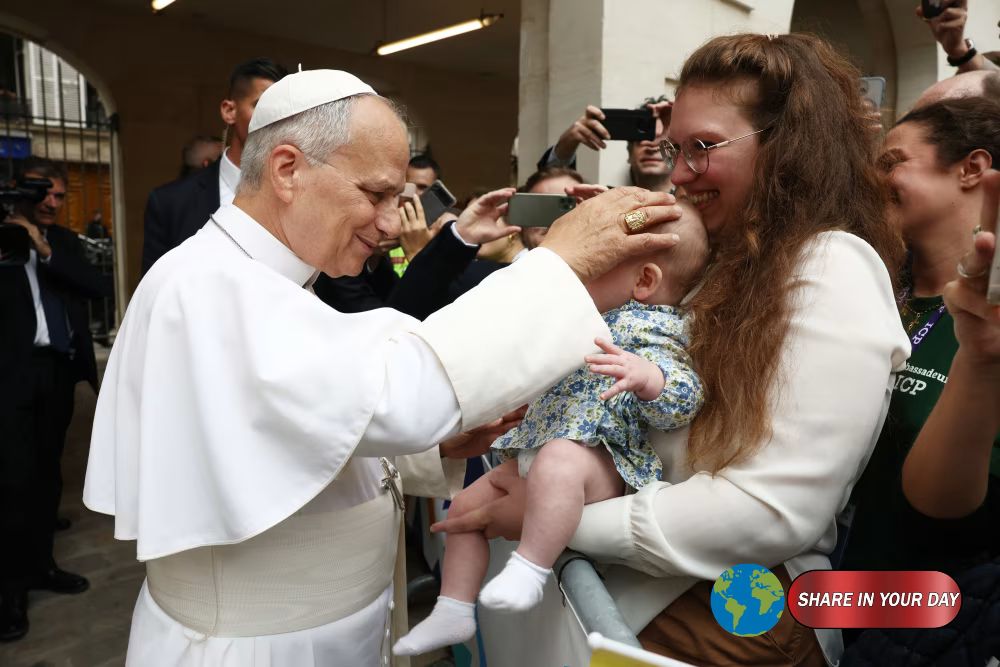
The four-day journey marks an important international visit for the pope and his first official trip to France. Large numbers of people gathered along the streets of Paris to see Leo as he traveled through the French capital, while thousands more prepared to attend major religious events during his visit.
The pope placed artificial intelligence near the center of his message. Speaking in Paris, Leo warned that rapid technological development could eventually produce what he described as a “paradise of machines,” a future in which automated systems increasingly shape human decisions and daily existence.
His concern was not simply about technological innovation itself. Instead, Leo emphasized the need for people to develop the ethical judgment necessary to determine how powerful new technologies should be created and used.
“If we are to avoid losing our humanity,” Leo said, there is an urgent need for education capable of helping people make ethical decisions in a world increasingly influenced by artificial intelligence.
The comments reflect an issue that has become increasingly important during Leo’s papacy. Artificial intelligence has rapidly expanded into workplaces, education, communication, entertainment and government, raising questions about privacy, employment, misinformation, decision-making and the role of human beings in an increasingly automated society.
Leo has repeatedly called for technological development to remain connected to human dignity. His approach places particular emphasis on the possibility that technological systems could become powerful enough to influence society without sufficient human oversight.
Massive Crowds Welcome the Pope
While technology was a central theme of Leo’s message, his arrival in France also produced a striking public response.
Crowds gathered in Paris to catch a glimpse of the pope as he traveled through the city. His itinerary included an appearance at UNESCO, meetings with French officials and a visit to Notre-Dame Cathedral, the historic Paris landmark that underwent extensive restoration following the devastating 2019 fire.
The scale of the visit reflects the continuing public interest surrounding the American-born pope. Organizers have prepared for enormous gatherings during the trip, including a major public Mass in Paris and events involving large numbers of young people.
The journey is also significant because it comes at a time when France has experienced a complicated relationship with Catholicism. The country remains deeply secular, while participation in traditional religious life has declined over decades. At the same time, large Catholic gatherings continue to attract substantial numbers of people, and interest in certain religious activities has shown signs of renewed energy.
Leo’s visit therefore brings him into a country where the Catholic Church remains culturally important but operates within a strongly secular public environment.
A Broader Message About Human Dignity
The pope’s warning about artificial intelligence fits into a wider message about human dignity that has become a defining theme of his leadership.
Leo has argued that technological progress should not be measured solely by speed, efficiency or economic value. Instead, he has called for greater attention to how technological changes affect ordinary people and society as a whole.
Artificial intelligence presents particularly difficult questions because systems can increasingly generate information, produce images and text, analyze enormous amounts of data and perform tasks once associated primarily with human workers.
Supporters of AI development point to its potential to improve productivity, scientific research, medicine and education. Critics and researchers, however, have raised concerns about employment disruption, misinformation, surveillance and the concentration of technological power.
Leo’s message adds a moral dimension to that debate.
Rather than rejecting technology outright, he has emphasized the importance of ensuring that technological progress remains accountable to people and ethical principles.
France Visit Combines Faith, Politics and Social Questions
The pope’s schedule in France extends beyond Paris. His journey also includes Lourdes, one of the Catholic Church’s most famous pilgrimage destinations, as well as Metz.
The visit comes as France debates questions involving religion, individual rights and the role of the state. France has taken significant legal steps concerning abortion and assisted dying, areas where Catholic teaching differs from positions embraced by much of French political society.
Leo is expected to emphasize the protection of human life and the dignity of every person during his journey.
His presence also comes against the backdrop of the Catholic Church’s continuing efforts to address its clergy abuse crisis. Encounters with survivors and discussions surrounding accountability remain particularly sensitive issues for the Church in France.
The pope’s visit therefore carries several overlapping messages. It is a religious pilgrimage, a major international diplomatic event and an opportunity for Leo to present his views on some of the defining questions facing modern society.
Looking Ahead
For Leo, the France trip provides a large international platform at a moment when artificial intelligence is becoming one of the most consequential technological developments of the modern era.
His warning about a “paradise of machines” was ultimately a call for caution rather than a rejection of innovation. The pope’s central argument was that technological progress should not come at the expense of human judgment, responsibility and dignity.
As crowds continued to follow him through Paris, the contrast was striking: a centuries-old religious institution using a rapidly changing technological age as the subject of one of its most urgent messages.
Leo’s visit will continue with major public events in Paris and stops elsewhere in France. But his warning about artificial intelligence is likely to remain one of the defining themes of the journey, particularly as governments, companies and individuals confront difficult questions about how much authority should be given to machines.
For the pope, the challenge is not simply deciding what artificial intelligence can do. It is deciding what humanity should allow it to become.