Googlebooks: 5 Exciting Tech Moves to Watch
Googlebooks are emerging as one of the most interesting new developments in the laptop market, but they are only part of a much larger technology story this week. Google has revealed more about its Android-based laptop platform, while Meta has expanded its smart-glasses lineup, Microsoft has redesigned its Surface Mouse, and Remedy Entertainment has released its long-awaited Control sequel.
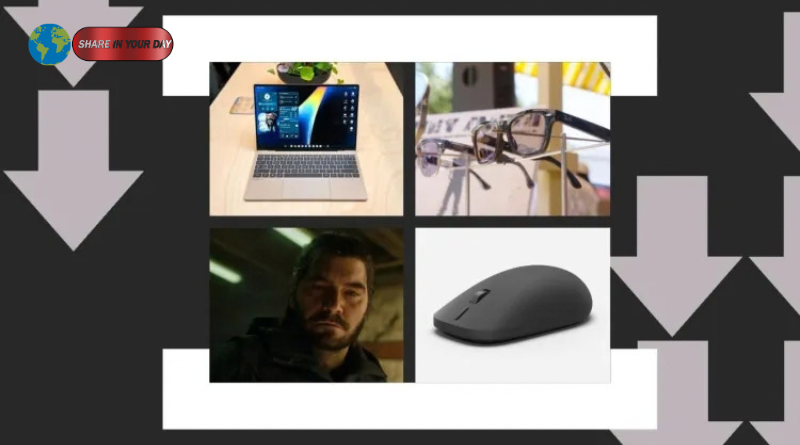
The developments were highlighted in the latest edition of The Verge’s Installer newsletter by senior reporter Jay Peters. The roundup covers several products and games that show how quickly the boundaries between artificial intelligence, mobile devices, PCs and wearable technology are changing.
For Google, however, the biggest development is clearly Googlebooks. The new laptop category is designed to combine the familiarity of a traditional computer with the Android ecosystem and Google’s Gemini AI technology.
Google says its first Googlebook models are being produced by Acer, Asus, Dell, HP and Lenovo. Prices start at $899, while the first devices are scheduled to reach U.S. stores on October 4.
Googlebooks Aim to Reinvent Android Laptops
Googlebooks represent a significant change in Google’s approach to personal computers.
Rather than simply extending ChromeOS, Google is positioning Googlebook OS as a new laptop platform built on the Android technology stack and combined with desktop foundations derived from ChromeOS.
That distinction matters because Google is trying to make the laptop feel like a natural extension of an Android phone.
According to Google, users will be able to connect their Android smartphones directly with their Googlebooks. Features include access to phone files, app integration and tools designed to make it easier to continue activities between a phone and a laptop.
The Verge’s testing also highlighted Google’s efforts to make this phone-to-laptop connection central to the experience. Android applications can be brought onto the Googlebook environment, while Google’s “Continue On” feature can help users move ongoing tasks from their phone to the laptop.
That strategy gives Googlebooks a clear identity.
Instead of competing only on laptop hardware, Google is attempting to sell an ecosystem in which the phone and computer work together more closely.
Googlebook Hardware Starts at $899
Google has announced five initial Googlebook models from major laptop manufacturers.
Acer, Asus, Dell, HP and Lenovo are participating in the launch. Google says the lineup starts at $899 and includes premium materials, touchscreen displays and modern processors from Intel and Qualcomm.
The specifications vary between models.
Google says the laptops can include displays reaching up to 2.8K resolution, haptic trackpads and at least 16GB of RAM across the portfolio. Some models reach 32GB. Battery claims extend to as much as 14 hours of video playback and 16 hours of web browsing, depending on the configuration.
The devices also feature Google’s distinctive Glowbar.
The light strip can indicate activities such as startup and battery status, while Google is opening parts of the Glowbar experience to developers.
The first generation therefore looks less like a budget Chromebook replacement and more like Google’s attempt to establish a premium laptop category.
Googlebooks Put Gemini AI at the Center
Artificial intelligence is another major component of Google’s strategy.
Google says Googlebooks are engineered around Gemini and include dedicated hardware designed to support on-device AI workloads. The company says the launch processors have NPUs capable of more than 45 TOPS of AI performance.
The Verge also highlighted Google’s Magic Pointer concept. The cursor can be used to bring up Gemini and interact with AI features while working on the computer.
This approach reflects a broader change in the PC market.
AI is no longer being presented simply as a separate application. Hardware manufacturers increasingly want AI assistants integrated into operating systems, productivity software and everyday computer controls.
Googlebooks are Google’s attempt to make that approach central to an Android-powered laptop.
Google is also promising long-term software support. The company says Googlebook OS will receive updates for up to 10 years.
Ray-Ban Meta Audio Takes Smart Glasses in Another Direction
While Googlebooks target the laptop market, Meta is pushing wearable technology in a different direction.
Meta recently introduced Ray-Ban Meta Audio, its first audio-only glasses. Unlike camera-equipped versions of its AI glasses, the new product focuses on speakers, microphones and hands-free AI interaction without including a camera.
Meta says the glasses weigh 43 grams and can provide up to 12 hours of use on a single charge, with up to another 48 hours available through the charging case. Pre-orders began at $349, with shipments scheduled for October 13.
The company is launching the audio glasses in two styles: Clubmaster and Burbank.
The idea is relatively straightforward.
Instead of asking consumers to wear earbuds, Meta wants some of the same functionality built directly into a pair of glasses. Users can listen to music and podcasts, make calls and interact with an AI assistant while keeping their ears open to their surroundings.
Meta is simultaneously expanding its camera-equipped Ray-Ban Meta lineup.
The new Ray-Ban Meta Gen 3 offers longer battery life, a customizable action button and upgraded microphones. Meta says the glasses can provide up to nine hours of battery life and use a 12-megapixel camera capable of 3K Ultra HD video recording.
The contrast between the two products is notable.
Ray-Ban Meta Audio removes the camera, while the Gen 3 model continues to develop the camera-based smart-glasses concept.
Microsoft Surface Mouse Gets a Major Refresh
Microsoft is also updating a product that has remained largely unchanged for years.
The Surface Mouse 2nd Edition introduces haptic feedback, a customizable action button and support for connecting to up to three devices. Microsoft lists the price at $79.99, with a release date of October 13, 2026.
The haptic system is designed to provide tactile responses to actions such as clicking, scrolling, dragging and aligning objects.
Microsoft says the haptic feedback can work with applications including PowerPoint, Affinity, Concepts and Filmora.
The mouse also uses Bluetooth 6.0 and can switch between three connected devices. Microsoft has redesigned the shape for extended use and added a soft-touch silicone surface.
The customizable action button is another sign of Microsoft’s broader AI strategy.
The button can provide quick access to Copilot and other shortcuts. Users can configure it for different actions through Microsoft’s software.
For a product as familiar as a mouse, those additions demonstrate how manufacturers are trying to turn basic PC accessories into more intelligent input devices.
Control Resonant Brings Remedy’s Sequel to Players
Gaming is another major part of the week’s technology news.
Remedy Entertainment has released CONTROL Resonant, the sequel to its critically acclaimed 2019 action game Control.
The new game launched on September 24, 2026, for PlayStation 5, Xbox Series X|S, PC through Steam and the Epic Games Store, and GeForce NOW. Mac versions are planned for later in the year.
The setting also represents a major shift.
Rather than focusing primarily on the Oldest House from the original game, CONTROL Resonant takes players into a distorted version of Manhattan and other unusual locations.
Remedy describes the game as an action-adventure RPG centered on Dylan Faden, who must confront a reality-altering threat while fighting for his humanity and survival.
The release is particularly significant because Remedy says the sequel took seven years to develop.
Creative Director Mikael Kasurinen described the project as the result of years of experimentation, rebuilding and refinement before its final release.
Silent Hill and Peloton Add More Variety
The technology roundup also touches on several other releases.
Konami’s Silent Hill: Townfall is another major game to watch, with the horror title receiving attention as the Halloween season approaches. The game expands the Silent Hill universe with a new setting and story.
Meanwhile, Peloton has introduced the Tread Flex, a folding treadmill aimed at consumers who want a smaller home fitness setup.
The treadmill costs $2,195 and is positioned by Peloton as its most affordable treadmill, although that price still puts it firmly in the premium home-fitness category.
These products may have little in common at first glance.
But together they illustrate the increasingly broad definition of consumer technology. A technology roundup now covers laptops, AI glasses, gaming, fitness equipment, computer accessories and entertainment platforms.
Logitech Yeti 2 Targets Creators and Streamers
Audio hardware is also receiving an update.
Logitech G has introduced the Yeti 2, a follow-up to the well-known Blue Yeti microphone.
The new microphone adds an LED display and an audio proximity sensor designed to track the speaker’s position.
That puts the Yeti 2 into a market increasingly shaped by streamers, podcasters, remote workers and online creators.
Microphones have become a much more important part of the consumer technology landscape as video calls, live streaming and creator platforms continue to influence how people communicate.
Why Googlebooks Matter Beyond Google
The launch of Googlebooks is interesting because Google is not simply introducing another laptop.
The company is attempting to create a new relationship between Android phones and computers.
For Android users, that could make the laptop feel less like a separate machine and more like the larger screen and keyboard component of an existing ecosystem.
Google is also promising 10 years of software support, which could help address one of the biggest concerns surrounding new computing platforms: longevity.
At the same time, the $899 starting price places Googlebooks in a much more competitive part of the laptop market.
Consumers can already choose from Windows PCs, Macs, Chromebooks and other alternatives. Google therefore needs more than an Android-based operating system to make the category successful.
The integration with Android phones, Gemini AI, premium hardware and long-term software support will be central to that effort.
The Bigger Technology Trend
Taken together, the products highlighted this week point toward several broader trends.
AI is moving into hardware. Google is building Gemini into Googlebooks, while Meta is integrating AI into glasses and Microsoft is putting Copilot access directly onto a mouse.
Devices are becoming more interconnected. Google wants Android phones and laptops to work together. Meta wants glasses to become a hands-free computing interface.
Traditional accessories are becoming smarter. Even a mouse can now include haptic feedback, device switching and an AI shortcut.
Wearables are diversifying. Meta’s introduction of camera-free Ray-Ban Meta Audio shows that smart glasses do not necessarily need to follow one hardware formula.
And gaming remains a major driver of new hardware and software experiences, with CONTROL Resonant demonstrating how established franchises can evolve into new environments.
What Comes Next for Googlebooks?
Googlebooks will face an important test once consumers can buy and use them at scale.
The hardware already looks competitive on paper, while Google has committed significant resources to software integration, AI and Android compatibility. The bigger question is whether those features provide enough practical value to convince buyers to choose a new platform.
Google has set a clear launch timetable.
The first Googlebooks are scheduled to arrive in the United States on October 4, followed by several additional markets on October 5. Google says every Googlebook includes 12 months of Google AI Pro, 5TB of cloud storage and additional bundled services.
That makes the launch more than a routine hardware refresh.
It is an attempt to establish a new category of Android-powered personal computers at a time when AI is reshaping what consumers expect from their devices.
For users already invested in Android, the concept may be particularly compelling.
For everyone else, the real test will come when Googlebooks move from demonstrations and specifications to everyday use.