
Andrew Bailey Resigns as FBI Co-Deputy Director, Returning to Missouri
Andrew Bailey, a senior FBI official who served as co-deputy director under FBI Director Kash Patel, has announced his resignation after roughly a year at the federal law enforcement agency.
Bailey said Monday, September 28, that he was stepping down to return to his family in Missouri. His resignation is expected to take effect October 2, according to multiple reports. He thanked President Donald Trump, Attorney General Todd Blanche and Patel for the opportunity to serve at the FBI.
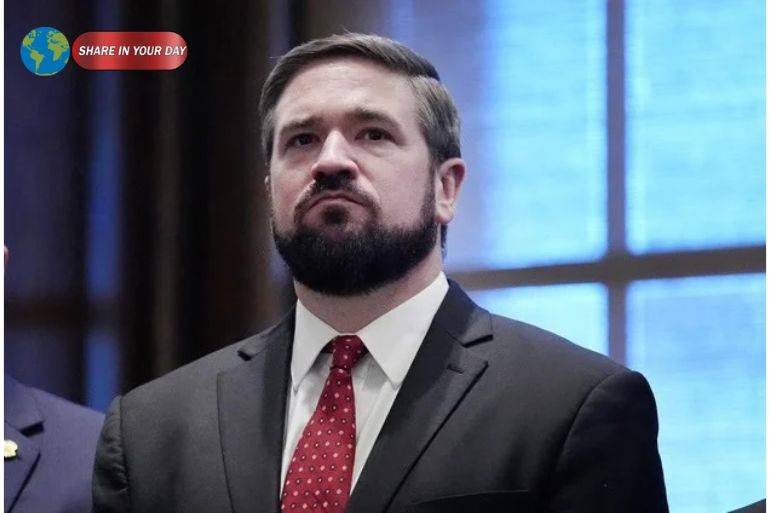
“With great pride in what we have accomplished,” Bailey said in announcing his departure, adding that he was returning to his family in Missouri. He also expressed confidence that Patel would continue his efforts to reform the FBI, combat violent crime and strengthen accountability at the bureau.
Bailey’s departure comes during a period of significant personnel changes at the FBI. His exit also raises questions about the future of an unusual leadership arrangement that placed two co-deputy directors in the bureau’s No. 2 position.
Bailey’s Unusual Role at the FBI
Bailey joined the FBI leadership team in 2025 after leaving his position as Missouri attorney general. He initially served alongside Dan Bongino, a former Secret Service agent and conservative media personality who also had no previous FBI experience.
The co-deputy director structure was unusual for the bureau and represented a significant departure from the traditional path into its senior leadership. The deputy director is responsible for helping oversee the FBI’s daily operations and typically has extensive experience inside the agency.
After Bongino left the FBI, Christopher Raia joined Bailey as the other deputy director. Raia brought years of experience as a career FBI official, creating a leadership arrangement that combined Bailey’s political and legal background with Raia’s experience within the bureau.
It remains unclear whether another official will be appointed to serve alongside Raia following Bailey’s departure. ABC News reported that the co-deputy arrangement was sometimes ill-defined, adding uncertainty about whether the FBI will continue the structure after Bailey leaves.
From Missouri Attorney General to FBI Leadership
Before joining the FBI, Bailey had built a national profile through his work as Missouri’s attorney general.
Bailey became attorney general after serving as Gov. Mike Parson’s general counsel. He was appointed to the office in 2022 after Eric Schmitt left the position following his election to the U.S. Senate.
Bailey subsequently won election to a full term as attorney general in 2024. During his time in Missouri, he pursued several legal battles associated with the Republican Party and Trump’s policy agenda.
His office challenged federal policies on immigration and transgender issues and pursued litigation involving technology companies and free-speech questions. His political profile helped make him a prominent figure among conservatives before his move to Washington.
Bailey resigned as Missouri attorney general in September 2025 to take the FBI leadership position.
His transition represented a major change from state politics to the upper levels of federal law enforcement. At the FBI, he became one of the most visible officials working under Patel as the bureau underwent changes directed by the Trump administration.
Role in Georgia Election Investigation
One of Bailey’s most prominent appearances as an FBI official came in January 2026, when federal agents executed a search warrant at an election facility in Fulton County, Georgia.
The operation involved the seizure of ballots and other materials connected to the 2020 presidential election. Bailey was present at the Fulton County election hub during the operation, alongside then-Director of National Intelligence Tulsi Gabbard.
The FBI’s involvement in the investigation attracted attention because of Trump’s longstanding claims about the 2020 election. Those claims have been rejected by numerous election officials, courts and reviews, while the Georgia investigation became one of several politically sensitive matters involving election-related activity.
Bailey’s presence at the operation made him a highly visible participant in the FBI’s election-related investigations during his short tenure.
A federal judge later rejected a request from Fulton County officials seeking the return of hundreds of boxes of ballots seized by the FBI.
FBI Undergoing Continued Leadership Changes
Bailey’s resignation is the latest development in a broader series of personnel changes at the FBI under Patel.
Bongino, who had initially served alongside Bailey, left the bureau earlier in 2026. Raia subsequently remained in the deputy director structure with Bailey.
The Washington Post reported that the FBI also experienced an extensive wave of dismissals and transfers involving experienced agents during Bailey’s tenure.
The leadership changes have occurred as the Trump administration has sought to reshape the federal law enforcement agency around priorities including violent crime, immigration enforcement, national security and organizational accountability.
Bailey’s departure therefore comes at a moment when questions about the bureau’s leadership structure and direction remain prominent.
Bailey Says He Is Returning Home
Despite the political significance surrounding his position, Bailey’s public explanation for leaving focused on his family.
In his announcement, he said he was returning to Missouri to spend more time with them. He also thanked Trump, Blanche and Patel for allowing him to serve in the FBI.
Patel separately praised Bailey for his work. The FBI director said Bailey had contributed to efforts to return the bureau to what he described as its core mission and to implement changes within the agency.
Bailey’s resignation is scheduled to become effective October 2, bringing his roughly yearlong tenure at the FBI to an end.
His departure leaves Raia as the remaining deputy director and creates a decision point for the FBI over whether to appoint another co-deputy director or return to a more traditional single-deputy structure.
For Bailey, the next chapter will take him back to Missouri after a rapid rise from state government to one of the most senior positions inside America’s principal federal investigative agency.
The resignation closes a relatively brief but consequential period in Bailey’s public career, marked by his transition from Missouri’s attorney general to the FBI’s senior leadership and his involvement in several politically sensitive investigations.
For the bureau, his departure adds another change to an organization already undergoing a significant transformation under Patel and the Trump administration.