Diesel Export Ban: Trump Weighs Action as Fuel Prices Surge
The diesel export ban being considered by the Trump administration could reshape the U.S. fuel market as diesel prices remain at historically high levels and global energy supplies face disruption. President Donald Trump said he is still seriously considering restrictions on U.S. diesel exports, while administration officials and industry groups continue to examine the potential consequences.
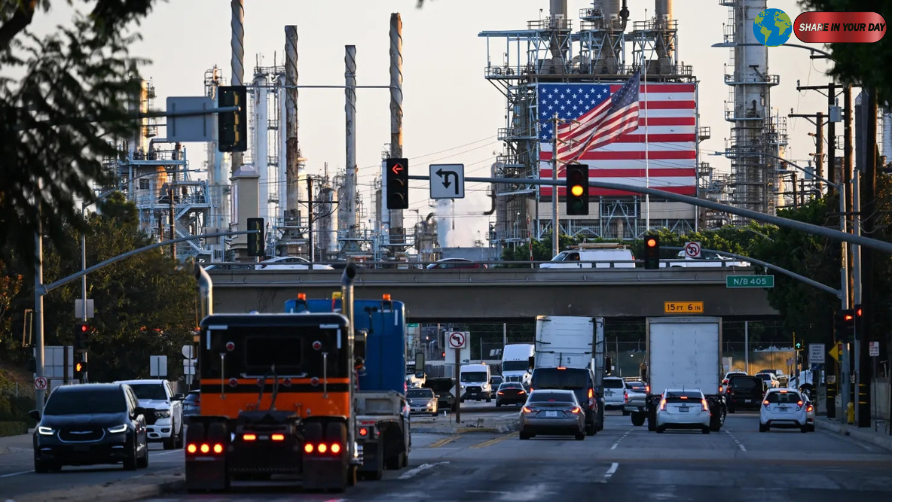
The proposal is aimed at increasing the amount of diesel available to American consumers, particularly farmers, truckers and other businesses that depend heavily on the fuel. However, analysts and industry representatives have warned that restricting exports could also create unintended effects, including pressure on gasoline prices and refinery operations.
The debate comes at a sensitive moment for global energy markets. Disruptions connected to the war involving Iran, problems affecting Russian refining capacity and the resulting strain on international fuel supplies have pushed diesel prices sharply higher.
For consumers, the central question is whether keeping more diesel inside the United States would provide meaningful relief at the pump or whether the policy could eventually create additional supply problems.
Diesel Export Ban Debate Intensifies
Trump’s latest comments indicate that the administration has not abandoned the idea.
Speaking near Chicago on Sept. 27, Trump said he was looking at a diesel export restriction “very seriously” and acknowledged that such a measure could potentially increase gasoline prices. His comments followed days of discussions among senior administration officials about possible ways to ease fuel costs.
The administration has not announced a final decision.
Treasury Secretary Scott Bessent previously confirmed that officials were examining whether a full or partial restriction would be feasible given the country’s refining capacity. The administration has also considered how long such a measure could remain in place without disrupting domestic fuel production.
That distinction is important.
A proposal under consideration is not the same as an implemented policy. Until the administration announces specific restrictions, refiners, fuel distributors and consumers cannot know precisely how the market would respond.
Why U.S. Diesel Prices Are So High
Diesel has become one of the biggest pressure points in the U.S. energy market.
According to reports citing AAA data, the national average price for diesel reached about $6.51 per gallon in late September. The Washington Post reported an even higher record of $6.53 per gallon earlier in the week.
The increase is connected to broader global supply disruptions rather than a single domestic factor.
The conflict involving Iran has disrupted oil flows and contributed to uncertainty around the Strait of Hormuz, one of the world’s most important energy shipping routes. At the same time, attacks on Russian refineries have affected supplies of refined petroleum products.
Oil prices also rose sharply on Sept. 28 after Trump rejected an Iranian proposal concerning the reopening of the Strait of Hormuz. Brent crude moved above $107 a barrel during trading, adding another source of pressure to global energy markets.
Because diesel is produced from crude oil through the refining process, disruptions affecting either crude supplies or refinery capacity can influence diesel availability and prices.
What a Diesel Export Ban Would Do
The basic argument behind the proposal is straightforward.
The United States exports large quantities of refined petroleum products. Restricting those exports could leave more diesel inside the country, potentially increasing domestic supply.
If domestic inventories rise, wholesale diesel prices could decline. That could provide temporary relief for industries that use large quantities of diesel.
Farmers are particularly sensitive to diesel costs because agricultural machinery relies heavily on the fuel. Trucking companies also face substantial diesel expenses because long-haul freight operations consume large quantities of fuel.
A lower diesel price could therefore reduce operating costs for transportation and agriculture.
However, the market is more complicated than simply redirecting fuel from foreign buyers to American consumers.
U.S. Refiners Face a Complicated Choice
A major issue is refinery economics.
Refineries do not simply produce diesel in isolation. They process crude oil into a range of products, including gasoline, diesel and jet fuel.
If exports of diesel were suddenly restricted, refiners could face a situation in which they have more diesel available domestically than the market can immediately absorb.
That could reduce the incentive to maintain maximum production.
Reuters reported that analysts have warned a diesel export ban could disrupt refinery operations and potentially worsen fuel-market problems instead of solving them.
The Washington Post similarly reported that the United States’ position as the world’s largest diesel exporter means restrictions could affect both domestic and international fuel markets.
This is one of the key arguments against a blanket ban.
A policy that initially increases domestic diesel supply could eventually encourage refiners to reduce production if they cannot profitably sell the resulting fuel abroad.
Diesel Export Ban Could Affect Gasoline Prices
Gasoline is another major concern.
Trump himself acknowledged that restricting diesel exports could lead to higher gasoline prices. The reason is connected to how refineries operate.
Gasoline, diesel and other refined fuels are produced from the same crude-oil refining system. A major disruption to the market for one product can therefore affect the economics of producing the others.
If refiners reduce overall processing because of weaker diesel economics, gasoline production could also be affected.
That could tighten gasoline supplies and put upward pressure on gasoline prices.
The potential trade-off is therefore central to the debate: a diesel export restriction could provide some short-term relief for diesel consumers while creating risks for gasoline prices and broader fuel availability.
Industry Groups Push Back on Export Restrictions
Major U.S. energy and business organizations have publicly opposed calls for a broad diesel export ban.
More than 30 business, energy and manufacturing groups signed a letter urging Trump not to restrict exports of diesel and other fuels, according to the American Fuel & Petrochemical Manufacturers. The organizations argued that export restrictions could reduce production, tighten supplies and increase costs for consumers, farmers and truckers.
The coalition includes several major energy and industry associations.
Their argument centers on the role of the United States in global refined-fuel markets. With other refining capacity disrupted, American refiners have increasingly supplied international buyers.
Industry groups say cutting exports could remove an important source of fuel from countries that currently depend on U.S. supplies.
That could push prices higher outside the United States while also changing incentives for American refiners.
The U.S. Has Become an Important Global Diesel Supplier
The export question is particularly significant because of the scale of U.S. diesel shipments.
The United States is the world’s largest diesel exporter, and exports have increased as international fuel supplies have become more constrained. The Strait Times reported that U.S. diesel exports reached a weekly record close to 2 million barrels per day in August.
Other reports have placed average U.S. distillate exports at roughly 1.4 million barrels per day, with Latin America and Europe among the major destinations.
That means an American export restriction would not be limited to the U.S. market.
Countries that rely on American refined products would need to find alternative supplies. Depending on the availability of European, Asian or Middle Eastern fuel, that could increase international diesel prices.
The policy could therefore have consequences well beyond the American pump.
Trump Administration Considers Alternatives
The administration is not necessarily limited to a complete export ban.
Officials have discussed whether a temporary or partial restriction could achieve some of the desired effect without creating the same level of disruption as a blanket prohibition.
Energy Secretary Chris Wright has previously indicated a preference for voluntary restraint rather than an outright ban. Other senior administration officials have also been examining the potential economic impact of different approaches.
A voluntary arrangement would allow refiners to reduce exports without formally prohibiting international shipments.
Such a policy could be more flexible, although its effectiveness would depend on how much fuel companies actually keep in the domestic market.
Another possible approach would involve temporary measures designed specifically around periods of unusually high demand.
Fall Harvest Raises Pressure on Diesel Supplies
Timing is another important factor.
The debate is occurring during the U.S. fall harvest season, when agricultural producers have significant diesel requirements.
Farm machinery depends on diesel for tractors, combines and other equipment. Higher fuel prices can therefore increase farmers’ operating costs at exactly the time when large amounts of fuel are needed.
Several lawmakers from agricultural states have urged the administration to consider export restrictions for that reason.
The political pressure comes as households and businesses are already dealing with elevated energy costs.
For farmers, however, diesel is not simply a transportation expense. It is a direct production cost that can influence the economics of planting, harvesting and transporting crops.
Diesel Prices Affect More Than Drivers
Diesel’s impact extends far beyond gas stations.
Trucks move food, consumer goods, construction materials and industrial products throughout the United States. Higher diesel prices increase the cost of operating those vehicles.
Those costs can eventually be reflected in shipping rates and the prices of goods.
Construction companies also rely heavily on diesel-powered machinery. Mining operations, agricultural businesses and some generators depend on diesel as well.
This means that prolonged diesel inflation can feed into broader consumer-price pressures.
That is one reason the current debate has attracted attention beyond the oil industry.
Global Oil Markets Add Another Risk
The proposed diesel export ban is being considered while crude markets are already unusually volatile.
On Sept. 28, Brent crude climbed more than 3% after Trump rejected an Iranian proposal involving the Strait of Hormuz. Reuters reported that Brent rose above $107 per barrel as markets reacted to the latest developments in the conflict.
The Strait of Hormuz is particularly important because of the volume of oil and energy products that normally pass through the waterway.
Any prolonged disruption can affect crude prices, shipping costs and refined-product markets.
That makes the timing of a potential U.S. export restriction particularly significant.
If global supplies remain tight, removing a major source of diesel exports could increase international competition for alternative supplies.
What Consumers Could See If a Ban Happens
The immediate effect would depend on the structure and duration of the policy.
A short-term restriction could increase domestic diesel availability and put downward pressure on diesel prices if inventories rise.
However, the longer-term effect could be different.
If refiners respond by reducing production, the initial benefit could fade. At the same time, gasoline prices could face upward pressure if overall refinery output declines.
International diesel prices could also increase as foreign buyers compete for alternative supplies.
The precise outcome would depend on several variables, including refinery utilization, domestic inventories, crude prices, export volumes and the duration of any restriction.
For that reason, economists and energy analysts have generally treated the potential policy as a complicated market intervention rather than a simple solution to high fuel prices.
Energy Industry Seeks Different Solutions
Energy companies and industry groups have suggested alternatives to an export ban.
One proposal mentioned by industry representatives is reducing or suspending the federal diesel excise tax. The argument is that a tax reduction could directly lower the price paid by consumers without interfering with international fuel flows.
Such a measure would have its own fiscal implications, however.
Other potential approaches include encouraging additional refinery output, addressing transportation bottlenecks and improving the availability of crude oil and refined products.
The administration is weighing the broader market consequences as it considers its options.
No Final Diesel Export Ban Has Been Announced
For now, the most important point is that the United States has not announced a final diesel export ban.
Trump has said he is seriously considering the measure, while officials have examined whether a full or partial restriction would be practical.
The administration’s eventual decision could depend on fuel prices, refinery capacity, domestic inventories and developments in global oil markets.
The proposal also remains part of a wider debate over how the United States should respond to an unusually tight global energy market.
What Happens Next
The coming weeks could provide a clearer picture of whether the administration chooses an outright ban, a partial restriction, voluntary limits or another approach.
Markets will likely watch several indicators closely.
These include U.S. diesel inventories, refinery utilization rates, wholesale diesel prices and gasoline prices. International developments involving Iran, Russia and major shipping routes will also remain important.
If the administration introduces restrictions, refiners and fuel traders would have to adjust quickly.
If officials decide against a ban, attention could shift toward other measures designed to lower domestic fuel costs.
Either way, the decision will have implications beyond the diesel pump.
Diesel Export Ban Debate Reflects a Wider Energy Challenge
The diesel export ban debate highlights the difficult choices facing the U.S. energy market in late September 2026.
The administration is seeking ways to address record-high diesel prices that are affecting farmers, truckers and other fuel-intensive industries. Keeping more diesel at home could increase domestic supply in the short term.
At the same time, the United States plays a major role in supplying refined fuel to the global market. Restricting exports could therefore affect international prices, refinery economics and potentially the cost of other fuels in the United States.
The uncertainty is compounded by rising crude prices and continued geopolitical disruption.
For consumers, the outcome will ultimately depend on how policymakers balance domestic fuel availability with the broader structure of the energy market.
For now, Trump is considering the option, but no final export ban has been announced. The administration’s next decision could have significant consequences for diesel prices, gasoline markets and fuel supplies in the United States and abroad.