Knicks Frontcourt Depth: 3 Reasons for Optimism Ahead of Title Defense
The New York Knicks are preparing to defend their NBA championship with a roster that retains much of the championship-winning core, but one significant offseason departure has raised questions about their ability to maintain their frontcourt strength throughout the 2026-27 campaign.
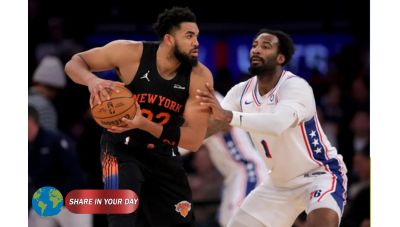
Mitchell Robinson’s departure to the Boston Celtics represents a meaningful change for a team that relied on his rebounding, rim protection and physical presence during its championship run. However, the Knicks have responded by bringing in veteran center Andre Drummond, while also maintaining a collection of versatile forwards who could give head coach Mike Brown additional lineup options.
The situation presents an interesting challenge for New York. Robinson was an important contributor, particularly during the postseason, but his limited playing time and injury history created questions about how much the team could depend on him over a full season.
According to NBA analyst Kevin O’Connor of Yahoo Sports, there are three reasons for optimism surrounding the Knicks’ frontcourt: Drummond’s expanded offensive skill set, Brown’s willingness to experiment with different lineups and the financial flexibility New York preserved by choosing a more affordable replacement.
These factors do not eliminate the risks associated with losing Robinson. Nevertheless, they provide a framework for understanding why the defending champions could remain competitive even with a different frontcourt rotation.
Knicks Frontcourt Depth Faces a Major Test After Robinson’s Departure
Robinson’s move to Boston was one of the most consequential changes to New York’s championship roster.
The longtime Knicks center established himself as a valuable defensive presence through his shot-blocking, offensive rebounding and ability to protect the basket. His physical style provided a useful complement to Karl-Anthony Towns, whose offensive versatility allowed New York to create different matchup problems for opposing defenses.
However, Robinson’s role was not always consistent.
During the 2026 regular season, he averaged 19.6 minutes per game. That figure dropped to 13.9 minutes during the playoffs, reflecting both injury concerns and the tactical decisions required to maximize the team’s offensive combinations.
His struggles at the free-throw line also created limitations in certain situations, particularly when opponents could exploit intentional fouling strategies.
Despite those challenges, Robinson remained a valuable defensive option. His ability to challenge shots around the rim and contest perimeter attempts made him particularly useful against larger opponents.
His departure therefore leaves New York with a difficult combination of needs: finding a reliable backup center, maintaining defensive resistance and ensuring that Towns does not have to shoulder an excessive workload.
The Knicks’ response has been to add Drummond while exploring how their existing players can contribute in different roles.
1. Andre Drummond Gives the Knicks a Different Offensive Dimension
The addition of Drummond is the first major reason for optimism about New York’s frontcourt.
Although he does not replicate everything Robinson provided, Drummond brings a different collection of skills that could benefit the team’s second unit.
His reputation as an elite rebounder remains central to his value. Like Robinson, he can create additional possessions through offensive boards and help the Knicks control the glass against opposing teams.
However, Drummond also offers some offensive versatility that could allow Brown to experiment with different approaches.
Drummond’s Developing Shooting Ability
One of the most notable developments in Drummond’s game has been his willingness to attempt three-point shots.
He made 32 of his 90 attempts from beyond the arc during the previous season, a significant development for a player whose offensive role historically centered on finishing near the basket.
Although that percentage does not establish him as a high-volume perimeter threat, it gives New York another potential option when constructing offensive lineups.
His improved free-throw shooting is also relevant. Drummond converted more than 60% of his attempts in consecutive seasons, providing a contrast with Robinson’s difficulties at the line.
These developments could make him easier to incorporate into different offensive situations.
A More Versatile Role in the Second Unit
Drummond can contribute through screening, rolling toward the basket, passing from handoff situations and positioning himself in the corner.
That variety could help the Knicks avoid becoming overly predictable when Towns rests.
Robinson’s offensive role was more closely associated with running the floor and finishing around the rim. Drummond, meanwhile, offers Brown additional opportunities to involve his backup center in half-court actions.
The distinction matters because the Knicks do not necessarily need Drummond to reproduce Robinson’s entire contribution.
Instead, they need him to provide dependable minutes while allowing the team’s other players to maintain their established responsibilities.
His role will likely remain limited, but his different skill set could become valuable in specific matchups.
2. Mike Brown’s Lineup Experimentation Could Unlock More Frontcourt Options
The second reason for optimism centers on Brown’s coaching philosophy.
Throughout his career, Brown has demonstrated a willingness to adjust rotations and experiment with unconventional combinations when circumstances demand it.
That flexibility could become especially important as the Knicks attempt to replace Robinson’s defensive contributions without sacrificing their offensive efficiency.
New York already has several players capable of operating in different positions, giving the coaching staff opportunities to develop lineups that do not rely exclusively on traditional center rotations.
OG Anunoby as a Small-Ball Center
One possibility involves using OG Anunoby at center in selected situations.
Anunoby’s physical strength, defensive versatility and perimeter shooting could make him an interesting option in small-ball formations.
Playing him at the five would allow the Knicks to switch more defensive actions while placing additional shooters on the floor.
Such combinations could create problems for opponents who rely heavily on conventional big men.
However, using Anunoby as a small-ball center would require careful matchup management. Larger centers could create rebounding and interior-scoring challenges, making the approach more suitable for specific situations rather than a permanent solution.
Even so, the option provides Brown with another tactical tool.
Mohamed Diawara’s Development Could Become Important
Young forward Mohamed Diawara represents another potential source of frontcourt flexibility.
Diawara showed encouraging signs during his rookie season, including the ability to contribute from the perimeter.
His three-point shooting and 7-foot-4 wingspan offer an intriguing combination of offensive spacing and defensive versatility.
The Knicks could benefit from giving him additional opportunities alongside a traditional center, allowing him to develop as a power forward rather than relying exclusively on smaller lineups.
His role will depend on his progress during training camp and the regular season. Nevertheless, the possibility of a stronger second-year contribution gives New York another avenue for improving its frontcourt rotation.
Additional Center Options
James Wiseman and Drew Eubanks also represent potential options for the minutes that require a traditional rim-running center.
Their ability to provide size and athleticism could help New York manage stretches when Drummond is unavailable or when particular matchups demand a different approach.
The Knicks will need to determine how these players fit into the rotation, but having multiple candidates provides flexibility during the regular season.
Ultimately, Brown’s willingness to experiment could allow New York to address its frontcourt needs through a combination of players rather than relying on one direct replacement for Robinson.
3. Financial Flexibility Helped New York Preserve Its Championship Core
![Scott Perry Named New Sacramento Kings GM, Tasked With Reviving Playoff Hopes – [your]NEWS](https://images.openai.com/static-rsc-4/glP16AeC_HQoTRdITi44KMaNC3Lwr09F23OXfkLmx7TcciyVD6MixJ8mNrd-bGl6Gp4WZvqSsplk4B5RPtaM_kmJbEsCwsEyS4muTvlEIw-qXoaZ3TUlPDrApqPAQEN-jr0XEA8C-Wn0AbAurwYashLj_d4lyQgBE64YXKGLZCM?purpose=inline)
The third reason for optimism involves the financial implications of Robinson’s departure.
Retaining the center on his new three-year, $47.4 million contract would have pushed New York above the NBA’s second-apron threshold, creating additional restrictions on the team’s roster-building flexibility.
Instead, the Knicks signed Drummond to a veteran minimum contract, allowing them to preserve financial room while retaining several important members of their championship rotation.
The decision was not simply about replacing one player with another. It reflected a broader strategy focused on maintaining depth across multiple positions.
New York retained guards and perimeter contributors including Jose Alvarado, Landry Shamet and Jordan Clarkson, while also keeping Diawara.
Those players could help compensate for the loss of Robinson by giving Brown additional choices when constructing smaller lineups.
Why Roster Balance Matters
A team’s frontcourt cannot be evaluated independently of its guards and wings.
The ability to create effective offensive possessions, maintain spacing and handle defensive assignments depends on how all five players function together.
By preserving its perimeter depth, New York has maintained several options that could help Brown adjust when traditional frontcourt combinations are less effective.
For example, a smaller lineup featuring additional ball-handlers and shooters could reduce the need for a conventional backup center in certain matchups.
That does not eliminate the importance of interior defense or rebounding. However, it provides a different way to manage the rotation.
The financial decision also gives the organization more flexibility to evaluate its needs as the season progresses.
Rather than committing a substantial portion of its resources to one position, the Knicks have maintained a broader collection of contributors.
The strategy carries risks, particularly if injuries expose a lack of reliable size. Nevertheless, it demonstrates how roster construction involves balancing individual talent with the overall needs of a championship team.
Karl-Anthony Towns Remains the Foundation of the Frontcourt
Regardless of how the backup rotation develops, Towns remains the central figure in New York’s frontcourt.
His scoring ability, rebounding and perimeter shooting give the Knicks a foundation that allows them to play with different combinations around him.
During the 2025-26 season, Towns averaged 20.1 points and 11.9 rebounds per game, according to the NBA’s season preview.
NBA.com
His offensive versatility was particularly important during the championship run, as New York used him to create advantages against opposing big men.
Towns can operate near the basket, stretch the floor with his shooting and serve as a passing option in different offensive formations.
Those skills make him especially valuable in a system that may require greater flexibility from its supporting frontcourt players.
However, the Knicks must also manage his workload carefully.
A successful title defense requires consistency over an extended regular season before the demands of the playoffs intensify.
If Towns is forced to absorb too many minutes because of limited backup options, the team could face challenges later in the campaign.
That is why Drummond’s availability and the development of younger players will be important elements of New York’s overall strategy.
What the Knicks Must Improve Before the Playoffs

Although there are legitimate reasons for optimism, the Knicks’ frontcourt situation is not without concerns.
Robinson’s defensive impact cannot be completely replaced by Drummond’s offensive versatility.
The former Knicks center provided a combination of rim protection, athleticism and defensive mobility that could become particularly important against elite opponents.
Drummond brings rebounding and additional offensive options, but his defensive profile differs from Robinson’s.
New York must also determine whether its younger players can handle meaningful responsibilities against experienced playoff competition.
Diawara’s development could help, but relying on a second-year forward to solve every frontcourt problem would place considerable pressure on his progress.
The coaching staff will therefore need to evaluate several factors throughout the regular season:
- Whether Drummond can remain effective in a limited role.
- How frequently Towns needs to play alongside another traditional big.
- Whether Anunoby can provide reliable small-ball center minutes.
- How quickly Diawara develops into a consistent rotation contributor.
- Whether additional depth becomes necessary before the trade deadline.
These questions will shape the Knicks’ ability to maintain their championship-level performance.
The regular season should provide Brown with opportunities to test different combinations before the postseason demands a more defined rotation.
Knicks Frontcourt Depth: A Different Path to Defending the Championship
The Knicks enter the 2026-27 season facing a frontcourt challenge that cannot be dismissed, but the departure of Robinson does not automatically mean their overall rotation will become less effective.
Drummond offers a different offensive skill set, Brown has several versatile players available for experimental lineups, and the front office preserved valuable depth by avoiding a more expensive commitment at center.
Those three factors form the basis of the optimism surrounding New York’s title defense.
The team will still need dependable rebounding, interior defense and consistent contributions from its supporting big men. Injuries or unfavorable matchups could expose the limitations of its current rotation.
Nevertheless, the Knicks have options beyond simply asking one player to replicate everything Robinson provided.
With Towns anchoring the frontcourt and a collection of experienced guards and wings supporting him, New York can explore different approaches throughout the season.
Whether those adjustments prove sufficient will become clearer as the defending champions face the demands of another long NBA campaign.
For now, the Knicks’ frontcourt remains a work in progress, but one with several potential solutions built into the roster.