Alamata Capture: 5 Key Facts on Tigray Crisis
The Alamata capture has emerged as a major development in Ethiopia’s renewed Tigray conflict, with pro-government forces claiming control of the strategically important town after days of fighting across northern Ethiopia. The development represents a reversal following a recent offensive by Tigrayan forces and raises fresh questions about the direction of the conflict and the future of the fragile 2022 peace agreement.
According to Reuters, Ethiopia’s military and allied militiamen entered Alamata, a town roughly 120 kilometers (75 miles) south of Tigray’s regional capital, Mekelle. The pro-government Tigrai Peace Force published video showing soldiers moving through the streets while carrying Ethiopian flags. Reuters said the footage was verified in its later reporting, while other early accounts noted uncertainty over the extent of consolidated control.
The reported Alamata capture comes during the most serious escalation in northern Ethiopia since the 2020-2022 Tigray war. Fighting has spread beyond Tigray into neighboring Amhara and Afar regions, while telecommunications disruptions and rising numbers of wounded civilians and combatants have intensified concerns about a wider humanitarian emergency.
1. Alamata Capture Changes the Battlefield
Alamata is strategically important because of its location near Tigray’s southern boundary with Amhara. The town sits along an important transportation and supply route, making it significant for the movement of troops, food and fuel.
Reuters reported that Alamata has changed hands several times during Ethiopia’s previous Tigray conflict. Its location also makes it relevant to any military movement toward Mekelle, the regional capital located approximately 120 kilometers to the north.
The Alamata capture therefore has implications beyond the town itself. Control of important roads and logistics hubs can influence the ability of opposing forces to reinforce positions, transport supplies and maintain pressure across multiple fronts.
However, battlefield developments in the region remain fluid. The fighting has involved federal forces, allied militias and Tigrayan forces operating across several areas. Communications disruptions have also made independent verification of events more difficult.
The significance of Alamata is partly historical. During the 2020-2022 war, the town repeatedly changed hands as federal, regional and allied forces fought for control of territory across northern Ethiopia. Its latest change in control comes after Tigrayan forces launched a new offensive last week.
2. Tigrayan Forces Had Recently Expanded Their Offensive
The latest fighting did not begin with the Alamata capture.
Tigrayan forces had launched attacks across several fronts in the preceding days, including areas of Tigray as well as neighboring Amhara and Afar. The renewed offensive represented a dramatic escalation after more than three years of relative calm following the 2022 peace agreement.
Reuters reported that Tigrayan forces had also seized airports in Mekelle, Axum and Shire earlier in the escalation. Ethiopian Airlines subsequently suspended commercial flights to those locations because of the security situation.
The African Union responded to the renewed violence by calling for restraint and an immediate de-escalation. In a September 23 statement, the African Union Commission said the 2022 Pretoria Agreement remained a cornerstone for peace, stability and reconciliation in Ethiopia. It also called for direct talks to resume.
The rapid sequence of territorial changes demonstrates how quickly the security situation has deteriorated.
For civilians, the military developments have brought uncertainty over transportation, communications, access to healthcare and the availability of basic goods.
3. The Pretoria Peace Agreement Is Under Severe Pressure
The Alamata capture is taking place against the backdrop of a peace process that had halted large-scale fighting in Tigray.
The Pretoria Agreement was signed in November 2022 under African Union auspices after two years of devastating war between Ethiopian federal forces and the Tigray People’s Liberation Front, commonly known as the TPLF.
The agreement helped stop the major fighting and created a framework for a political settlement. Yet tensions between the federal government and Tigrayan political and military actors continued.
The latest escalation now threatens to reverse many of the gains made since the agreement.
The African Union has explicitly urged the parties to return to dialogue and warned that military actions risk undermining the progress achieved under the Pretoria framework.
The renewed conflict is particularly significant because the previous war caused enormous human suffering and displacement. Reuters has reported estimates of hundreds of thousands of deaths during the 2020-2022 conflict, while the humanitarian consequences continued long after the guns fell silent.
The latest fighting therefore carries consequences well beyond the immediate military contest over Alamata.
4. Regional Tensions Are Adding Another Layer
The conflict is also occurring within a wider period of instability in the Horn of Africa.
Ethiopian military chief Field Marshal Birhanu Jula has accused Eritrea, Sudan and Egypt of supporting forces opposed to the federal government. Eritrea and Sudan have denied the allegations, while Egypt had not immediately responded to the latest accusation reported by Reuters.
These allegations are important because Ethiopia’s relations with its neighbors have already been strained by disputes involving security, borders, the Red Sea and regional political influence.
Eritrea has particular significance because it shares a border with Tigray and was involved on the federal side during the earlier Tigray war. Relations between Addis Ababa and Asmara have subsequently deteriorated.
Meanwhile, Sudan remains engulfed in its own conflict, adding another major source of instability along Ethiopia’s western border.
Egypt also has longstanding strategic disagreements with Ethiopia, particularly over the Grand Ethiopian Renaissance Dam and Nile water issues.
As a result, developments in Tigray are being watched not only as an Ethiopian internal conflict but also as a potential source of wider regional instability.
Importantly, accusations of foreign involvement remain contested. Claims made by one side should not automatically be treated as independently established facts.
5. Humanitarian Concerns Are Growing Again
Perhaps the most serious consequence of the renewed fighting is the threat to civilians.
Tigray was already struggling to recover from the humanitarian damage caused by the 2020-2022 war. The latest escalation has brought renewed disruption to transportation, communications and healthcare.
Reuters reported that internet and telephone networks in Tigray remained disrupted for a fourth consecutive day. The loss of telecommunications is especially significant during active fighting because civilians may struggle to contact relatives, emergency services and humanitarian organizations.
Medical organizations have also reported a sharp increase in war-related casualties.
The Associated Press reported that Médecins Sans Frontières, or Doctors Without Borders, saw the number of wounded patients at hospitals in Korem and Alamata rise from about 180 to more than 420 over a 48-hour period. Another hospital in northern Ethiopia received hundreds more wounded patients.
The humanitarian situation is further complicated by displacement.
UNHCR data for May 2026 listed roughly 749,500 internally displaced people in Tigray, illustrating the scale of displacement that remained even before the latest escalation.
That existing displacement means another major wave of fighting could place additional pressure on communities already struggling with damaged infrastructure, limited services and economic disruption.
What the Alamata Capture Means for Mekelle
The strategic importance of Alamata is closely connected to Mekelle.
Mekelle is Tigray’s regional capital and the political center of the region. Reuters described Alamata as an important supply hub while reporting that pro-government forces were pressing northward toward Mekelle.
That does not mean that control of Alamata automatically determines the future of Mekelle. The terrain, military positions, supply networks and political calculations across Tigray remain complex.
Nevertheless, the Alamata capture gives federal-aligned forces an important position in southern Tigray.
The development also follows a period in which Tigrayan forces had made gains elsewhere. Earlier in the escalation, Tigrayan fighters seized strategic locations and airports, while federal authorities reported counteroffensives in several areas.
The result is a rapidly changing battlefield in which control of individual towns can shift quickly.
For residents of Mekelle and surrounding communities, the uncertainty is particularly concerning because the region’s major population centers remain vulnerable to disruptions in transportation and essential services.
Why the Latest Fighting Matters Beyond Ethiopia
The renewed Tigray conflict has implications for the broader Horn of Africa.
Ethiopia is one of Africa’s most populous countries and plays an important political, economic and security role in the region. Prolonged instability in its north could affect neighboring states, humanitarian operations and regional trade routes.
The conflict is also occurring alongside Sudan’s devastating civil war and continuing disputes over Red Sea access.
That combination makes the situation particularly sensitive.
The African Union has already called on neighboring countries to avoid actions that could contribute to escalation and instead support dialogue and confidence-building.
International humanitarian organizations face another challenge: reaching communities during active fighting.
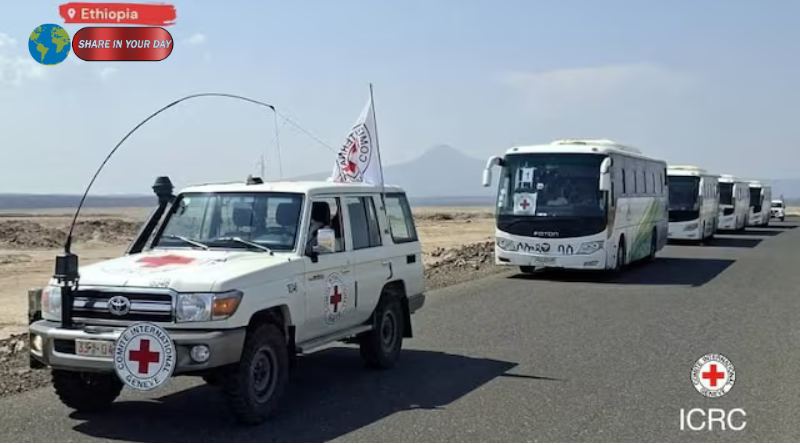
The International Committee of the Red Cross said it had transferred 161 people from Mekelle to Semera in neighboring Afar, including African Union monitors, federal police personnel, Ethiopian Airlines employees and Red Cross personnel.
Such evacuations highlight how quickly normal civilian and institutional activity can become impossible when fighting expands.
What Happens Next?
The immediate question is whether the Alamata capture will lead to a broader federal advance or become another temporary shift in a fluid conflict.
Much will depend on the ability of both sides to reinforce their positions and on whether diplomatic efforts can halt further escalation.
The African Union has called for direct talks, while international actors have urged both sides to step back from military confrontation.
At the same time, communications problems mean information coming from the battlefield can be delayed, incomplete or difficult to independently verify.
That makes careful reporting particularly important.
The current situation should therefore be understood as an evolving conflict rather than a settled military outcome. The reported takeover of Alamata is significant, but the broader struggle over Tigray’s territory, political authority and security arrangements remains unresolved.
For civilians, the most immediate concern is whether the renewed fighting can be contained before it produces another humanitarian disaster on the scale of the previous war.
The Bigger Picture
The Alamata capture is one of the clearest signs that northern Ethiopia’s fragile post-2022 peace is under severe pressure.
The town’s strategic location gives its reported change in control military and logistical importance. More broadly, however, the development reflects a much larger breakdown in relations between Ethiopia’s federal authorities and Tigrayan forces.
The fighting has already disrupted communications, affected air travel, increased pressure on hospitals and raised concerns about displacement. Regional accusations involving Eritrea, Sudan and Egypt add another layer of uncertainty.
The African Union continues to identify the Pretoria Agreement as the framework for resolving the crisis, while calling for immediate de-escalation and renewed dialogue.
Whether the latest battlefield developments remain limited or develop into a wider conflict will depend heavily on events in the coming days.
For now, Alamata has once again become a focal point in Ethiopia’s long-running Tigray crisis — and its latest change in control is being closely watched across the Horn of Africa.