NFL DHS Video: League Demands Dawkins Clip Removal
The NFL has asked the U.S. Department of Homeland Security to remove a social media video featuring Hall of Fame safety Brian Dawkins after the footage was used in a post about immigration enforcement at the U.S. border. The NFL DHS video dispute emerged Monday after the Department of Homeland Security posted highlights of the former Philadelphia Eagles and Denver Broncos star in connection with a purported migrant caravan.
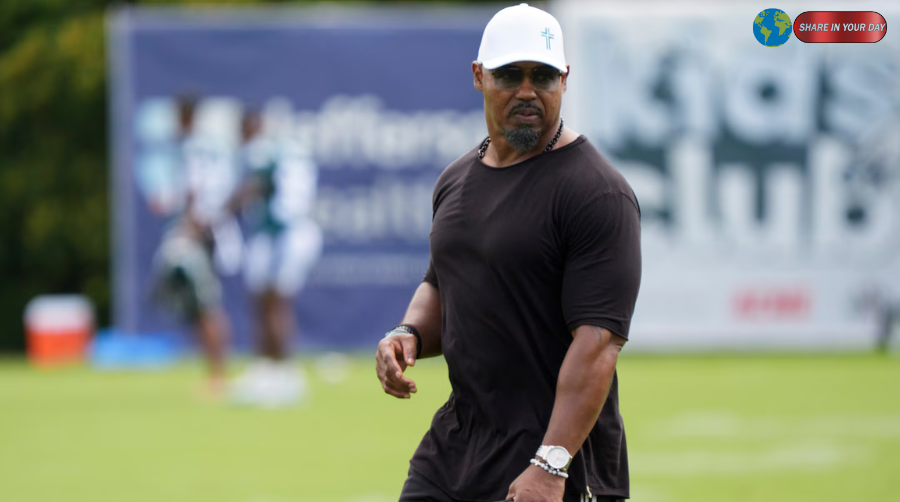
The video showed Dawkins’ pregame entrance and several of his most aggressive tackles from his NFL career. DHS accompanied the footage with the caption, “Our time has come,” echoing words heard in Dawkins’ pregame walkout.
The National Football League subsequently requested that DHS take the video down, according to NFL spokesman Brian McCarthy.
Dawkins also said he had not authorized the use of his likeness or highlights for the government post.
The dispute has raised questions about the use of professional sports footage in government social media campaigns, particularly when the footage is repurposed for political or immigration-related messaging.
NFL DHS Video Sparks Copyright Dispute
The central issue in the NFL DHS video controversy is the use of footage from Dawkins’ football career in a government social media post.
According to the Associated Press, the NFL confirmed Monday that it had asked DHS to remove the video. As of Monday evening, the department had not removed the post.
The video was published Sunday and featured Dawkins walking onto the field before a game while chanting, “The time has come.” The footage then transitioned into a montage of hard hits from his career. DHS used the material while discussing a reported group of migrants approaching the U.S. border.
DHS added football terminology to its response, saying that the U.S. Border Patrol was “playing lockdown defense” at the border.
The NFL’s response was direct: The league said it had requested that DHS remove the video.
That request reflects the NFL’s longstanding control over its game footage and other league-owned media. However, the specific legal status of the video and whether any copyright or other intellectual-property violation occurred would depend on the rights associated with the footage and how it was used.
Brian Dawkins Says He Did Not Give Permission
Dawkins separately addressed the issue.
The former Eagles safety said he had not given permission for DHS to use his likeness in the post. CBS Philadelphia reported that Dawkins said he had “respectfully not given permission” for DHS to use his name, image and likeness.
That distinction is important because the dispute involves more than the NFL’s ownership of video footage.
Dawkins’ identity and likeness are also connected to the footage. Even if an organization had access to a particular video clip, the use of a former athlete’s image in a government message can raise separate questions about authorization and endorsement.
Dawkins retired from professional football in 2011 after a 16-season career with the Eagles and Denver Broncos. He was selected to nine Pro Bowls and named first-team All-Pro five times, according to AP. He was inducted into the Pro Football Hall of Fame in 2018.
His reputation as one of the most recognizable defensive players in Eagles history made the footage particularly identifiable to NFL fans.
What the DHS Post Was About
DHS used the Dawkins footage in response to a report concerning a purported migrant caravan.
According to reporting from the Associated Press, DHS said the U.S. Border Patrol was tracking a group of migrants coming from Honduras. The department said the group had departed San Pedro Sula and that federal authorities were monitoring its movement.
The Washington Post reported that the original DHS post was connected to an unverified claim about a “huge migrant caravan” approaching the U.S. border. The agency’s social media response incorporated the football footage and the phrase “Our time has come.”
DHS did not address the NFL’s request for removal in the statement cited by AP.
The department instead emphasized its border-enforcement message, saying Border Patrol was tracking the group and using football terminology to describe its approach.
NFL DHS Video Draws Attention to Sports Footage
The incident is not the first time football footage has appeared in government messaging connected to the Trump administration.
The Washington Post and other outlets reported that a White House social media video earlier in 2026 used NFL and college football highlights alongside footage connected to military strikes against Iran.
One clip reportedly showed former Eagles cornerback Sheldon Brown delivering a famous hit on Reggie Bush during a 2006 playoff game.
The use of sports footage in that context generated attention because the original football footage was created as sports entertainment, while the government video placed it alongside military material.
The new Dawkins dispute is different in subject but similar in its use of recognizable football imagery to communicate a government message.
In the DHS case, the footage was used to communicate a border-enforcement theme.
Why Brian Dawkins Was Featured
Dawkins was known during his playing career for his physical style and emotional pregame entrances.
While playing for Philadelphia, he developed a reputation for his “Weapon X” persona. His pregame entrance often featured an intense performance before he took the field.
The DHS video used that imagery to reinforce its own message about border enforcement.
The Los Angeles Times reported that the department responded to questions about the footage by referring to Dawkins’ nickname and using football language in its statement. DHS said it was “playing lockdown defense at the border” and would use every “Weapon” at its disposal.
That wording directly connected Dawkins’ football identity with the department’s immigration-enforcement messaging.
However, Dawkins said he had not authorized that use of his likeness.
NFL Has Strict Control Over Its Footage
The NFL has significant commercial interests tied to its game footage.
NFL highlights are distributed through league-controlled media operations, broadcast partners and licensing arrangements. Game footage can be used by news organizations under applicable legal and licensing frameworks, while commercial and promotional uses can involve separate permissions.
The league’s request to DHS therefore reflects its position that the government post should not remain online.
NFL spokesman Brian McCarthy confirmed the request but did not publicly detail the legal theory behind it in the statements reported Monday.
That means it is important to distinguish between what is confirmed and what remains unresolved.
It is confirmed that the NFL requested removal.
It is confirmed that Dawkins said he did not authorize the use of his likeness.
It is also confirmed that the video remained online as of Monday evening, according to AP.
Whether DHS ultimately removes the video, whether the parties reach an agreement, or whether the dispute develops into a formal legal matter remains to be seen.
Philadelphia Eagles Connection Adds Interest
The controversy has particular resonance in Philadelphia because Dawkins remains one of the most recognizable players in Eagles history.
He spent the majority of his career with Philadelphia before finishing his playing career with Denver. His nine Pro Bowl selections and five All-Pro honors helped establish him as one of the era’s most accomplished defensive backs.
The Eagles have not publicly commented on the dispute in the reporting available Monday.
For fans, however, the footage is immediately recognizable.
Dawkins’ pregame entrance was part of his identity as an Eagles player, making its appearance in a federal immigration-enforcement post particularly noticeable.
The Broader Question of Athlete Likeness
The NFL DHS video controversy also illustrates a broader issue involving athletes and government social media.
Athletes routinely have their images and highlights distributed through television broadcasts, sports websites and social platforms. However, the context in which those images appear can significantly change how viewers interpret them.
A highlight originally created to celebrate a defensive play can communicate something very different when paired with a government message.
That distinction is particularly relevant when the subject involves a controversial or politically significant issue.
Dawkins’ statement that he did not authorize the use provides a clear indication that he did not intend the footage to function as an endorsement of the DHS message.
At the same time, DHS’s use of the footage demonstrates how recognizable sports imagery can be repurposed to attract attention to government communications.
DHS Video Remained Online
As of Monday evening, the video had not been removed, according to AP.
The department’s statement did not directly respond to the NFL’s request. Instead, DHS continued to discuss its border-enforcement position and the migrant group it said Border Patrol was monitoring.
The Los Angeles Times similarly reported that both the original video and a follow-up image featuring Dawkins remained online Monday afternoon.
That leaves the immediate outcome unresolved.
The NFL has made its position clear by requesting removal. Dawkins has said he did not provide permission. DHS, meanwhile, had not indicated publicly that it would comply with the league’s request in the reporting available Monday.
What Happens Next
The next development will likely depend on whether DHS removes the post or whether the NFL takes additional steps.
If the video is removed, the dispute could end as a social-media and intellectual-property disagreement.
If it remains online, the league or Dawkins could potentially consider additional options, depending on the rights involved and the circumstances of the footage’s use.
No such legal action had been announced in the reporting available as of September 28.
For now, the facts are relatively straightforward.
DHS posted a video featuring Brian Dawkins’ NFL highlights in connection with a border-enforcement message. The NFL asked DHS to remove it. Dawkins said he did not authorize the use of his likeness. DHS said Border Patrol was tracking a migrant group and used football terminology in its response, but did not directly address the NFL’s removal request in the statement cited by AP.
The dispute places professional sports footage at the intersection of copyright, athlete likeness rights and government communication.
It also demonstrates how familiar sports imagery can take on a different meaning when placed in a political or government-policy context.
For the NFL, the immediate concern is the unauthorized use of its content. For Dawkins, the issue also involves the use of his personal identity and career imagery without his stated permission.
And for DHS, the video was part of its effort to communicate its border-enforcement message through social media.
The outcome of the NFL DHS video dispute will determine whether the footage remains available online or is removed following the league’s request.
Image ALT Text
NFL DHS video featuring Brian Dawkins highlights in immigration enforcement post
Suggested External Links
- Washington Post — NFL asks DHS to remove Brian Dawkins video
- Associated Press — NFL asks Homeland Security to take down video
- CBS Philadelphia — Brian Dawkins video and DHS dispute
- Los Angeles Times — NFL asks DHS to remove Dawkins video
Suggested Internal Links
Link naturally to existing articles on your website about:
- NFL news
- Philadelphia Eagles
- Brian Dawkins
- NFL copyright disputes
- U.S. immigration policy
- Department of Homeland Security
- Trump administration news
- NFL social media controversies