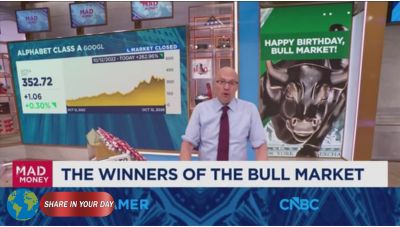
Jim Cramer Says the S&P 500’s Four-Year Bull Run Offers a Key Lesson for Investors
The S&P 500’s remarkable four-year advance has delivered an important message for investors, according to CNBC’s Jim Cramer: staying invested through periods of uncertainty can be more rewarding than repeatedly trying to predict the stock market’s next move.
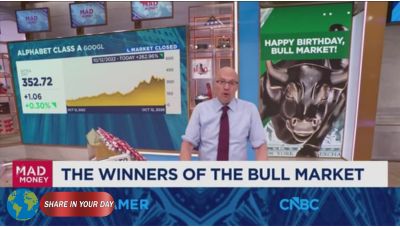
In a report published on October 12, 2026, Cramer reflected on the market’s performance since its October 2022 low, arguing that investors who resisted the temptation to sell during difficult periods benefited from the recovery that followed. The benchmark index has risen approximately 118% since that low, according to CNBC’s report.
The rally has unfolded through several episodes that raised concerns about the economic outlook, including aggressive Federal Reserve interest-rate increases, turmoil in the banking sector, trade-policy uncertainty and geopolitical tensions. Despite those challenges, US stocks recovered and eventually reached new records.
Cramer’s message comes as investors face a fresh set of questions about how long the rally can continue. While the S&P 500 remains near record territory, concerns about inflation, elevated interest rates and the concentration of gains in a relatively small group of technology companies have complicated the outlook.
The four-year advance illustrates the potential benefits of a long-term investment approach, but it does not guarantee that stocks will continue rising. Investors must still weigh their financial goals, risk tolerance and the possibility of market losses.
The Four-Year Rally That Rewarded Patient Investors
The current S&P 500 bull market began after the index reached a closing low on October 12, 2022. At the time, investors were dealing with elevated inflation, rising borrowing costs and growing fears that monetary tightening could push the US economy into a recession.
The Federal Reserve had raised interest rates sharply to control inflation, putting pressure on valuations across the stock market. Technology shares, which had benefited from years of low borrowing costs, faced particular scrutiny as investors reassessed the prices they were willing to pay for future growth.
Banking-sector instability added another layer of uncertainty in 2023. Concerns about financial institutions and the broader economic outlook encouraged investors to reconsider their exposure to riskier assets.
Yet the market eventually regained momentum.
According to CNBC’s report, the S&P 500 gained roughly 118% between its October 2022 low and the October 2026 anniversary of that turning point.
KhanList
The advance highlights a recurring challenge in investing: periods of severe pessimism can occur near market turning points, making it difficult to determine when conditions will improve.
Investors who sold during a downturn may have avoided some immediate losses, but they also risked missing the subsequent recovery. Those who maintained suitable long-term positions participated in the market’s rebound.
However, the lesson is not that investors should ignore every warning sign. Instead, the rally demonstrates why short-term headlines and long-term investment objectives do not always point in the same direction.
Why Cramer Emphasizes Staying Invested
Cramer’s central argument is that investors can undermine their own results by repeatedly attempting to time the market.
Market timing involves deciding when to sell investments before prices decline and when to buy again before prices recover. Although the strategy can appear attractive, it requires investors to make two difficult decisions correctly: when to leave the market and when to return.
Getting either decision wrong can reduce returns.
An investor who sells during a sharp decline may feel relieved initially. But if prices rebound before that investor buys again, the recovery can become more difficult to capture.
The same problem can arise when investors wait for economic conditions to become completely comfortable before returning to stocks. Markets frequently move ahead of the economic news, meaning prices may recover before uncertainty has fully disappeared.
Cramer’s observation about the four-year rally reinforces the importance of considering investments over a longer period rather than treating every negative headline as a signal to exit.
A long-term approach does not eliminate losses. Instead, it can help investors avoid making major portfolio decisions based solely on fear or excitement.
The approach also requires discipline. Remaining invested should not mean holding every stock indefinitely, ignoring deteriorating business fundamentals or accepting more risk than a household can afford.
Investors still need to review their allocations, maintain appropriate diversification and determine whether their holdings remain consistent with their objectives.
AI and Technology Have Helped Drive the Market Higher
Artificial intelligence has become one of the defining forces behind the recent US stock market rally.
Demand for AI computing infrastructure, advanced semiconductors, data centers and related technologies has supported investor interest in major technology companies. Businesses viewed as potential beneficiaries of AI investment have attracted substantial attention as investors assess the possibility of long-term revenue growth.
The trend has helped propel the broader index, but it has also raised questions about how widely distributed the gains have been.
A Reuters report published on October 12, 2026, noted that the S&P 500 had gained approximately 14% during the year, even as more than 40% of its constituent stocks had declined. The report highlighted the influence of AI-related and semiconductor companies on the index’s performance.
Reuters
That distinction matters because the S&P 500 is a market-capitalization-weighted index. Companies with larger market values have a greater influence on its overall performance than smaller constituents.
Consequently, a strong headline return does not necessarily mean that the typical stock has delivered comparable gains.
Investors holding broad index funds may benefit from the performance of the largest companies, but they also remain exposed to changes in market leadership. If heavily weighted technology shares weaken, their movements can have an outsized effect on the index.
The AI boom therefore offers both an explanation for the market’s strength and a reason for investors to examine the sources of that strength carefully.
A Strong Index Does Not Mean Every Stock Is Rising
The difference between the S&P 500’s headline performance and the results of its individual constituents is an important consideration for investors in 2026.
Reuters reported that the index’s advance had been concentrated in a relatively small group of AI-related and chipmaking companies. More than two-fifths of its stocks were down for the year, while the median constituent had posted a much smaller gain than the overall index.
Reuters
This pattern suggests that the market’s apparent strength can conceal weakness in parts of the economy and corporate sector.
For investors, the distinction can influence decisions about diversification. Someone holding a handful of large technology stocks may experience a very different outcome from someone invested across a wider range of industries.
It also illustrates why the performance of an index should not be treated as a complete picture of every investment opportunity.
The S&P 500 includes companies from multiple sectors, but its weighting system means that its largest constituents can dominate returns. A rally led by a narrow group of companies may continue, but it can also leave the index more sensitive to disappointing earnings, valuation concerns or shifts in investor expectations.
Cramer’s long-term investing message and these market-breadth concerns are not necessarily contradictory. Investors can avoid emotional trading while still evaluating whether their portfolios are appropriately diversified.
Inflation and Interest Rates Remain Important Risks
The market’s strong performance has not removed concerns about inflation or borrowing costs.
Interest rates affect companies and investors in several ways. Higher financing costs can make it more expensive for businesses to borrow, invest and expand. They can also reduce the present value investors assign to future earnings, placing pressure on stock valuations.
For consumers, elevated borrowing costs can affect mortgages, credit cards, vehicle financing and other household expenses. If spending weakens, businesses may face slower revenue growth.
Inflation can complicate the outlook further. Persistent price increases may limit the Federal Reserve’s ability to lower rates quickly, even when investors would welcome easier monetary conditions.
Market participants were also watching key US economic releases and the start of another corporate earnings season in October. The Associated Press reported on October 12 that major US indexes remained near record levels as investors prepared for fresh economic data and quarterly results.
AP News
+1
These developments could influence expectations about economic growth, corporate profitability and future monetary policy.
The risks are relevant to Cramer’s message because long-term investing requires investors to accept that uncertainty will remain part of the process. Staying invested is not a guarantee against a correction, and even a strong bull market can experience substantial setbacks.
The Danger of Assuming the Rally Will Continue
A four-year advance can encourage optimism, but past performance cannot establish how long a bull market will last.
Stocks can rise for extended periods before experiencing a correction or a more prolonged downturn. Valuations, earnings growth, interest rates, economic conditions and investor sentiment all influence market behavior.
The concentration of gains in large technology companies creates another uncertainty. If AI-related investment continues to generate strong business results, leading companies could remain important drivers of the index. If expectations become too ambitious or earnings disappoint, valuations may come under pressure.
Neither outcome is certain.
Investors should also distinguish between a long-term investment plan and an unconditional belief that prices will always recover quickly. A broad index can experience significant declines, and recovery periods may be longer than investors anticipate.
The practical lesson is to make investment decisions based on a clear strategy rather than relying exclusively on either optimism or pessimism.
That strategy may include holding diversified investments, maintaining cash for near-term expenses and periodically reviewing the balance between stocks and other assets. The appropriate mix depends on an investor’s circumstances and capacity to withstand losses.
What the Bull Market Means for Long-Term Investors
The S&P 500’s performance since October 2022 offers a useful case study in the challenges of managing investments during periods of uncertainty.
Investors who sold at the market’s low would have faced a difficult decision about when to return. Those who remained invested through the recovery captured the subsequent gains, assuming they held investments that tracked the index over the relevant period.
But the comparison should not be interpreted as proof that holding is always the best choice for every asset or investor.
Individual stocks can fail to recover from downturns. Companies can lose their competitive advantages, suffer financial distress or experience permanent declines in value. Diversification can reduce exposure to the failure of a single holding, although it cannot eliminate market risk.
The broader point behind Cramer’s comments is that investors should consider the costs of reacting to every market disturbance.
A disciplined strategy can help reduce the temptation to make abrupt changes in response to headlines. It can also encourage investors to focus on factors they can control, such as costs, diversification, saving rates and the alignment between investments and future needs.
For investors using index funds, the rally also serves as a reminder that broad-market exposure can provide participation in the performance of leading companies without requiring a decision about which individual stock will outperform. However, index funds still carry market risk, and their returns depend on the underlying holdings.
Conclusion: A Lesson in Patience, Not a Guarantee of Future Gains
Jim Cramer’s reflection on the S&P 500’s four-year bull market centers on a familiar investing principle: attempting to predict every short-term market move can be difficult, and reacting to fear may cause investors to miss important recoveries.
The index’s roughly 118% rise from its October 2022 closing low demonstrates how dramatically market conditions can change over time.
KhanList
Yet the 2026 market also presents reasons for caution. Gains have been concentrated in a relatively small group of companies, inflation and interest rates remain important variables, and future returns will depend on business performance and changing economic conditions.
Reuters
+1
The broader takeaway is not that investors should disregard risks or assume the rally will continue. It is that investment decisions are often more effective when guided by a consistent plan than by repeated attempts to anticipate the market’s next move.
For long-term investors, patience can be valuable—but it works best alongside diversification, realistic expectations and an understanding that losses remain possible.