Beth Hammack Warns Persistent Inflation May Require Higher Interest Rates
Federal Reserve Bank of Cleveland President Beth Hammack is warning that persistent inflation may require tighter monetary policy, adding to the debate over how aggressively the U.S. central bank should respond to continuing price pressures.
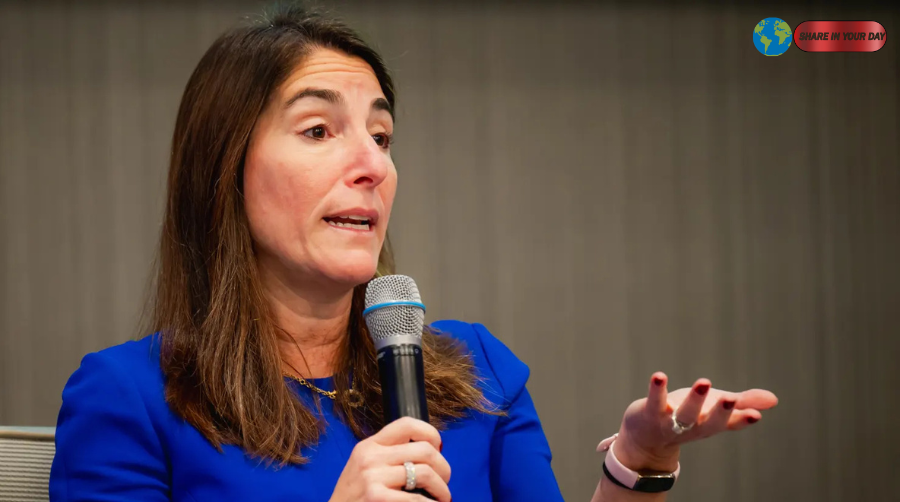
Speaking on October 12, 2026, Hammack emphasized that inflation is no longer confined to a handful of categories. Rising energy costs, tariffs, and strong investment in artificial intelligence infrastructure are contributing to a broader increase in business expenses, making it more difficult for inflation to return to the Federal Reserve’s 2% target.
Hammack believes policymakers should consider making smaller adjustments to monetary policy more frequently rather than waiting until inflation becomes more deeply entrenched. She argues that acting in a timely manner could reduce the need for larger and more disruptive policy changes later.
Her comments come as Federal Reserve officials weigh the appropriate level of interest rates against an economy that continues to demonstrate resilience despite elevated prices. Policymakers face a delicate balancing act: cooling demand enough to control inflation without unnecessarily weakening employment or economic growth.
The Cleveland Fed president has also raised concerns about the possibility that businesses are beginning to expect inflation to remain elevated. If companies increasingly anticipate rising costs, those expectations could influence pricing decisions and make the inflation problem more persistent.
For consumers, businesses, and financial markets, Hammack’s remarks reinforce the possibility that borrowing costs could remain restrictive for longer than some investors expect.
Beth Hammack Says Inflation Pressures Are Broadening
One of the central messages in Hammack’s October 12 remarks was that inflation is becoming a broader economic problem rather than remaining concentrated in energy prices or other individual categories.
Energy costs and tariffs have contributed to higher expenses for businesses, but Hammack also highlighted price pressures associated with strong demand for technology equipment and infrastructure.
The rapid expansion of artificial intelligence has created substantial demand for data centers, advanced computer components, electricity, and other resources. That investment can support economic growth, but it can also increase competition for materials, equipment, construction capacity, and power.
When demand rises faster than available supply, businesses may face higher costs. Those increases can eventually reach consumers through more expensive products and services.
Hammack has also pointed to pressures affecting industries beyond technology. Business contacts have reported higher expenses involving insurance, metals, plastics, grains, and electricity, suggesting that inflationary pressures are reaching a wide range of economic activities.
That breadth matters for monetary policy.
If price increases were concentrated in one category, policymakers might have more reason to expect inflation to ease as the specific disruption fades. However, when rising costs appear across multiple industries, the Federal Reserve may have to consider whether broader demand is contributing to the problem.
Hammack’s concern is that inflation could become increasingly difficult to control if businesses begin incorporating persistent price increases into their planning.
Even if energy prices eventually decline, demand-related pressures may remain. In that situation, monetary policy could need to do more than simply wait for temporary supply shocks to disappear.
Why the Federal Reserve May Need Tighter Monetary Policy
Hammack’s position reflects concern that current economic conditions may not be sufficiently restrictive to bring inflation back to the central bank’s target.
Higher interest rates generally make borrowing more expensive for households and businesses. Mortgage payments, business loans, and financing for major purchases can become less affordable, potentially slowing spending and investment.
That reduction in demand can help ease pressure on prices.
However, the process is not immediate. Monetary policy affects the economy with a lag, meaning rate changes may take time to influence business decisions, household spending, and inflation.
This creates a challenge for policymakers. Waiting too long to address persistent inflation could allow expectations of future price increases to become embedded in the economy. Responding too aggressively, meanwhile, could slow economic activity more than necessary.
Hammack favors a measured approach that allows the Federal Reserve to respond as economic conditions evolve.
Her argument is that smaller, timely adjustments may help the central bank avoid having to make a much larger correction later. The objective is to introduce enough restraint to moderate demand without creating unnecessary economic disruption.
Nevertheless, her preference for tighter policy does not automatically mean she has committed to a specific interest rate increase at the next Federal Reserve meeting.
The timing and size of any future adjustment will depend on incoming economic information, including inflation readings, labor-market conditions, and evidence about the strength of consumer and business demand.
For investors, the distinction is important. A policymaker can believe that monetary policy needs to become more restrictive while remaining undecided about precisely when the next adjustment should occur.
Artificial Intelligence Investment Adds to Inflation Concerns
Artificial intelligence has emerged as another important factor in the inflation debate.
Companies across the technology sector are investing heavily in data centers, computing equipment, and supporting infrastructure. These projects require substantial quantities of specialized components, electrical equipment, construction services, and energy.
The resulting demand can put pressure on prices even as the investment creates new economic opportunities.
Hammack has highlighted the possibility that AI-related spending is contributing to inflation through both supply constraints and stronger overall demand.
For example, rising demand for advanced computer components can increase costs for data-center developers. Similar components and industrial resources may also be needed in aviation, electricity generation, construction, and other sectors.
When multiple industries compete for the same resources, prices can rise beyond the sector that originally generated the demand.
The broader economic impact depends on how quickly suppliers can expand capacity and whether new investment ultimately improves productivity enough to offset some of the cost pressures.
AI infrastructure investment may eventually help businesses operate more efficiently. However, the construction phase can create immediate demand for workers, equipment, electricity, and materials.
That distinction matters to the Federal Reserve because monetary policymakers must respond to current economic conditions rather than rely solely on the potential long-term benefits of technological progress.
If AI-related investment continues to support strong demand while inflation remains elevated, Hammack believes policymakers may need to ensure that monetary conditions provide sufficient restraint.
The challenge is to moderate excess demand without undermining productive investment that could strengthen the economy over time.
Tariffs and Energy Costs Complicate the Inflation Outlook
Tariffs and energy prices present additional complications for the Federal Reserve.
Tariffs can increase the cost of imported goods and the components used in domestic manufacturing. Businesses may absorb some of those increases, but others may pass the costs on to customers.
A single tariff-related price adjustment does not necessarily imply that inflation will continue accelerating indefinitely. However, repeated tariff changes can create successive cost increases that make it harder for businesses to stabilize prices.
Hammack has expressed concern that multiple rounds of cost increases can produce a more persistent inflation problem than a single, isolated shock.
Energy prices can create a similar challenge. Higher fuel and electricity costs can directly affect household budgets while also increasing operating expenses for manufacturers, transportation companies, retailers, and service providers.
If energy prices fall, some of that pressure may ease. But lower energy costs alone may not be sufficient if businesses continue to experience strong demand and rising expenses in other categories.
This is why Hammack has emphasized the breadth of inflation rather than focusing on one particular price index component.
The Federal Reserve must determine whether current price increases are temporary or reflect a more sustained imbalance between demand and the economy’s ability to supply goods and services.
That assessment will influence how long policymakers believe restrictive interest rates are necessary.
Can the Fed Reduce Inflation Without Increasing Unemployment?
One of the biggest questions facing the Federal Reserve is whether it can cool demand without causing significant damage to the labor market.
Hammack has indicated that she wants inflation to decline while avoiding unnecessary job losses.
The challenge is that higher interest rates can affect both sides of the economy. They can reduce inflation by discouraging borrowing and spending, but they can also cause businesses to postpone investment, slow hiring, or reduce their workforces.
The severity of those effects depends on the strength of demand, financial conditions, and the extent to which businesses can adjust their plans without cutting employment.
Hammack has suggested that some moderation in corporate investment or wealth-driven consumer spending could help reduce inflationary pressure.
The objective would be to bring demand back toward a sustainable pace rather than stop economic growth altogether.
That distinction is important because strong economic activity is not inherently inflationary. Growth becomes a greater concern for monetary policymakers when demand consistently outpaces the economy’s productive capacity.
If businesses and consumers continue spending aggressively while companies face limited supplies of key resources, prices may remain elevated.
A moderate slowdown in some areas of demand could help relieve those pressures. However, the Federal Reserve cannot precisely control which sectors will respond most strongly to higher borrowing costs.
Policymakers must therefore evaluate how monetary restraint is affecting the economy and adjust their decisions as new evidence becomes available.
Hammack’s position reflects an effort to bring inflation down without causing more labor-market weakness than necessary.
Inflation Expectations Could Become a Bigger Problem
Hammack is also concerned about the risk that persistent inflation could change how businesses set prices.
When companies expect costs to keep rising, they may be more inclined to increase prices in advance, particularly if they believe competitors will do the same.
Workers and suppliers may also adjust their expectations about future prices, potentially creating additional pressure on business expenses.
These dynamics can make inflation harder to control because expectations begin influencing actual decisions.
The Federal Reserve closely monitors inflation expectations because confidence in the central bank’s commitment to price stability can influence economic behavior.
If households and businesses believe inflation will eventually return to the Fed’s 2% target, temporary price increases may be less likely to trigger widespread adjustments in wages and prices.
If that confidence weakens, policymakers may need to apply more restrictive monetary policy to restore credibility and bring demand into better balance.
Hammack’s warning suggests that she is watching for signs that inflationary thinking may be becoming more established among businesses.
The longer inflation remains elevated, the greater the risk that companies will begin treating repeated price increases as a normal feature of the economic environment.
Preventing that shift is one reason Hammack favors responding to persistent inflation before the problem becomes more difficult to reverse.
Hammack Emphasizes Transparency in Federal Reserve Policy
Beyond interest rates, Hammack has stressed the importance of explaining how the Federal Reserve makes monetary policy decisions.
She distinguishes between communicating the principles that guide policymakers and offering forward guidance that could be interpreted as a promise about future interest rates.
A clear explanation of the Fed’s decision-making process can help households, companies, and investors understand how economic developments may influence policy.
For example, explaining that persistent inflation could lead to tighter monetary conditions gives businesses useful information about the factors policymakers are monitoring.
However, that explanation does not guarantee that a particular rate increase will happen on a specific date.
Economic conditions can change quickly. A new inflation report, an unexpected decline in employment, or a significant shift in consumer spending could alter the appropriate policy response.
Hammack believes transparency helps the public understand the reasoning behind decisions without creating unrealistic expectations about future actions.
This distinction is especially relevant when financial markets are sensitive to statements from Federal Reserve officials.
Investors often attempt to anticipate interest rate decisions because those expectations influence bond yields, stock valuations, currency markets, and borrowing costs.
Clear communication can help reduce uncertainty, but policymakers must avoid creating the impression that their decisions are fixed regardless of future economic data.
What Hammack’s Comments Mean for Interest Rates and Markets
Hammack’s comments reinforce the possibility that U.S. monetary policy could remain restrictive if inflation continues to exceed the Federal Reserve’s target.
They do not, by themselves, establish that an immediate rate increase is certain.
The next policy decision will depend on the full range of economic evidence available to the Federal Open Market Committee.
Investors will be watching inflation reports, employment figures, consumer spending, and signals about business investment to determine whether the economy is cooling sufficiently.
Bond markets may react to expectations about the timing and pace of future rate adjustments. If investors believe the Fed will need to maintain higher rates for longer, Treasury yields and other borrowing costs could face upward pressure.
Equity markets may also respond as investors reassess the cost of financing, corporate earnings prospects, and the valuations of growth-oriented companies.
For households, the consequences could include continued pressure on borrowing costs if monetary policy remains restrictive.
Businesses considering major investments may also need to account for a higher cost of capital when deciding whether to expand operations, hire workers, or finance new projects.
These outcomes are not guaranteed, and markets will continue to respond to new information. However, Hammack’s remarks make clear that the fight against inflation remains a major consideration for the Federal Reserve.
The Outlook for Federal Reserve Monetary Policy
The Federal Reserve faces a difficult period as it attempts to return inflation to 2% without unnecessarily weakening economic growth or employment.
Hammack’s comments suggest that she remains concerned about broad-based price pressures and the possibility that strong investment and consumer demand could keep inflation elevated.
Her preference for smaller, timely policy adjustments reflects a desire to prevent inflation expectations from becoming entrenched and to avoid the need for more disruptive measures later.
At the same time, the effectiveness of any policy response will depend on how the economy reacts. If demand moderates and inflation begins moving sustainably lower, the case for additional tightening could weaken. If price pressures persist, policymakers may face greater pressure to maintain or increase restraint.
For now, the central bank must balance the risks of acting too slowly against the possibility of tightening financial conditions more than necessary.
Hammack’s warning underscores that the inflation challenge is broader than energy prices or tariffs alone. Strong technology investment, persistent business costs, and sustained demand are also part of the picture.
The coming economic data will help determine whether those pressures are easing or becoming more entrenched.
For investors, businesses, and consumers, the key takeaway is that the path of interest rates remains dependent on inflation’s progress. The Federal Reserve has not eliminated the possibility of further tightening, and policymakers will continue evaluating whether current conditions are sufficient to restore price stability.