Saudi Arabia Houthi Attacks: 7 Major Defense Challenges
Saudi Arabia is facing renewed security challenges as missile and drone attacks attributed to Yemen’s Houthi movement expose the difficulties of defending a large country against increasingly sophisticated weapons. Despite substantial investments in advanced aircraft, radar systems and missile defenses, the kingdom has struggled to prevent every attack on strategically important locations, including airports and energy infrastructure.
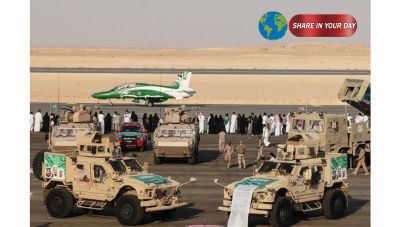
The latest escalation has raised questions about the effectiveness of existing defensive arrangements, the cost of intercepting incoming weapons and the possibility of a broader regional confrontation. Reports published in October 2026 describe attacks that have disrupted civilian activity and increased pressure on Saudi authorities to respond.
The Saudi Arabia Houthi attacks also highlight a wider problem facing governments that rely on expensive military systems to protect extensive territories. Even advanced defenses have limitations when they must monitor numerous potential targets while confronting drones, cruise missiles and ballistic missiles launched from nearby territory.
Saudi Arabia now faces a difficult balance. Its government must protect civilians and critical infrastructure while considering how to respond without triggering another prolonged and costly conflict in Yemen.
1. Saudi Arabia Houthi Attacks Expose Air Defense Challenges
Saudi Arabia has spent heavily on modernizing its military, purchasing American fighter aircraft, radar technology and air defense systems. Its arsenal includes Patriot missile batteries designed to intercept certain incoming aerial threats.
However, possessing sophisticated equipment does not guarantee that every missile or drone can be detected and destroyed.
Air defense operations require reliable early-warning information, accurate tracking, effective communications and sufficient interceptors positioned near vulnerable locations. A weakness in any part of this system can reduce the likelihood of a successful interception.
The kingdom also faces the challenge of distinguishing between different types of incoming weapons. Ballistic missiles, low-flying cruise missiles and relatively inexpensive drones have different flight characteristics and may require different defensive responses.
According to an Associated Press report published October 14, Saudi Arabia’s recent difficulties reflect a combination of geographical challenges, the capabilities of Houthi weapons and the limitations of even advanced military technology.
The attacks do not establish that Saudi defenses are entirely ineffective. Rather, they demonstrate that defensive systems cannot guarantee complete protection against every possible threat.
For Saudi officials, the immediate challenge is determining how the attacks penetrated existing defenses and what changes could reduce the risk of future incidents.
2. The Kingdom’s Vast Territory Makes Protection Difficult
Saudi Arabia’s geography creates a significant obstacle for military planners.
The country covers an extensive area, with major cities, airports, oil installations, industrial facilities and military sites distributed across different regions. Its long border with Yemen adds another layer of complexity.
Protecting every potential target with the same level of coverage would require enormous resources. Even when radar and missile defense systems are deployed strategically, gaps can remain between protected areas.
This problem becomes more complicated when attacks occur at multiple locations or arrive with limited warning.
A government may prioritize major population centers, military bases and critical energy infrastructure. Yet attackers can seek opportunities elsewhere, forcing defenders to decide where limited resources will have the greatest effect.
The challenge is not unique to Saudi Arabia. Large countries must often distribute defensive resources across vast distances, while attackers can concentrate their weapons on a smaller number of selected targets.
Saudi Arabia’s geography therefore gives military planners a difficult problem: protect essential infrastructure without exhausting the resources needed to maintain defensive readiness over time.
3. Missile and Drone Tactics Complicate Interception
The Houthis have developed considerable experience using missiles and unmanned aerial vehicles during years of conflict in Yemen and attacks across the wider region.
These weapons can be used in different ways. Drones may approach at relatively low altitude, while certain missiles travel at high speeds and follow flight paths that complicate interception.
Some attacks may also involve several weapons arriving within a short period. Such tactics can place pressure on radar operators, command centers and available interceptors.
Air defense systems must identify incoming threats, assess their likely targets and determine whether an interception is necessary. When multiple objects approach simultaneously, these decisions become more demanding.
The cost difference between offensive and defensive weapons is another concern. Some drones can be manufactured for substantially less than the missiles used to intercept them. Repeated attacks may therefore impose a financial burden even when most incoming weapons are successfully destroyed.
However, cost alone does not determine the outcome of an engagement. The type of weapon, its flight path, the defended asset and the available defensive system all influence the result.
The central lesson is that air defense requires a layered approach rather than reliance on a single weapon or technology.
4. Attacks on Airports Increase Civilian and Economic Risks
Airports are particularly sensitive targets because they support passenger travel, cargo transportation, emergency services and international business.
An attack near an airport can force authorities to suspend operations while they assess damage and determine whether aircraft can continue flying safely. Even a temporary closure can affect thousands of passengers and disrupt connections across an international aviation network.
Recent reports described a deadly attack on Riyadh’s King Khalid International Airport on October 10, 2026, followed by further security concerns involving Saudi aviation facilities.
The reported casualties and disruption have increased pressure on Saudi authorities to strengthen protection for civilian infrastructure.
Airports also have importance beyond transportation. Riyadh’s international connections support business travel, tourism and the kingdom’s efforts to attract foreign investment.
Repeated security incidents could make airlines, travelers and companies more cautious about operating in affected areas. The scale of any longer-term economic impact will depend on the duration and frequency of disruptions.
Authorities must also communicate clearly with airlines and the public. Reliable information about closures, flight changes and safety measures can help limit confusion during a security emergency.
5. Saudi Oil Infrastructure Faces Growing Pressure
Energy facilities represent another major concern in the expanding confrontation.
Saudi Arabia is one of the world’s most important oil producers, and its energy infrastructure plays a central role in international markets. Refineries, processing facilities, pipelines and export terminals are therefore strategically significant.
Damage to an energy installation can affect operations even when the physical destruction is limited. Fires, emergency shutdowns, inspections and security restrictions may interrupt activity while engineers assess the situation.
Reuters reported on October 15 that Gulf markets were under pressure following renewed Houthi threats and attacks affecting Saudi energy infrastructure. The report described a fire at an Aramco administrative building in Dhahran after a strike.
Such incidents illustrate how a regional security crisis can affect investors’ expectations and perceptions of supply risk.
Nevertheless, an attack on an individual facility does not automatically mean that national oil production has stopped or that global supplies will experience a prolonged shortage. The actual consequences depend on the location of the damage, available backup capacity and the speed of repairs.
Saudi Arabia’s response will likely involve both physical protection and efforts to maintain operational continuity.
Protecting energy infrastructure is also important for international shipping. Any broader disruption to oil production or transportation could affect buyers, shipping companies and economies that depend on stable energy supplies.
6. The Yemen Conflict Creates a Difficult Strategic Choice
The recent escalation is connected to the long-running conflict between Yemen’s Houthi movement and forces aligned with the internationally recognized Yemeni government.
Saudi Arabia has supported Yemeni government forces in their struggle against the Houthis. The movement, which has controlled Yemen’s capital, Sanaa, since 2014, regards Saudi involvement as part of the conflict against its authority.
The relationship has repeatedly produced cross-border security tensions.
Saudi leaders must now consider how to deter further attacks while avoiding a military campaign that could expand the conflict or create additional costs for the kingdom.
A larger air campaign might target Houthi military infrastructure, but its effectiveness would depend on the intelligence available, the locations of the targets and the movement’s ability to adapt.
A ground operation would raise different risks, including casualties, logistical demands and the possibility of becoming involved in another prolonged conflict.
Diplomacy presents its own difficulties. Any negotiation would need to address security concerns, the position of Yemen’s competing political forces and the conditions required to reduce cross-border attacks.
There is no simple solution. Military action may impose costs on the Houthis without eliminating their ability to launch weapons, while negotiations may take time and depend on whether the parties see an advantage in reducing hostilities.
7. Regional Security and International Trade Are at Stake
The implications extend beyond Saudi Arabia and Yemen.
The Arabian Peninsula lies near important international energy and shipping routes, including the Red Sea and the Bab el-Mandeb Strait. These waterways connect trade between Europe, Asia and other regions.
Escalating violence near such routes can increase concerns about maritime safety, insurance costs and shipping schedules. Companies may need to reconsider routes or take additional precautions if threats persist.
The consequences depend on the scale and location of any disruption. Security concerns do not necessarily mean that all shipping has stopped, but uncertainty can affect commercial decisions before a major interruption occurs.
The conflict also involves broader regional relationships. Iran has supported the Houthis, although the movement has its own leadership, objectives and domestic political interests. Saudi Arabia’s security partnerships with the United States and other countries are relevant to its ability to obtain equipment, intelligence and diplomatic support.
International involvement could strengthen defensive coordination, but it could also complicate efforts to contain the conflict if additional countries become directly involved in hostilities.
For that reason, regional governments face a shared interest in preventing attacks on civilian facilities and reducing the risk of a wider confrontation.
Why Advanced Military Equipment Has Limits
Saudi Arabia’s current difficulties illustrate an important distinction between military spending and actual defensive coverage.
Expensive aircraft and missile systems can provide substantial capabilities, but their effectiveness depends on deployment, training, maintenance, intelligence and the availability of ammunition.
A defensive system must also be sustainable. If incoming attacks continue over an extended period, commanders must manage interceptor stocks and ensure that critical sites remain protected.
This is particularly important when relatively inexpensive weapons can be launched repeatedly. The defender may need to spend significant resources responding to each new threat, even if the attack causes little damage.
Military planners can address these challenges through layered defenses, improved warning systems, better coordination and measures that reduce the vulnerability of critical facilities.
Hardening infrastructure and developing emergency-response procedures can also limit the consequences when an interception fails.
However, no combination of technology and preparation can eliminate every risk. Effective security depends on reducing the probability of successful attacks while ensuring that essential services can recover when incidents occur.
What Happens Next?
Saudi Arabia’s next decisions will shape the course of the confrontation.
Officials must investigate how recent attacks reached their targets, assess damage and determine whether additional defensive measures are required. They must also consider the military, economic and diplomatic consequences of any retaliation.
Further Houthi attacks could increase pressure for a stronger Saudi response. Conversely, diplomatic efforts and changes in the fighting inside Yemen could create opportunities to reduce hostilities.
The situation remains fluid, and public statements from the parties should be distinguished from independently verified developments. Claims about responsibility, casualties, military capabilities and the effectiveness of particular weapons may require further confirmation as new information becomes available.
For international markets, the key questions include whether energy infrastructure can continue operating normally, whether shipping routes remain accessible and whether the conflict expands to additional countries or facilities.
For civilians, the most immediate concerns are safety, access to transportation and the ability to continue daily activities without further disruption.
Conclusion: Saudi Arabia Faces a Complex Security Test
The Saudi Arabia Houthi attacks demonstrate the limits of relying on advanced military equipment to protect a large country against persistent missile and drone threats.
Saudi Arabia has substantial defensive capabilities, but its geography, the diversity of incoming weapons and the demands of protecting civilian and energy infrastructure create difficult operational challenges.
The stakes extend well beyond the battlefield. Continued attacks could disrupt aviation, affect confidence in energy infrastructure and increase uncertainty across regional trade networks.
Saudi leaders must therefore weigh immediate defensive requirements against the longer-term consequences of escalation. Strengthening air defenses may reduce vulnerabilities, but lasting security will also depend on the political and military developments shaping Yemen’s conflict.
Whether the current crisis leads to a wider confrontation or renewed efforts to reduce hostilities will depend on decisions made by the parties involved in the coming days and weeks.