Iran Women’s Football Team Salutes and Sings National Anthem at Asian Cup Match Amid Political Tension
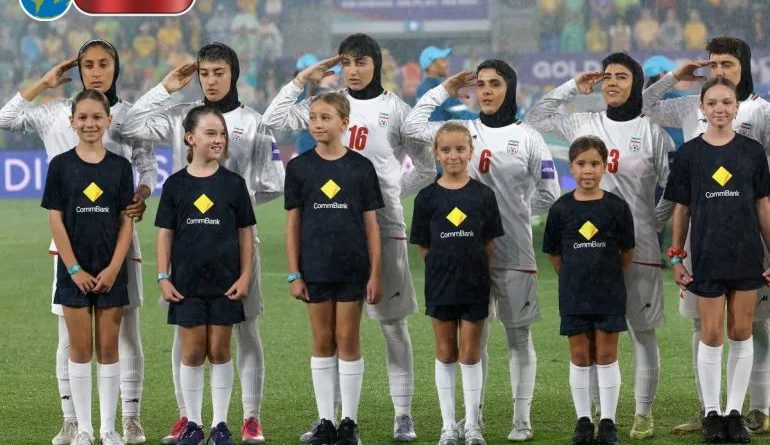
Gold Coast, Australia — Iran’s women’s national football team sang and saluted the national anthem before their 2026 AFC Women’s Asian Cup match against Australia’s Matildas on Thursday, in a dramatic shift from their opening game of the tournament where they remained silent during the anthem.
The decision marked a stark contrast to the team’s actions at the start of the competition, set against the backdrop of a wider conflict in the Middle East that has deeply affected Iranians at home and abroad.
A Change From Silence to Salute
Earlier in the week, Iran’s women stood motionless and did not sing their national anthem before their first group match against South Korea — a gesture that drew international attention and was interpreted by many observers as a subtle protest against political conditions in their home country.
But at Robina Stadium on Thursday evening, with rain falling and a significant crowd present, Iranian players placed hands to their hearts and sang the anthem “Mehr‑e Khavaran” (Eastern Sun) before kickoff.
The contrasting acts at two consecutive games have sparked broad discussion about the players’ intentions and the pressures they face, both on the field and off it.
Political and Emotional Undercurrents
Iran’s decision to sing and salute came against an intensely charged backdrop. The team has openly voiced concern for families back home, who are living under the strain of conflict in the Middle East, and has navigated the emotional weight of separated loved ones in Iran.
Following the opening silence — viewed by supporters abroad as a brave symbolic gesture — some Iranian state media figures harshly criticised the players, branding them “traitors” for not singing.
Meanwhile, Iranian expatriates and protesters have gathered outside stadiums and in local communities, waving pre‑1979 Iranian flags and chanting for broader political change, highlighting the intersection of sport and dissent in this moment.
Match Context and Reception
Australia dominated the match, claiming a 4‑0 victory, but the anthem moment drew significant attention on social media and in international news. Sections of the crowd reacted vocally during the anthem, reflecting the complex mix of support, protest and broader geopolitical sentiment among spectators.
Supporters waving contrasting flags and banners added a visible layer of political expression to what otherwise would have been a sporting event — a reminder that global football often becomes a reflection of national identity and sentiment, especially in times of crisis.
Broader Sporting and Political Implications
Iran is one of the few Middle Eastern nations competing at this year’s Women’s Asian Cup, and the team’s actions have reignited conversations about athletics, national expression, and political pressure on athletes from countries undergoing upheaval.
The tournament continues through March 21, with Iran’s final group‑stage match set against the Philippines, a crucial fixture if they are to advance in the competition.
Looking Ahead
As Iran’s team progresses through the tournament, their conduct before national anthems and on the pitch is likely to remain a focal point of international discussion — not only in sport but also in diplomacy and human rights discourse.
Whether future matches will see similar expressions of solidarity, caution, or protest remains to be seen, but the spotlight on Iran’s women soccer team has extended far beyond the football field, touching on deeper issues of national identity, political pressure and global solidarity.