Barcelona Heartbreak Revealed: 4 Brutal Lessons From UCL Exit
Barcelona heartbreak has become an all-too-familiar storyline in European football, and the 2026 UEFA Champions League quarterfinal exit only deepened that narrative. Despite a spirited 2–1 second-leg victory, the Catalan giants were eliminated 3–2 on aggregate by Atletico Madrid, extending their continental drought to 11 years.
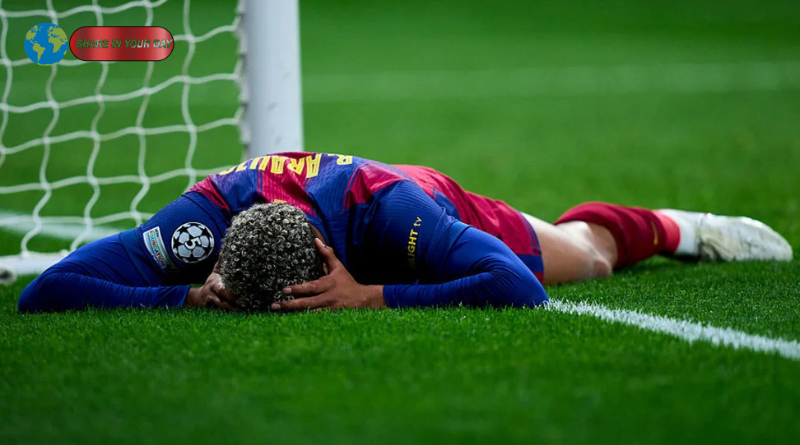
The match was filled with drama, tactical intrigue, and moments of brilliance—but ultimately, it exposed recurring flaws that continue to haunt Barcelona on Europe’s biggest stage. From tactical decisions to individual performances, here are four major takeaways from Barcelona’s latest heartbreak.
1. Hansi Flick’s Bold Selection Nearly Worked
Barcelona entered the decisive second leg with urgency and purpose. Manager Hansi Flick made bold tactical choices, leaving high-profile attackers on the bench and opting for a more dynamic and fluid attacking setup.
The decision paid immediate dividends. Barcelona came out aggressively, scoring twice within the opening 30 minutes through Lamine Yamal and Ferran Torres, leveling the aggregate score and putting Atletico Madrid under immense pressure.
The attacking trio, supported by Dani Olmo’s creativity, overwhelmed Atletico’s defense early on. Barcelona created multiple clear chances and looked capable of completing a stunning comeback.
However, while the tactical gamble succeeded in attack, it also exposed vulnerabilities. The aggressive setup required near-perfect execution—and as events unfolded, even minor lapses proved costly.
Still, Flick’s approach demonstrated that Barcelona has the tactical flexibility and attacking quality to compete with Europe’s elite. The issue lies not in ambition, but in execution and balance.
2. Defensive Fragility Remains Barcelona’s Achilles’ Heel
If there is one constant in Barcelona heartbreak, it is defensive instability. Once again, their high defensive line proved to be both a strength and a fatal weakness.
After Barcelona’s explosive start, Atletico Madrid capitalized on a familiar flaw. A quick transition caught Barcelona’s defense out of position, allowing Ademola Lookman to score the decisive goal that restored Atletico’s aggregate lead.
This was not an isolated incident—it was a pattern. Barcelona’s system prioritizes high pressing and aggressive positioning, but it leaves significant space behind the defensive line. Against disciplined teams like Atletico, those gaps are ruthlessly exploited.
Statistics underline the issue. Barcelona has conceded an alarming number of goals in recent Champions League campaigns and failed to keep a clean sheet throughout this season’s competition.
Even more concerning is the lack of adaptation. Despite repeated failures, the tactical approach remains largely unchanged. As the saying goes, repeating the same mistakes while expecting different results rarely leads to success.
Until Barcelona addresses this structural weakness, their European ambitions will continue to fall short—regardless of attacking brilliance.
3. Lamine Yamal Shines Despite the Pain
Amid the disappointment, one positive stands out clearly: Lamine Yamal.
The young star delivered a performance well beyond his years, scoring a crucial goal and consistently troubling Atletico’s defense. Across both legs, he was arguably the most dangerous player on the pitch.
Yamal’s technical ability, composure, and creativity were on full display. He created multiple chances, completed numerous successful dribbles, and remained a constant threat until the final whistle.
Yet, football can be cruel. Despite his brilliance, Yamal did not register an assist and ultimately could not carry his team over the line.
At just 18 years old, his performance signals a bright future—not only for Barcelona but for world football. Many already consider him among the elite talents of his generation, and this match only reinforced that belief.
However, his emergence also highlights a deeper issue: Barcelona’s reliance on young players in high-pressure situations. While their talent is undeniable, experience often proves decisive in knockout football.
Yamal may not have secured victory, but he emerged with his reputation enhanced—a rare silver lining in a painful night.
4. A Decade of European Failure Continues
Perhaps the most sobering takeaway from this Barcelona heartbreak is the broader context. This elimination marks 11 consecutive seasons without a Champions League title for one of football’s most storied clubs.
For a team that dominated Europe in the early 21st century, this prolonged drought is difficult to comprehend. Over the years, Barcelona has exited the competition in nearly every conceivable way:
- Blowing large leads
- Suffering heavy defeats
- Early group-stage eliminations
- Narrow knockout losses like this one
In recent seasons, a troubling pattern has emerged. Barcelona often produces heroic efforts to recover from difficult situations, only to fall short due to defensive errors, red cards, or moments of misfortune.
This latest exit followed that script almost perfectly. After overturning a two-goal deficit, Barcelona conceded at a crucial moment and later saw their hopes fade following a red card to Eric Garcia.
Even external factors added to the frustration. Controversial refereeing decisions and missed opportunities further fueled the sense of injustice among players and fans.
Yet, focusing solely on bad luck risks ignoring deeper issues. Sustained success in the Champions League requires consistency, resilience, and tactical discipline—qualities Barcelona has struggled to maintain in recent years.
What’s Next for Barcelona?
Despite the disappointment, there are reasons for cautious optimism.
Barcelona’s squad is young, talented, and improving. The performances of players like Yamal, along with the team’s attacking potential, suggest that the foundation for future success is in place.
Manager Hansi Flick has also emphasized the need to learn from these experiences and build for the future. The focus now shifts to domestic success, where Barcelona remains a strong contender for the La Liga title.
However, progress will depend on addressing key weaknesses:
- Defensive organization must improve
- Tactical flexibility must increase
- Big-game composure must be developed
Without these changes, the cycle of near-misses and heartbreak is likely to continue.
Conclusion
Barcelona heartbreak in the Champions League is no longer a shock—it is a pattern.
This latest elimination against Atletico Madrid encapsulated everything that has defined their European struggles in recent years: brilliant attacking play, costly defensive errors, and moments of cruel misfortune.
Yet, within the disappointment lies potential. With a new generation of talent emerging and lessons to be learned, Barcelona has an opportunity to rebuild and return stronger.
The question is no longer whether they have the quality—but whether they can finally overcome the flaws that have held them back for over a decade.
Until then, the wait for European glory goes on.