Texas Scientists Reveal Brain Breakthrough That Could Rewire How We Understand Aging
A new wave of neuroscience research is challenging long-held assumptions about how the human brain ages. According to findings highlighted by Texas researchers, the brain may not simply decline over time—instead, it may retain a surprising ability to adapt, reorganize, and even maintain youthful characteristics under certain conditions. The brain breakthrough Texas researchers are studying suggests that aging in the brain is far more flexible than previously believed.
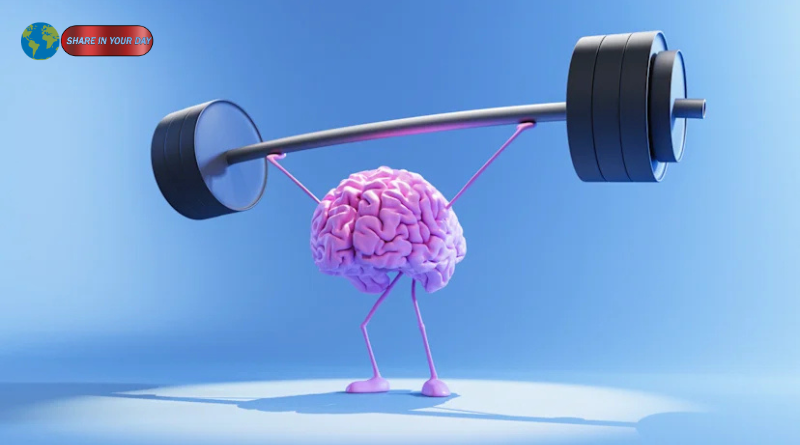
This discovery is part of a growing body of scientific work showing that cognitive decline is not an inevitable one-way path. Instead, the brain appears capable of partial renewal, even in later life, depending on biological and environmental factors.
A New Understanding of Brain Aging
For decades, scientists believed that brain aging followed a mostly linear decline: neurons weaken, connections reduce, and cognitive abilities slowly deteriorate. However, newer studies are challenging this model.
Research from neuroscience teams, including those associated with institutions in Texas, has identified that certain brain regions do not age uniformly. Some layers of the brain remain stable, while others show signs of compensation and adaptation over time.
This layered behavior suggests that the brain is not a single aging structure but a complex system with different components aging at different rates. In some cases, parts of the brain even appear to strengthen their function as compensation mechanisms activate.
This is a key element of the brain breakthrough Texas researchers are exploring.
The Science Behind the Breakthrough
One of the most significant insights from recent research is the concept of brain plasticity—the brain’s ability to reorganize itself by forming new connections. Even in adulthood and old age, the brain does not become completely rigid.
Instead, studies show that:
- Some cortical layers remain stable longer than expected
- Certain neural structures increase efficiency through adaptation
- Myelin content in some regions may increase with age as a compensatory response
- Cognitive skills practiced regularly can remain stable for decades
These findings suggest that the brain has built-in mechanisms to resist decline, at least partially.
Scientists studying brain aging have observed that repeated mental activity—such as problem-solving, language use, or motor skills—helps preserve neural pathways. This supports the idea that “use it or lose it” applies strongly to cognitive health.
Texas Research Contributions to Brain Science
While global neuroscience research is advancing rapidly, Texas-based research institutions have contributed significantly to understanding brain development and aging.
Earlier foundational work from Texas A&M University explored how the brain’s neocortex develops and how structural layers are linked to cognitive ability and intelligence. These studies helped establish the importance of cortical organization in higher brain functions such as perception, language, and reasoning.
More recent interpretations of brain imaging research suggest that the brain’s structure is not static after development. Instead, it continues to undergo micro-level changes that can influence cognitive resilience later in life.
This evolving perspective is central to the brain breakthrough Texas researchers are helping bring into public attention.
Can the Brain Become Younger?
One of the most exciting implications of this research is the possibility that the brain’s “age” is not fixed. Modern imaging studies using MRI-based brain-age estimation have shown that lifestyle factors can significantly influence how old the brain appears biologically.
For example, large-scale studies have found that:
- Healthy sleep patterns are linked to younger brain profiles
- Strong social connections correlate with slower brain aging
- Stress management can reduce cognitive decline markers
- Regular mental and physical activity supports brain resilience
In some cases, participants with multiple healthy habits showed brains that appeared several years younger than their chronological age.
These findings reinforce the idea that brain aging is not strictly predetermined and may be influenced by behavior and environment.
Neuroplasticity: The Brain’s Hidden Advantage
A key concept behind this breakthrough is neuroplasticity—the brain’s ability to change its structure and function throughout life.
Neuroplasticity allows the brain to:
- Form new neural connections
- Strengthen existing pathways
- Adapt to injury or environmental changes
- Compensate for age-related decline in certain regions
This adaptability is particularly important in understanding why some individuals maintain strong cognitive abilities well into old age.
In fact, some studies of exceptionally healthy older adults—often called “super agers”—have shown that their brains maintain unusually high levels of neural activity and even continue generating new neurons in specific regions associated with memory.
This supports the broader scientific view that cognitive decline is not universal or inevitable.
What This Means for Cognitive Health
The implications of the brain breakthrough Texas researchers are significant. If the brain can maintain or even regain youthful characteristics under the right conditions, it opens new possibilities for:
- Dementia prevention strategies
- Cognitive training programs
- Lifestyle-based brain health interventions
- New therapeutic approaches for age-related decline
Instead of focusing only on slowing degeneration, future neuroscience may increasingly focus on enhancing regeneration and resilience.
This shift could redefine how society approaches aging, memory loss, and mental performance.
Limitations and Scientific Caution
Despite the excitement, researchers emphasize that brain aging is complex. Not all findings point toward full reversal of aging, and many mechanisms are still under investigation.
For example:
- Some brain structures still shrink with age
- Not all cognitive functions respond equally to intervention
- Genetic factors play a significant role in brain health
- More long-term human studies are needed
In other words, while the brain shows adaptability, it is not fully “reversible” in the way younger tissue is.
Scientists continue to investigate how far neuroplasticity and regenerative processes can realistically go in humans.
The Future of Brain Research
The direction of neuroscience is shifting toward understanding how to optimize brain health across the lifespan rather than simply treating decline after it occurs.
Emerging research areas include:
- Brain-age prediction models using AI
- Cellular regeneration in aging neural tissue
- Drug compounds targeting cognitive resilience
- Non-invasive brain stimulation techniques
- Lifestyle-based interventions backed by imaging science
The brain breakthrough Texas researchers are part of a global effort that is gradually redefining what it means to age mentally.
Conclusion
The idea that the brain simply deteriorates with age is becoming outdated. Modern research—including contributions from Texas-based scientists—shows that the brain is far more dynamic, adaptive, and resilient than previously believed.
While aging still affects cognitive performance, evidence suggests that the brain retains the ability to reorganize itself and, in some cases, maintain youthful characteristics far longer than expected.
As neuroscience advances, the possibility of improving brain health through lifestyle, training, and future medical interventions becomes increasingly realistic.
The breakthrough does not promise eternal youth—but it does suggest something equally important: the brain is not fixed, and its future is still being shaped.