Hamas Weapons Plan Revealed: What It Means for Gaza’s Future
The Hamas weapons plan is emerging as one of the most critical and controversial elements in ongoing negotiations over the future of Gaza. As international mediators push for a long-term ceasefire between Israel and Hamas, the question of whether and how Hamas will disarm has become a central sticking point.
Recent developments suggest that proposals under discussion could reshape the political and security landscape of the region for years to come. However, the issue remains deeply complex, with both sides holding firm positions and significant uncertainty surrounding implementation.
The Core of the Hamas Weapons Plan
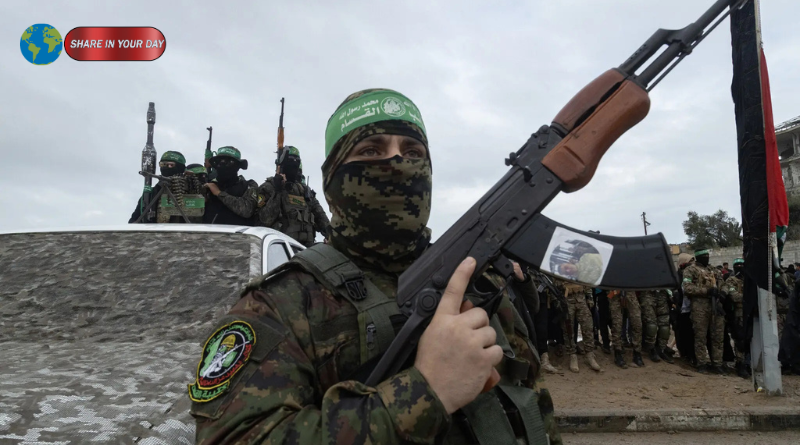
At the heart of the Hamas weapons plan is a proposal that would require the militant group to surrender its most powerful weapons—particularly those capable of striking Israel. According to reports, this includes long-range rockets, heavy artillery, and parts of its extensive underground military infrastructure.
However, the plan is not as straightforward as full disarmament.
Instead, negotiators have discussed a phased approach, in which Hamas would gradually give up its arsenal over several months. During this period, some limited weapons—such as small arms—might be temporarily retained under strict conditions.
This compromise reflects the reality on the ground: Hamas remains a dominant force in Gaza, with tens of thousands of fighters and significant military capabilities.
Why Disarmament Is So Difficult
Disarming Hamas is not just a technical challenge—it is deeply political.
For Israel, dismantling Hamas’s military capabilities is seen as essential for long-term security. Israeli officials have repeatedly emphasized that any lasting peace depends on eliminating the threat posed by Hamas weapons.
On the other hand, Hamas views its weapons as a form of resistance. Leaders within the group have indicated that they are unwilling to fully disarm while Israeli forces remain active in or around Gaza.
This fundamental disagreement has made negotiations extremely fragile.
Meanwhile, mediators—including the United States, Egypt, and Qatar—are attempting to bridge the gap. Their goal is to create a framework that ensures security for Israel while offering political and economic stability for Palestinians in Gaza.
A Phased Transition Strategy
One of the most notable aspects of the Hamas weapons plan is its gradual implementation timeline.
Rather than demanding immediate disarmament, the proposal envisions a multi-stage process that could unfold over approximately eight months.
During this time:
- Heavy weapons would be decommissioned first
- Smaller arms would be registered and monitored
- A new governing authority in Gaza could take control of security responsibilities
This phased approach is designed to reduce the risk of sudden instability. A rapid disarmament could create a power vacuum, potentially leading to chaos or the rise of rival armed groups.
Therefore, the plan attempts to balance urgency with caution.
The Role of International Oversight
Another key element of the Hamas weapons plan is international involvement.
Officials have discussed the possibility of an international or technocratic authority overseeing Gaza during the transition period. This body would be responsible for:
- Managing surrendered weapons
- Coordinating reconstruction efforts
- Ensuring compliance with the agreement
Such an arrangement could provide a level of neutrality and accountability. However, it also raises questions about sovereignty and long-term governance.
Who will ultimately control Gaza remains an open question.
Ongoing Violence Complicates Negotiations
Despite diplomatic efforts, violence has not fully subsided.
Recent reports indicate continued clashes and airstrikes, even amid ceasefire discussions. These incidents highlight the fragile nature of the current situation and the difficulty of building trust between the parties.
Each new outbreak of violence risks derailing progress.
For civilians in Gaza, the stakes are incredibly high. Years of conflict have devastated infrastructure, displaced communities, and created a severe humanitarian crisis.
A successful agreement could pave the way for reconstruction and recovery. However, failure could mean a return to full-scale war.
Internal Divisions Within Hamas
The Hamas weapons plan is not only controversial externally—it is also causing internal debate within the organization.
Some leaders appear open to a temporary reduction in military activity, especially if it leads to improved living conditions in Gaza. Others remain strongly opposed to any form of disarmament.
These internal divisions add another layer of complexity to negotiations.
If Hamas cannot reach a unified position, implementing any agreement will be significantly more difficult.
Israel’s Strategic Calculations
From Israel’s perspective, the Hamas weapons plan is a test of credibility.
Israeli officials have indicated that they are prepared to resume large-scale military operations if Hamas does not comply with disarmament requirements.
At the same time, Israel faces international pressure to support a diplomatic solution.
Balancing these competing priorities is a major challenge for policymakers.
The Broader Regional Context
The Hamas weapons plan cannot be viewed in isolation.
It is part of a wider regional dynamic that includes tensions with Iran, shifting alliances, and ongoing conflicts across the Middle East.
These factors influence the calculations of all parties involved.
For example, regional instability could make it more difficult to enforce any agreement. Conversely, a successful deal in Gaza could have positive ripple effects throughout the region.
What Happens Next?
The future of the Hamas weapons plan remains uncertain.
Key questions include:
- Will Hamas agree to the proposed terms?
- Can Israel accept a phased disarmament process?
- Will international mediators succeed in maintaining momentum?
The answers to these questions will determine whether the current negotiations lead to lasting peace or renewed conflict.
Conclusion: A Critical Turning Point
The Hamas weapons plan represents a pivotal moment in the ongoing Israel-Hamas conflict.
On one hand, it offers a potential pathway toward stability, reconstruction, and reduced violence. On the other hand, it exposes deep divisions and unresolved tensions that could undermine progress.
Ultimately, the success of the plan will depend on political will, effective implementation, and sustained international support.
For now, the world is watching closely as one of the most complex negotiations in recent history continues to unfold.