Journalist Killing Lebanon: 5 Key Facts Revealed
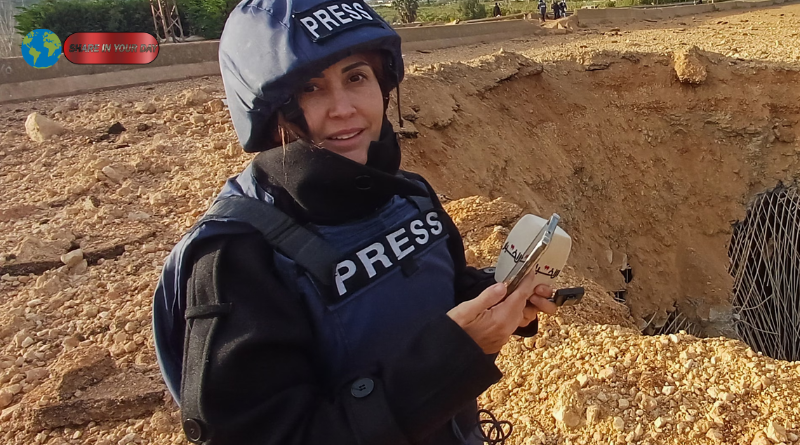
The journalist killing Lebanon case has sparked global outrage after Lebanese authorities accused Israel of blocking rescue efforts following a deadly airstrike. The incident, which claimed the life of journalist Amal Khalil, highlights growing concerns about press safety and alleged violations of international humanitarian law amid escalating regional conflict.
The tragedy unfolded in southern Lebanon during ongoing hostilities between Israeli forces and Hezbollah, despite a fragile ceasefire. Meanwhile, conflicting narratives from both sides have intensified international scrutiny.
What Happened in Southern Lebanon?
The fatal strike occurred near the town of al-Tayri, where journalist Amal Khalil and photographer Zeinab Faraj were reporting on recent military activity. According to Lebanese officials, an Israeli airstrike initially hit a vehicle near the journalists.
Moments later, as they sought shelter inside a nearby building, a second strike hit the structure. Khalil became trapped under the rubble, while Faraj sustained serious injuries but was eventually rescued.
However, the situation escalated further when rescue teams attempted to reach Khalil.
Rescue Efforts Allegedly Blocked
Lebanon’s health ministry and military officials claim that Israeli forces actively obstructed rescue operations. Reports indicate that ambulances and emergency crews were prevented from accessing the site due to gunfire and the use of a sound grenade.
This delay proved critical. Khalil remained trapped for hours before civil defense teams were finally able to recover her body.
Lebanese Prime Minister Nawaf Salam condemned the incident, describing both the strike and obstruction of rescue efforts as potential “war crimes.”
Such allegations have intensified calls for an international investigation.
Israel’s Response to the Incident
The Israeli military has denied deliberately targeting journalists or blocking rescue operations. Officials stated that the strike targeted vehicles believed to pose a threat after leaving a Hezbollah-linked military area.
According to Israel, the vehicles approached troops in a manner considered dangerous, prompting military action. The army also said it was reviewing reports regarding injured journalists.
This response reflects a broader pattern in the conflict, where Israel maintains that its operations are defensive and aimed at neutralizing Hezbollah threats.
A Pattern of Escalating Violence
The journalist killing Lebanon case is not an isolated incident. Violence has intensified across southern Lebanon in recent weeks, even amid ceasefire efforts.
Recent reports indicate that multiple civilians, including journalists, have been killed in Israeli strikes.
In one account, another journalist was killed after a similar strike hit a building where reporters had taken refuge. Rescue operations in that case were also reportedly delayed due to ongoing fire.
Since the conflict reignited earlier in 2026, more than 2,400 people have been killed in Lebanon, underscoring the severity of the crisis.
Why Journalists Are Increasingly at Risk
Journalists working in conflict zones have always faced significant risks. However, the situation in Lebanon appears to be worsening.
Media organizations and press freedom advocates argue that repeated incidents involving journalists raise serious concerns about their protection under international law.
Under the Geneva Conventions, journalists are considered civilians and must not be targeted. Additionally, any interference with medical or rescue operations is strictly prohibited.
Yet, reports of delayed rescues and repeated strikes on the same locations—sometimes referred to as “double-tap” attacks—have raised alarm among human rights groups.
International Reaction and Legal Implications
The killing of Amal Khalil has triggered strong reactions both locally and internationally. Lebanese officials have pledged to bring the case before international bodies, potentially including the United Nations.
Human rights organizations are also calling for independent investigations into whether the incident constitutes a violation of international humanitarian law.
Meanwhile, global press freedom groups warn that failure to hold perpetrators accountable could set a dangerous precedent.
The Fragile Ceasefire Under Threat
The incident comes at a particularly sensitive time. A U.S.-brokered ceasefire between Israel and Hezbollah was already under strain before the attack.
Recent clashes, including drone strikes and retaliatory fire, have threatened to derail ongoing diplomatic efforts.
As tensions rise, incidents like the journalist killing Lebanon case risk further undermining peace negotiations.
Broader Context: A Regional Crisis
The conflict in Lebanon is part of a wider regional escalation involving Israel, Iran, and allied groups.
The ongoing war has disrupted not only local stability but also global markets, particularly energy supply routes.
This broader context makes each incident more consequential, as it feeds into an already volatile geopolitical situation.
Press Freedom in Conflict Zones
The death of Amal Khalil highlights a troubling trend: journalists are increasingly becoming casualties of war.
Press freedom organizations emphasize that independent reporting is essential, especially in conflict zones where misinformation can spread rapidly.
However, when journalists themselves become targets—or are unable to be rescued safely—the ability to report truthfully is severely compromised.
What Happens Next?
The next steps will likely involve diplomatic pressure, potential investigations, and continued debate over accountability.
Lebanon has indicated it will pursue legal action through international channels. Meanwhile, Israel’s internal review may determine whether any operational errors occurred.
However, without a broader de-escalation of the conflict, similar incidents could continue.
Conclusion
The journalist killing Lebanon case has become a flashpoint in the ongoing conflict, raising urgent questions about civilian protection, press freedom, and the rules of war.
While both sides present conflicting accounts, the human cost is undeniable. The death of Amal Khalil serves as a stark reminder of the dangers faced by journalists—and the importance of safeguarding those who risk their lives to report the truth.
As international attention grows, the world will be watching closely to see whether justice, accountability, and meaningful change follow.