Thailand Cambodia Maritime Dispute: Shocking Deal Ends After 20 Years
The long-running Thailand Cambodia maritime dispute has entered a dramatic new phase after Thailand officially terminated a decades-old agreement aimed at resolving overlapping territorial claims. The move signals a major shift in regional diplomacy and raises fresh concerns about stability in Southeast Asia.
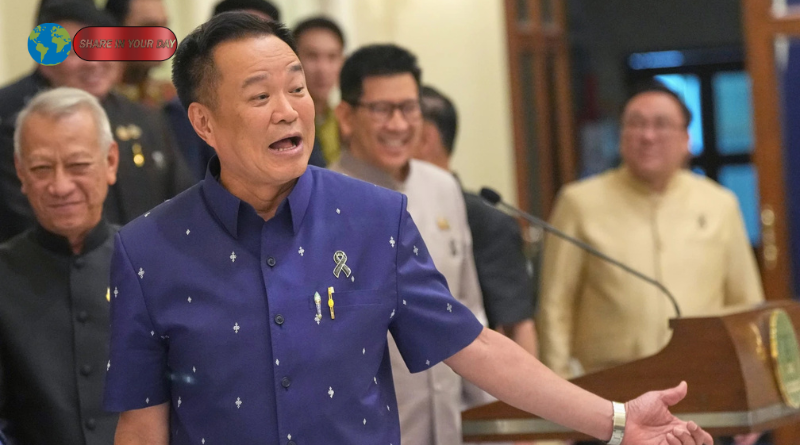
Thailand’s government announced it would scrap a 2001 Memorandum of Understanding (MOU) with Cambodia—an agreement that had served as a framework for peaceful negotiations over disputed maritime boundaries in the Gulf of Thailand.
The decision comes after more than 20 years of stalled talks, failed negotiations, and rising political tensions between the two neighboring countries.
What Was the 2001 Agreement About?
The now-defunct agreement was designed to help Thailand and Cambodia peacefully resolve overlapping maritime claims while also enabling joint development of natural resources.
Specifically, the deal aimed to:
- Establish a framework for maritime boundary negotiations
- Promote joint exploration of offshore oil and gas
- Prevent escalation of territorial conflicts
- Encourage cooperation under international law
However, despite multiple rounds of discussions, the agreement produced little tangible progress.
Over time, political disagreements, nationalist pressures, and shifting leadership priorities on both sides prevented any meaningful resolution.
Why Thailand Ended the Deal
Thailand’s decision to terminate the agreement was driven by several key factors.
1. Two Decades of Deadlock
After five rounds of negotiations over more than 20 years, both sides failed to agree on maritime boundaries or resource-sharing mechanisms.
Officials in Bangkok argued that continuing under the same framework was no longer productive.
2. Rising Nationalist Sentiment
Domestic politics played a significant role. Thailand’s leadership has faced growing pressure to adopt a tougher stance on territorial sovereignty.
The decision aligns with political promises made by Thai Prime Minister Anutin Charnvirakul, who pledged to reassess long-standing agreements perceived as ineffective.
3. Recent Border Tensions
The maritime dispute cannot be separated from broader tensions between the two countries.
In 2025, clashes along the Thailand-Cambodia border escalated into serious conflict, involving airstrikes, artillery, and large-scale displacement of civilians.
These events heightened mistrust and made diplomatic compromise more difficult.
Cambodia’s Response
Cambodia expressed regret over Thailand’s decision but emphasized its commitment to peaceful resolution.
Government officials in Phnom Penh stated that the country would continue pursuing diplomatic solutions through international legal frameworks.
Cambodian leaders have indicated they may turn to the United Nations Convention on the Law of the Sea (UNCLOS) as a basis for resolving the dispute.
This approach reflects Cambodia’s broader strategy of relying on international law to strengthen its position in territorial disputes.
Shift Toward International Law
With the bilateral agreement now scrapped, both countries appear to be shifting toward international legal mechanisms.
Thailand has also signaled openness to using UNCLOS as a reference point for future negotiations.
This marks a significant transition:
- From bilateral negotiation → to multilateral legal frameworks
- From informal cooperation → to formal dispute resolution
- From political compromise → to legal adjudication
Experts say this could either clarify the dispute or prolong it, depending on how both sides engage with the process.
The Importance of the Gulf of Thailand
The disputed area is not just about territorial lines—it carries major economic significance.
Energy Resources
The Gulf of Thailand is believed to contain valuable offshore oil and gas reserves.
Resolving the Thailand Cambodia maritime dispute could unlock billions of dollars in energy development opportunities.
Strategic Location
The region is also important for:
- Shipping routes
- Fisheries
- Regional security dynamics
Because of this, both countries are highly motivated to secure favorable outcomes.
Impact on Regional Stability
The termination of the agreement raises concerns beyond Thailand and Cambodia.
ASEAN Concerns
As members of the Association of Southeast Asian Nations (ASEAN), both countries are expected to maintain peaceful relations.
However, unresolved disputes risk undermining regional unity and cooperation.
Risk of Escalation
Although both governments have reaffirmed their commitment to peaceful solutions, the absence of a formal framework increases uncertainty.
Past conflicts demonstrate how quickly tensions can escalate.
In 2025, fighting displaced hundreds of thousands of people and caused significant damage to infrastructure and cultural sites.
A History of Tension
The maritime dispute is part of a broader pattern of conflict between Thailand and Cambodia.
Colonial-Era Boundaries
Many of the disagreements stem from maps and borders drawn during the colonial period, which remain contested today.
Recurrent Clashes
Over the years, disputes have erupted into violence multiple times, particularly near sensitive areas such as:
- Border regions
- Historical landmarks
- Strategic territories
Despite ceasefires and diplomatic efforts, underlying issues have never been fully resolved.
What Happens Next?
With the agreement officially scrapped, the future of the Thailand Cambodia maritime dispute remains uncertain.
Possible Scenarios
1. Negotiation Under UNCLOS
Both countries may engage in structured negotiations based on international law.
2. Prolonged Legal Dispute
If disagreements persist, the case could move toward arbitration or conciliation processes.
3. Renewed Bilateral Talks
Despite the breakdown, direct negotiations could resume under a new framework.
Challenges Ahead
Several obstacles could complicate efforts to resolve the dispute:
- Deep-rooted mistrust between both nations
- Political pressures within each country
- Economic stakes tied to natural resources
- Nationalist sentiment influencing policy decisions
These factors make a quick resolution unlikely.
Global Implications
The outcome of the Thailand Cambodia maritime dispute could have broader implications for international law and regional geopolitics.
Test Case for UNCLOS
If both countries rely on UNCLOS, the case could serve as a model for resolving similar disputes worldwide.
Influence on Southeast Asia
Other nations in the region are also dealing with maritime disputes, particularly in the South China Sea.
How Thailand and Cambodia handle this situation could set an important precedent.
Conclusion: A Turning Point in Southeast Asia
Thailand’s decision to end its maritime agreement with Cambodia marks a significant turning point in one of Southeast Asia’s most persistent disputes.
While both countries continue to express commitment to peaceful resolution, the path forward is uncertain.
The shift toward international legal frameworks offers a potential way forward—but also introduces new complexities.
Ultimately, the future of the Thailand Cambodia maritime dispute will depend on whether diplomacy, law, and political will can align to produce a lasting solution.
For now, the region watches closely as two neighboring nations navigate a delicate and high-stakes conflict that could shape the future of Southeast Asia.