Congo Military Plane Crash: 13 Dead as Probe Begins
A Congo military plane crash near Kenge in the Democratic Republic of Congo killed 13 people on Friday, September 25, after the aircraft reportedly suffered a technical problem while returning toward the capital, Kinshasa. The plane attempted to make an emergency landing in the town of Kenge but crashed into a residential plot, according to Kwango provincial officials and a Reuters report.
The crash involved a small Let L-410 aircraft operated by TRACEP. Among those killed were senior members of the Congolese armed forces, including General Lucien-René Likulia Bakumi, the army’s auditor general. A major, a captain and other military personnel and civilians were also aboard.
The accident has prompted an aviation investigation as authorities work to establish exactly what caused the aircraft to lose its ability to continue safely toward Kinshasa.
Congo Military Plane Crash Kills 13 Near Kenge
The aircraft was traveling from Kikwit toward Kinshasa when the emergency developed, according to officials cited by Reuters. The plane diverted toward Kenge after experiencing what was described as a technical problem.
Kenge is the capital of Kwango province and lies along the important route connecting southwestern parts of the Democratic Republic of Congo with Kinshasa.
According to Kwango Vice Governor Remy Saki Bokinda, the pilot attempted to find somewhere suitable to land after the problem developed. However, the town did not have an appropriate landing strip for the aircraft.
The aircraft ultimately crashed into a residential plot.
Bokinda said all 13 people aboard died. Twelve victims were reportedly burned beyond recognition, while the pilot’s body was found outside the wreckage.
The circumstances made identification particularly difficult, with investigators and local authorities facing the immediate task of securing the crash site and recovering the victims.
Senior Military Officers Were Among the Victims
The Congo military plane crash was especially significant because several members of the country’s military leadership were traveling aboard the aircraft.
One of the confirmed victims was General Lucien-René Likulia Bakumi, who served as auditor general of the Armed Forces of the Democratic Republic of Congo, or FARDC.
Local reports also identified other senior military officials among the passengers. Reporting from Congolese outlets indicated that the aircraft was carrying a delegation traveling on official business.
The loss of senior military personnel adds another dimension to the tragedy because the passengers were not simply traveling privately. They were reportedly carrying out an official mission involving the military and judicial institutions.
Congolese reporting identified Lieutenant General Joseph Mutombo Katalayi, described as the first president of the High Military Court, among the victims. Other officers and military personnel were also listed in local reports.
Because information was still developing on Friday, officials had not released a complete and universally verified passenger list at the time of initial reports. Investigators are expected to confirm the identities of all victims as the recovery and identification process continues.
What Happened Before the Crash?
The first accounts point to a technical malfunction as the immediate problem faced by the crew.
The aircraft was on its return journey from Kikwit to Kinshasa when the emergency occurred. Rather than continuing toward the capital, the pilot attempted to land near Kenge.
That decision suggests the crew was responding to an in-flight emergency and searching for a location where the aircraft could be brought down safely.
However, Kenge reportedly lacked a suitable landing strip for the aircraft. The aircraft therefore attempted to land in an area that was not designed to serve as an emergency runway.
Officials said the plane crashed into a residential plot.
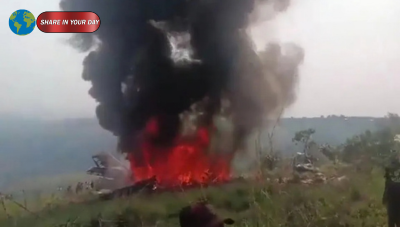
The aircraft then caught fire, producing heavy smoke and flames that were captured in images and videos circulating from the scene.
At this stage, the reported technical failure should not be treated as the final determination of the crash cause. A technical problem may explain why the emergency landing was attempted, but investigators still need to establish what malfunction occurred, when it began, how the aircraft responded and why the emergency landing ended in a fatal impact.
Crash Site Turns Into Emergency Scene
Images from Kenge showed wreckage engulfed in flames as local residents gathered near the scene.
Emergency and security personnel moved into the area after the crash. The site had to be secured while recovery operations were carried out.
The presence of a residential area near the crash site also raised concerns about people on the ground. Initial reports said no residents were killed in the crash, although the aircraft struck a residential plot.
The survival of people on the ground was one of the few elements of the disaster that did not add further casualties to the already devastating death toll.
The aircraft itself was destroyed by the impact and subsequent fire.
Because several victims were badly burned, authorities faced additional challenges in identifying the bodies. Those procedures are expected to form part of the broader response following the accident.
Investigation Into the Congo Military Plane Crash
The Democratic Republic of Congo’s aviation accident investigation authority has launched a probe into the crash.
The investigation is expected to focus on several areas, including the aircraft’s mechanical condition, maintenance history, flight records, crew decisions and weather conditions at the time of the accident.
Investigators will also examine the wreckage for evidence of the failure reported before the emergency landing.
Aircraft accident investigations normally require investigators to distinguish between the sequence of events and the underlying cause. For example, a technical malfunction can trigger an emergency, but the final investigation may determine that other factors also contributed to the outcome.
For that reason, early reports should be considered preliminary.
Authorities have not yet announced a final explanation for why the aircraft crashed.
The investigation will also be important in determining whether the aircraft was operating under appropriate technical and operational conditions before the flight.
TRACEP Aircraft Involved in the Crash
The aircraft was reported to be a Czech-built Let L-410 operated by TRACEP.
The Let L-410 is a twin-engine turboprop aircraft designed for regional transportation and operations from relatively short airfields. Aircraft of this type are used in a number of countries where aviation infrastructure can vary considerably between major cities and remote communities.
Local reporting identified the aircraft involved in Friday’s crash as a Let L-410 registered 9S-GUC.
The registration and aircraft details will be among the information investigators can use when reconstructing the flight.
The aircraft’s operational history, maintenance records and previous inspections could become important parts of the investigation. However, those details had not been fully established in the initial reports available after the crash.
The accident also comes after another TRACEP-operated L-410 was involved in a separate crash in eastern Congo in July 2026. That July accident involved a different aircraft and route, and investigators must treat the incidents separately unless evidence establishes a connection.
Congo’s Aviation Safety Challenges
The latest Congo military plane crash has once again drawn attention to aviation safety in the Democratic Republic of Congo, a country where air travel plays an important role because of its enormous territory and difficult road infrastructure.
Kinshasa is separated from many parts of the country by long distances and limited road connections. Aircraft therefore provide an important link between the capital and provincial centers.
However, aviation operations can become more challenging when aircraft operate in areas where suitable airports or emergency landing facilities are limited.
The Kenge crash illustrates one of those challenges.
When the crew experienced an emergency, the pilot reportedly attempted to find a place to land. But the lack of an appropriate runway complicated the situation.
That does not establish that infrastructure was the cause of the crash. Only the official investigation can determine how much, if any, role the availability of landing facilities played in the final outcome.
Why the Investigation Matters
The investigation will be closely watched because the victims included senior military officials and because the aircraft was operating on an official mission.
A clear explanation could help establish whether the accident resulted from a mechanical malfunction, operational circumstances, environmental conditions or a combination of factors.
Investigators will likely examine the aircraft’s engines and other systems, cockpit evidence, maintenance documentation and operational records.
Witness statements and photographs or video from the crash site could also assist investigators in reconstructing the final moments of the flight.
The exact sequence leading from the reported technical problem to the failed emergency landing remains unclear.
Until investigators release additional findings, claims about the precise cause should therefore be treated cautiously.
Families Await Further Information
For families of the victims, the immediate priority is identification and the return of remains.
The reported condition of many of the bodies means that identification could take time.
The death of senior military and judicial officials is also expected to have consequences for the institutions where they worked, particularly if replacements are required while investigations and official mourning continue.
For the wider community in Kenge, the crash has brought a major aviation disaster directly into a residential area.
Witnesses described a scene dominated by flames and smoke after the aircraft came down.
The crash occurred suddenly, leaving emergency responders and local authorities to deal with the consequences while investigators began collecting evidence.
What Happens Next
The next stage will be the formal investigation into the aircraft’s final flight.
Authorities are expected to gather information about the aircraft’s condition before departure, the technical problem reported during the journey and the decisions made during the attempted emergency landing.
Investigators will also need to determine whether the aircraft had sufficient options available after the technical problem developed.
A preliminary investigation may provide additional information about the aircraft and flight path, but a final report could take considerably longer.
For now, the confirmed central facts are clear: a TRACEP-operated aircraft crashed near Kenge on September 25 while traveling toward Kinshasa, 13 people aboard were killed, senior military officials were among the victims, and authorities have opened an aviation investigation.
The final cause of the Congo military plane crash remains to be established.
As investigators examine the wreckage and flight records, further details should clarify what happened during the aircraft’s final minutes and why the attempted emergency landing could not be completed safely.