Meta VR Glasses: 5 Powerful Features Revealed
Meta is taking another major step into the future of virtual reality with its new Meta VR Glasses, a lightweight headset designed to combine high-resolution displays, artificial intelligence, eye tracking, hand controls and virtual workspaces.
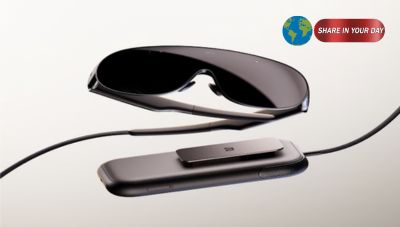
Unveiled at Meta Connect 2026, the new device represents a significant change in Meta’s approach to virtual reality hardware. Rather than relying on a traditional headset design alone, Meta is presenting the VR Glasses as a much lighter wearable connected to a separate computing puck.
The device is expected to launch in spring 2027 with a starting price of $1,299. Meta says the glasses weigh about 100 grams, while the separate computing unit provides the processing power needed to run the experience.
The announcement puts Meta directly into a rapidly developing part of the technology market, where companies are trying to make virtual and mixed reality devices smaller, more comfortable and more useful for everyday work.
Meta VR Glasses Bring Virtual Workspaces Into View
One of the most important features of the Meta VR Glasses is the ability to create virtual workspaces.
Instead of being limited to a physical computer monitor, users can place virtual screens and applications around them. This could allow a person to work with multiple displays without physically owning multiple monitors.
Meta describes the glasses as capable of transforming into a workspace, entertainment screen, gaming environment and other digital experiences. The company is positioning the product as a new generation of VR rather than simply another Quest headset.
For professionals, the virtual desktop capability could be one of the most practical elements of the device.
A laptop can provide one physical display, while a traditional desktop setup can require several monitors, a large desk and additional hardware. A virtual workspace potentially removes some of those physical limitations.
The user could instead see multiple digital windows positioned within their surrounding environment.
That concept has existed in virtual and mixed reality for years. However, Meta is attempting to make it more practical by reducing the physical size and weight of the hardware.
5K Displays Target High-Resolution VR
Display quality is another major component of the new device.
According to TechRepublic, the Meta VR Glasses feature 5K displays designed to provide a high-resolution visual experience. The high pixel density is particularly important in VR because users view digital images at very close range.
A low-resolution display can make virtual environments appear less convincing. Text can also become difficult to read, which creates problems when VR is being used for productivity rather than entertainment.
The move toward 5K-class displays therefore reflects Meta’s attempt to make virtual screens more useful for everyday computing.
For work applications, sharp text is especially important.
Someone using a virtual browser, spreadsheet, programming environment or document editor needs to be able to read small details for extended periods. Better display resolution can help reduce some of the visual limitations associated with earlier generations of VR hardware.
Meta has not presented the glasses simply as a gaming accessory. The company’s broader pitch includes productivity and professional applications, making display quality an important part of the product’s appeal.
Meta VR Glasses Use Eyes and Hands Instead of Traditional Controls
Another major change involves how people interact with the device.
The Meta VR Glasses are designed around eye tracking and hand interaction. Meta’s developer documentation says the eyes and hands are the primary input methods, with gaze used for targeting and a hand pinch used for selection.
That means users can interact with virtual objects without necessarily holding a conventional controller.
The interaction model is relatively straightforward.
A user can look toward an object or application to target it and then use a hand gesture to select it. This could make navigating virtual screens feel more natural than moving a physical controller through the air.
The approach also supports Meta’s goal of making the headset lighter and less cumbersome.
Controllers remain compatible with the device, according to Meta’s developer documentation, but the company is clearly designing the core experience around eyes and hands.
That creates new possibilities for developers.
Instead of simply adapting traditional controller-based VR applications, developers can design experiences around gaze, gestures and spatial interaction from the beginning.
A Separate Compute Puck Keeps the Glasses Lightweight
The unusual hardware design is one of the most noticeable aspects of the Meta VR Glasses.
The glasses themselves are connected to a separate computing puck. Rather than placing all of the processing hardware inside the frame, Meta has moved significant computing components into the external unit.
The result is a device that Meta says weighs about 100 grams.
This approach addresses one of the biggest challenges facing VR manufacturers: weight.
Traditional VR headsets need displays, processors, batteries, sensors and other components mounted around the user’s head. As manufacturers increase performance, those components can also make headsets heavier.
Moving computing hardware away from the face provides another way to reduce the weight of the wearable portion.
The trade-off is that the glasses are tethered to the computing puck.
That means the device is not completely self-contained in the same way as a standalone headset. Users will need to manage the relationship between the glasses and the external computing unit.
For Meta, however, the design appears to be an attempt to balance high performance with a significantly lighter form factor.
Meta AI Is Becoming Part of the VR Strategy
Artificial intelligence is another major part of Meta’s hardware strategy.
The company has been expanding its AI capabilities across its products, and Meta Connect 2026 placed personal AI at the center of the company’s broader technology ecosystem.
Meta introduced Muse as a personal AI agent designed to assist users with tasks and goals, and the company is also bringing its AI capabilities to wearable devices.
That broader strategy matters for the Meta VR Glasses because Meta is no longer treating VR as an isolated platform.
Instead, the company appears to be building an ecosystem where AI, glasses, virtual reality and software services work together.
The potential result is a more conversational form of computing.
Rather than opening an application manually, users could increasingly interact with digital services through natural language, gaze and gestures.
Meta’s developer tools are also being updated to support AI-assisted development. The company says its Meta VR CLI can work with AI coding agents, including Muse Code, allowing developers to describe projects and receive assistance with creating VR applications.
Meta VR Glasses Run on the Same Platform as Quest
Despite the new hardware design, Meta is not abandoning the software ecosystem it has built around Quest.
Meta says the VR Glasses run on the same operating system as Meta Quest and use the same SDKs. That means developers familiar with Quest development can begin adapting their applications to the new device.
This could be important for the device’s launch.
A new VR platform can face a difficult problem when it arrives without enough software. Developers may hesitate to invest resources into a platform without a large audience, while consumers may hesitate to buy hardware that lacks applications.
Meta is attempting to reduce that barrier by carrying over its existing development ecosystem.
The company has already made the v207 SDKs available, even though the hardware itself is not scheduled to arrive until spring 2027.
That gives developers time to test applications and adapt existing experiences before consumers can purchase the glasses.
Developers Can Start Building Before Launch
Meta’s decision to release development tools ahead of the hardware launch is a clear signal that software will be central to the product.
The company says developers can build and test experiences for the VR Glasses using Unity, Unreal, Android and web development tools. Simulators are also available for developers who do not yet have access to the physical hardware.
That gives developers several months to experiment with the new interaction model.
Because gaze and hand gestures are central to the experience, applications designed for conventional controllers may need to be reconsidered.
A productivity application, for example, might use gaze to select a virtual window and a pinch gesture to move or resize it.
A game could use hand movements rather than physical controllers.
These possibilities mean the new hardware is not simply about shrinking an existing headset. It creates a different design environment for VR developers.
Meta VR Glasses Price Starts at $1,299
The biggest barrier for many consumers could be the price.
Meta has announced a $1,299 price point for the VR Glasses, placing the product firmly in the premium category. The company has not positioned it as an inexpensive replacement for the Quest lineup.
At that price, consumers will likely expect more than gaming.
The combination of 5K displays, AI capabilities, eye tracking, hand tracking and virtual workspaces suggests that Meta is targeting people interested in productivity and advanced computing as well as entertainment.
The separate computing puck also represents a different hardware philosophy from conventional standalone VR.
Meta’s own developer materials describe VR Glasses as an addition to its VR portfolio rather than a replacement for Quest devices.
That distinction is important.
Quest can continue serving consumers looking for a more traditional standalone VR experience, while VR Glasses can target users interested in a lightweight premium device.
Spring 2027 Launch Gives Meta Time to Prepare
The Meta VR Glasses are scheduled to launch in spring 2027 rather than immediately following the 2026 announcement.
That gives Meta time to refine the hardware and expand the software ecosystem.
It also gives developers an opportunity to create applications specifically designed for the new form factor.
Meta has already launched a developer competition tied to the new hardware. The company’s VR Start Developer Competition runs from September 24 through November 18, 2026, with $1 million in total prizes across multiple categories.
The competition could help encourage developers to experiment with new VR experiences before consumers receive the glasses.
That strategy could be important because the success of a premium VR platform depends heavily on its software library.
Meta Is Expanding Beyond Traditional VR
The announcement of the Meta VR Glasses is part of a much broader hardware strategy.
At Meta Connect 2026, the company also highlighted AI glasses, its Muse personal AI platform and new developer tools.
Meta says developers can now extend mobile applications to AI glasses using its Wearables Device Access Toolkit. It also supports web applications and Meta AI connectors, giving developers multiple ways to bring services to wearable devices.
This suggests Meta sees wearable computing as a major long-term opportunity.
The company’s vision extends beyond putting a screen in front of a person’s eyes.
Instead, Meta is trying to create computing devices that respond to voice, movement, gaze, gestures and AI.
The VR Glasses are one part of that larger strategy.
What Meta VR Glasses Could Mean for the Future
The launch of the Meta VR Glasses marks an important moment for virtual reality hardware.
The product combines several trends that have been developing independently: high-resolution displays, spatial computing, artificial intelligence, gesture controls and lightweight wearable design.
Its $1,299 price means it will occupy a premium position, while the spring 2027 launch gives Meta time to strengthen the platform before the device reaches consumers.
The most significant question may not be whether the glasses can display virtual screens.
The technology can already do that.
The bigger question is whether users will find the combination of lightweight hardware, eye tracking, hand controls, AI and virtual workspaces useful enough to change the way they work and interact with computers.
Meta is betting that they will.
With the company’s existing Quest ecosystem, new AI capabilities and developer tools already becoming available, the groundwork for that experiment is now being built.
When the Meta VR Glasses arrive in spring 2027, consumers will get a clearer answer about whether this new approach can move VR beyond