Nancy Roman Space Telescope Revealed: A 200x Leap Beyond Hubble
NASA has officially completed one of its most ambitious space observatories ever built—the Nancy Roman Space Telescope—and it is now ready for launch.
Often described as a revolutionary successor to the Hubble Space Telescope, this next-generation instrument promises to transform how humanity observes the universe. With the ability to map the sky up to 100–200 times faster and wider than Hubble, the Roman Telescope is poised to unlock mysteries ranging from dark energy to alien worlds.
The telescope is currently scheduled for launch as early as September 2026, marking a major milestone in NASA’s long-term space exploration strategy.
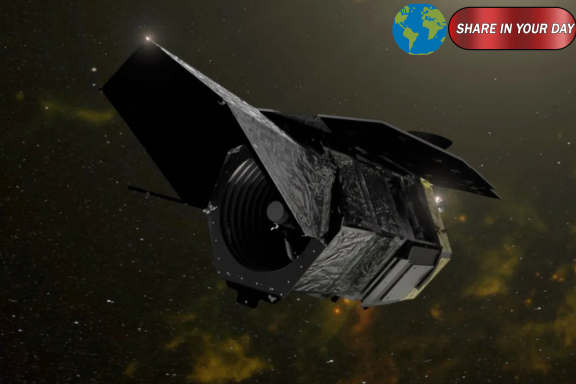
What Is the Nancy Roman Space Telescope?
The Nancy Roman Space Telescope is a powerful infrared observatory developed by NASA and named after Nancy Grace Roman, a pioneering astronomer often called the “mother of Hubble.”
Unlike previous telescopes, Roman is designed for wide-field surveys. While Hubble captures extremely detailed images of small sections of the sky, Roman will scan vast areas quickly—essentially creating a high-resolution map of the universe.
Key Specifications
- 2.4-meter primary mirror (similar to Hubble)
- 300-megapixel Wide-Field Instrument
- Field of view ~100x larger than Hubble
- Infrared observation capability
- Planned 5-year mission
This combination allows Roman to maintain sharp image quality while covering enormous portions of the cosmos.
Why It’s Being Called “Revolutionary”
The excitement surrounding the Roman Telescope isn’t just hype—it’s rooted in real technological breakthroughs.
1. Massive Sky Coverage
Roman’s biggest advantage is its ability to scan large areas of space rapidly. Scientists estimate it can survey the sky hundreds of times faster than Hubble while maintaining comparable resolution.
This means tasks that once took years could now be completed in months—or even weeks.
2. Mapping the Invisible Universe
One of Roman’s primary missions is to study dark energy, the mysterious force driving the accelerated expansion of the universe.
By observing billions of galaxies and measuring cosmic structures, Roman will help scientists answer fundamental questions:
- Why is the universe expanding faster over time?
- Is dark energy constant—or evolving?
- Does Einstein’s theory of gravity fully explain cosmic behavior?
Roman will use multiple techniques, including gravitational lensing and supernova observations, to gather this data.
3. Discovering Thousands of New Worlds
Another groundbreaking goal is the search for exoplanets—planets outside our solar system.
Roman will use a technique called gravitational microlensing, allowing it to detect planets that are otherwise invisible.
Experts believe the telescope could discover tens of thousands—or even over 100,000—new exoplanets, dramatically expanding our understanding of planetary systems.
Some of these worlds could potentially resemble Earth, raising exciting possibilities in the search for life beyond our planet.
4. Direct Imaging of Alien Planets
Unlike many telescopes, Roman includes a coronagraph instrument designed to block out starlight.
This allows scientists to directly image planets orbiting distant stars—something extremely difficult with current technology.
This capability represents a major step toward future missions that could capture images of Earth-like planets.
How It Compares to Hubble and Webb
To understand Roman’s significance, it helps to compare it with NASA’s other flagship telescopes.
Hubble Space Telescope
- Launched in 1990
- High-resolution imaging
- Narrow field of view
James Webb Space Telescope
- Launched in 2021
- Deep infrared observations
- Focuses on detailed, distant objects
Nancy Roman Space Telescope
- Launching in 2026
- Wide-field surveys
- Fast mapping of large sky areas
In simple terms:
- Hubble = zoom lens
- Webb = deep space microscope
- Roman = panoramic camera
Together, these telescopes will provide a more complete picture of the universe than ever before.
Launch Timeline and Mission Details
The Roman Telescope has reached a major milestone: completion.
NASA now plans to ship the observatory to Kennedy Space Center for final launch preparations, with liftoff targeted for September 2026 aboard a SpaceX Falcon Heavy rocket.
Once launched, Roman will travel to the Sun-Earth L2 Lagrange point—a stable region about 1 million miles from Earth.
This location provides:
- Minimal interference from Earth
- Stable thermal conditions
- Continuous observation capability
Interestingly, this is the same region where the James Webb Space Telescope operates.
Data Power: A New Era of Astronomy
Roman is expected to generate enormous amounts of data—up to hundreds of terabytes per year.
To put that into perspective:
- A single Roman image could contain millions of galaxies
- Displaying one full image could require hundreds of thousands of 4K screens
This massive data output will enable scientists worldwide to conduct research at an unprecedented scale.
Challenges and Risks
Despite its promise, the Roman Telescope has faced challenges:
Budget Pressures
The mission has survived multiple attempts at cancellation due to budget concerns, highlighting the high cost of cutting-edge space science.
Technological Complexity
Building a telescope capable of such wide-field imaging while maintaining high resolution is extremely complex.
Competition and Expectations
With missions like ESA’s Euclid and China’s Xuntian telescope also launching, Roman will operate in a competitive scientific environment.
Why This Matters for Humanity
The Roman Telescope is more than just a scientific instrument—it represents a leap forward in humanity’s ability to understand the cosmos.
Its discoveries could reshape our knowledge of:
- The origin and fate of the universe
- The distribution of galaxies and dark matter
- The frequency of habitable planets
- The fundamental laws of physics
In many ways, Roman is not just about seeing farther—it’s about seeing more clearly.
The Future of Space Exploration
As NASA prepares for the Roman Telescope’s launch, the mission signals a broader shift in space exploration:
- Larger datasets
- Faster discoveries
- More collaboration between telescopes
- Increased reliance on AI for analysis
Roman will work alongside Hubble and Webb, creating a powerful trio of observatories that complement each other’s strengths.
This multi-telescope strategy is expected to dominate astronomy for decades to come.
Conclusion
The Nancy Roman Space Telescope stands as one of NASA’s most ambitious and transformative projects.
With its unprecedented ability to map vast regions of space, detect thousands of new planets, and explore the mysteries of dark energy, Roman is set to redefine modern astronomy.
As its launch approaches in 2026, scientists and space enthusiasts alike are eagerly awaiting what could be one of the most important missions in the history of space exploration.
The universe is about to come into focus—on a scale we’ve never seen before.