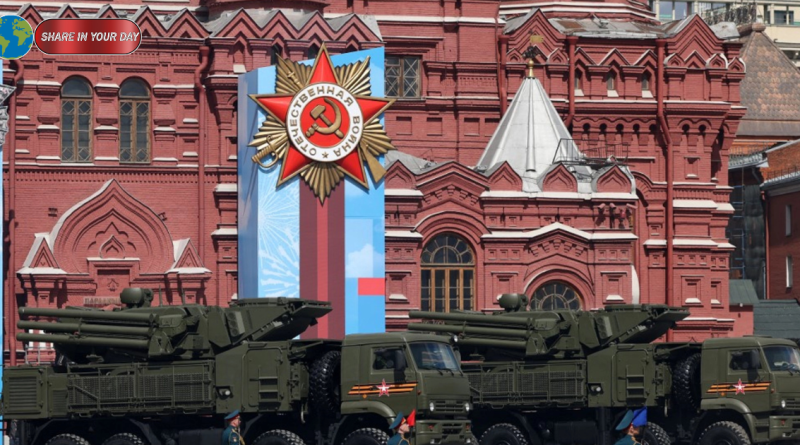
Russia Expands Moscow Air Shield Ahead of Victory Day
Russia has significantly expanded its Moscow air shield ahead of the country’s annual Victory Day celebrations, deploying dozens of new air defense systems around the capital amid growing fears of Ukrainian drone attacks. The move highlights increasing security concerns inside Russia as the war in Ukraine continues to intensify far beyond the front lines.
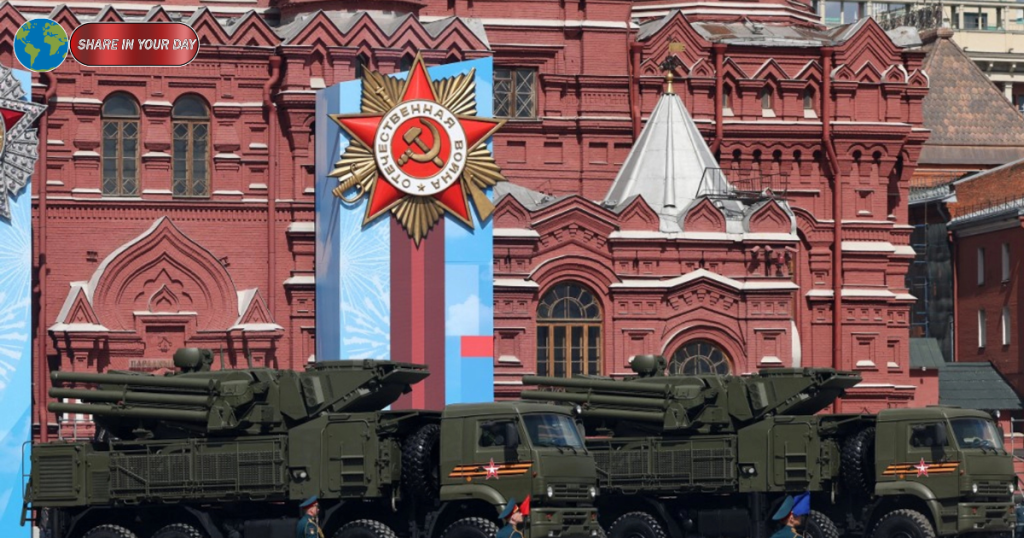
According to reports from Ukrainian and Russian monitoring sources, Moscow and surrounding regions have seen a sharp increase in visible military installations in recent weeks. New air defense batteries, radar systems, and anti-drone units have reportedly been positioned around key government sites, infrastructure hubs, and ceremonial locations connected to the May 9 Victory Day parade.
The Kremlin’s security buildup comes after multiple Ukrainian long-range drone strikes targeted Russian territory over recent months, including attacks near Moscow and critical infrastructure facilities. These incidents have forced Russian authorities to rethink homeland defense strategies and invest heavily in layered protection around the capital.
For many analysts, the expansion of the Moscow air shield reflects a deeper reality about the war: Russia no longer sees itself as insulated from direct attack.
Moscow Faces Rising Drone Threats
Since the beginning of the war, Ukrainian drone capabilities have evolved dramatically.
What initially appeared to be isolated strikes against military targets has transformed into a broader campaign capable of reaching deep inside Russian territory. Ukrainian drones have increasingly targeted oil refineries, military plants, logistics hubs, and airfields far from the battlefield.
In recent months, several drones reportedly approached or entered Moscow’s airspace, prompting airport shutdowns and emergency responses from Russian authorities. These incidents have embarrassed the Kremlin and exposed vulnerabilities in Russia’s domestic defense network.
As a result, Russia has accelerated deployment of advanced air defense systems around the capital.
Military observers noted increased sightings of Pantsir-S1 anti-aircraft systems positioned on rooftops and near government facilities across Moscow. Additional radar arrays and electronic warfare systems have also reportedly appeared throughout the wider Moscow region.
The Kremlin has not publicly detailed the full scope of the deployment. However, security measures ahead of Victory Day suggest Russian officials are preparing for possible disruptions during one of the country’s most symbolic national events.
Victory Day Creates Major Security Concerns
Victory Day remains one of the most important political and military ceremonies in Russia.
Held annually on May 9, the event commemorates the Soviet Union’s victory over Nazi Germany during World War II. The celebration typically includes a massive military parade through Red Square featuring troops, armored vehicles, missile systems, and speeches from Russian President Vladimir Putin.
Because of its symbolic significance, Victory Day represents a high-profile target for potential disruption.
Russian authorities reportedly fear that Ukrainian drones or sabotage operations could embarrass the Kremlin during the globally televised ceremony. As a result, security preparations this year appear substantially more intense than in previous years.
Reports indicate that mobile internet restrictions, GPS disruptions, and temporary communications controls may also be introduced around Moscow during the celebrations. Russian officials have increasingly relied on electronic warfare systems to counter drone navigation technologies.
Meanwhile, authorities are reportedly conducting expanded surveillance and patrol operations across the capital.
The heightened security environment reflects growing anxiety inside Russia over the war’s changing dynamics.
Russia’s Air Defense Strategy Is Evolving
The expansion of the Moscow air shield highlights a major shift in Russian military priorities.
Earlier in the conflict, most Russian air defense assets focused primarily on frontline operations and protecting occupied territories. However, repeated drone attacks deep inside Russia have forced military planners to divert resources toward homeland defense.
Analysts say the Kremlin now views domestic air defense as a strategic necessity rather than a secondary concern.
This evolving strategy includes multiple layers of protection:
- Long-range missile interception systems
- Short-range anti-drone platforms
- Electronic warfare technology
- Radar detection networks
- Mobile rapid-response defense units
Together, these systems form what Russian officials describe as an integrated defensive shield around key regions.
However, experts caution that defending a massive city like Moscow against low-cost drone attacks remains extremely difficult.
Small drones can fly at low altitude, change direction quickly, and overwhelm expensive missile systems through sheer numbers. Ukraine has increasingly relied on this asymmetrical strategy to pressure Russian infrastructure and psychological confidence.
That challenge explains why Russia continues investing heavily in layered defense systems rather than relying on a single platform.
Ukrainian Drone Warfare Continues Expanding
Ukraine’s drone campaign has become one of the defining military developments of the war.
Ukrainian forces and intelligence agencies have repeatedly demonstrated the ability to strike targets hundreds of kilometers inside Russian territory. Oil refineries, military factories, radar systems, and fuel depots have all faced attacks over the past year.
Some of the most significant strikes targeted strategic energy infrastructure, temporarily disrupting refinery operations and forcing costly repairs.
Ukraine’s strategy appears designed not only to damage military capabilities but also to create economic and psychological pressure inside Russia. By showing that even Moscow faces potential threats, Ukrainian operations undermine the image of complete Kremlin control.
Military analysts believe drone warfare will remain central to the conflict moving forward.
Both Ukraine and Russia are investing heavily in unmanned technologies, including attack drones, reconnaissance platforms, and electronic warfare systems. The battlefield increasingly resembles a high-tech conflict driven by innovation and rapid adaptation.
At the same time, civilian populations in both countries are becoming more exposed to the consequences of long-range attacks.
The Kremlin Wants to Project Strength
Despite growing security concerns, the Kremlin is determined to project confidence ahead of Victory Day.
Russian state media continues emphasizing military resilience, national unity, and the importance of defending Russia against external threats. Victory Day celebrations remain a key part of that narrative.
However, the visible expansion of air defenses around Moscow tells a more complicated story.
The presence of anti-aircraft systems throughout the capital serves as a reminder that Russia’s war is increasingly reaching home territory. What once seemed distant to many Russian citizens now appears much closer.
Some analysts argue that the Kremlin faces a difficult balancing act.
On one hand, officials want to reassure the public and demonstrate military strength. On the other hand, the massive security buildup itself signals that authorities perceive genuine danger.
That contradiction has become more visible as the war continues.
Moscow Air Shield Reflects a New Phase of the War
The expansion of the Moscow air shield illustrates how dramatically the Russia-Ukraine conflict has evolved.
What began largely as a conventional ground invasion has transformed into a multidimensional war involving drones, cyber operations, long-range strikes, economic warfare, and information campaigns.
Increasingly, neither side enjoys true geographic safety.
Ukraine faces daily missile and drone attacks on cities and infrastructure. Meanwhile, Russia now confronts growing vulnerabilities inside its own borders, including in politically symbolic locations such as Moscow.
The Kremlin’s decision to strengthen Moscow’s defenses ahead of Victory Day demonstrates how seriously Russian authorities take those threats.
Whether the expanded air shield can fully protect the capital remains uncertain.
What is clear, however, is that the psychological geography of the war has changed permanently.
The conflict is no longer confined to trenches and battlefields near the front.
Now, even Moscow prepares for the possibility of attack.
Image ALT Text
Moscow air shield expansion with Russian air defense systems ahead of Victory Day celebrations