US Troop Withdrawal Shocks Germany’s Vilseck Town
The quiet Bavarian town of Vilseck is facing growing anxiety after reports emerged that thousands of American troops could soon leave Germany. For decades, the town has depended heavily on the presence of the US military. Now, residents fear that the proposed withdrawal could permanently change the local economy, culture, and identity.
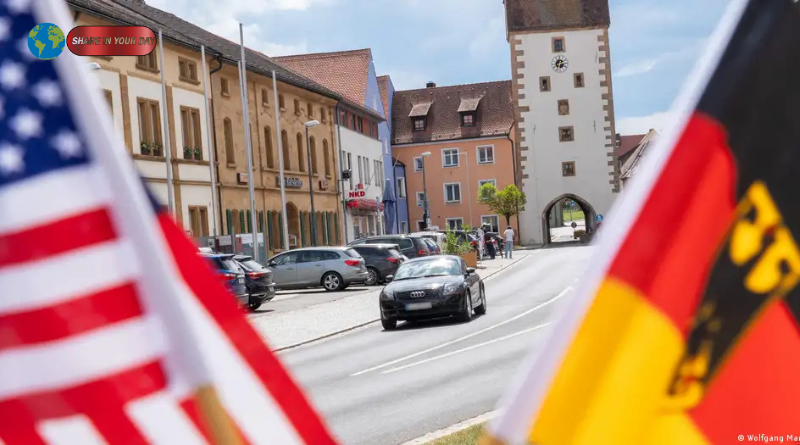
The potential move is part of a broader US military repositioning in Europe. Reports indicate that around 5,000 troops may be withdrawn from Germany in the coming months, with Vilseck expected to be among the hardest-hit communities.
Located in Bavaria, Vilseck has long been tied to the US Army’s Rose Barracks installation, home to the 2nd Stryker Cavalry Regiment. The military presence has shaped the town for generations, creating thousands of jobs and building close relationships between German residents and American families.
Why Vilseck Depends on the US Military
Vilseck is not a large city. The town itself has fewer than 7,000 residents, yet thousands of American troops and their families live nearby because of the military installation.
For years, local businesses have relied on American customers. Restaurants, bars, supermarkets, repair shops, and rental properties all benefit from the constant flow of military personnel.
According to local officials, the US military presence generates massive economic activity across the region. Some estimates place the annual contribution at hundreds of millions of dollars.
Mayor Thorsten Grädler warned that the consequences of a withdrawal would be severe. He explained that the local economy has become deeply interconnected with the military base over time.
The concern is not only financial. Many residents say the American presence has become part of the town’s identity.
The Strategic Importance of Rose Barracks
Rose Barracks is one of the most important US Army installations in Europe. The base serves as a critical hub for training and military readiness within NATO operations.
The 2nd Stryker Cavalry Regiment stationed there is considered one of the US Army’s primary combat formations in Europe. Military analysts believe the unit plays a major role in NATO’s eastern defense posture.
The base is also part of the larger US Army Garrison Bavaria network, which includes nearby training grounds in Grafenwöhr and Hohenfels. Together, these facilities form one of the largest US military training systems outside the United States.
Because of this strategic value, some German officials hope the withdrawal plan may still be reversed.
Why the US Is Considering Troop Withdrawals
The proposed reduction comes amid rising tensions between Washington and several European governments.
Reports suggest the Trump administration wants European NATO members to increase defense spending and reduce reliance on American military protection.
The current plan would reduce the US troop presence in Germany by roughly 5,000 personnel over the next several months. The decision follows renewed debates over military funding, NATO responsibilities, and geopolitical strategy in Europe.
This is not the first time Vilseck has faced uncertainty.
During Donald Trump’s first presidency, a similar withdrawal proposal targeted the same military unit. However, the plan was eventually canceled under President Joe Biden.
That history has given some residents hope that the latest proposal could still change.
Economic Fears Grow Across Bavaria
The economic impact of the potential troop withdrawal could extend far beyond Vilseck itself.
The wider Bavaria region hosts thousands of military personnel and civilian workers connected to US operations. Many local contractors and service providers rely heavily on the military economy.
Some reports estimate that the Vilseck and Grafenwöhr military communities support around 1,500 civilian jobs directly.
Local officials fear the departure of troops would trigger business closures, falling property values, and reduced investment in surrounding towns.
The uncertainty is already affecting development plans. Some housing projects designed for military families may now face delays or cancellation.
For small communities in rural Bavaria, the loss of stable military-related income could be devastating.
A Deep Cultural Connection
The relationship between Vilseck and the American military extends beyond economics.
For more than 75 years, Germans and Americans have lived side by side in the region. Residents describe strong friendships, cultural exchanges, and shared traditions that developed over decades.
Many American soldiers raise families in the area, while German locals often work on military bases or in businesses serving the military community.
Festivals, schools, restaurants, and sporting events frequently bring both communities together. In some parts of Bavaria, English is commonly heard alongside German because of the long American presence.
Local leaders say losing the troops would feel like losing part of the town’s character.
Some residents also worry about the psychological effect on younger generations who grew up seeing the US military as a permanent part of daily life.
NATO Concerns and European Security
Beyond the local impact, the proposed withdrawal has sparked wider concerns about NATO security.
Germany remains one of the most important hubs for US military operations in Europe. American bases in the country support logistics, intelligence, medical operations, and rapid troop deployment across the continent.
Security analysts warn that reducing forces in Germany could weaken NATO’s readiness during a period of growing geopolitical instability.
At the same time, some European leaders argue the situation highlights the need for Europe to strengthen its own defense capabilities.
Bavarian officials have even suggested that German military forces could eventually occupy facilities abandoned by US troops to preserve strategic infrastructure.
The debate reflects broader changes in transatlantic relations as Europe adapts to shifting US foreign policy priorities.
Residents Hope for a Reversal
Despite the uncertainty, many people in Vilseck remain hopeful.
Local leaders continue to push for diplomatic discussions aimed at preserving the American military presence. German officials believe the strategic importance of Bavaria’s military infrastructure may ultimately convince Washington to reconsider.
For now, however, no final decision has been officially confirmed regarding the complete withdrawal of the Stryker Brigade from Vilseck.
That uncertainty has left businesses, workers, and families in limbo.
Some residents say they are trying to remain optimistic because similar proposals in the past never fully materialized. Others fear the current geopolitical climate makes this situation more serious than before.
Either way, the future of Vilseck now depends heavily on political decisions being made thousands of miles away in Washington.
The Future of US Troops in Germany
Germany still hosts tens of thousands of American troops across multiple military installations. The country remains one of the most important US military partners in Europe.
However, the discussion surrounding troop reductions signals a possible shift in the long-standing military relationship between the two nations.
For towns like Vilseck, the issue is deeply personal.
The possible departure of American forces threatens not only economic stability but also decades of shared history and international cooperation.
As officials continue negotiations and military planners review strategic priorities, residents in Vilseck are left waiting anxiously for answers.
Whether the withdrawal ultimately happens or not, the debate has already exposed how dependent some European communities remain on the American military presence.
And for this small Bavarian town, the uncertainty alone is already changing daily life.