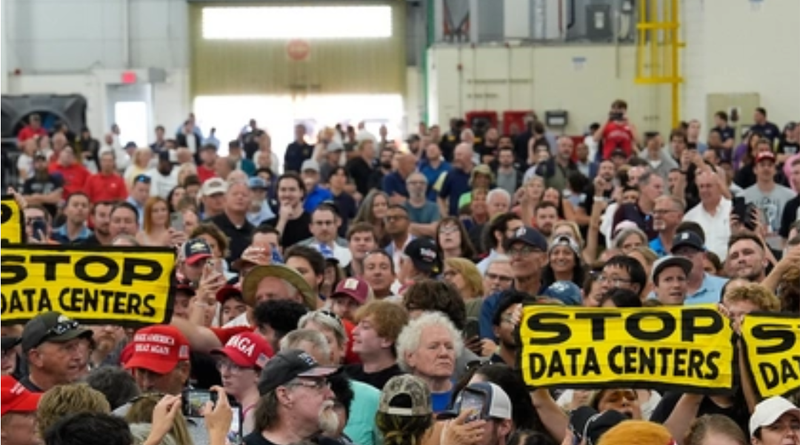
Data Centers Face a Shocking Political Backlash
The data center backlash is becoming a major political problem in the United States as communities, voters and elected officials increasingly question the rapid expansion of artificial intelligence infrastructure. What was once presented primarily as an economic opportunity is now becoming a contentious debate over electricity, water, land use and who ultimately pays for the AI boom.
The growing resistance has caught parts of the technology industry off guard. Political leaders who once welcomed new data center investment are increasingly being forced to address public concerns, while technology companies face mounting pressure to explain how their projects will affect local communities.
The shift is significant because data centers are at the heart of the artificial intelligence race. Powerful computing facilities are required to train and operate increasingly sophisticated AI systems. Yet those facilities also consume enormous amounts of electricity and can require substantial infrastructure investment.
As the industry expands, the political question is becoming harder to avoid.
Why the Data Center Backlash Is Growing
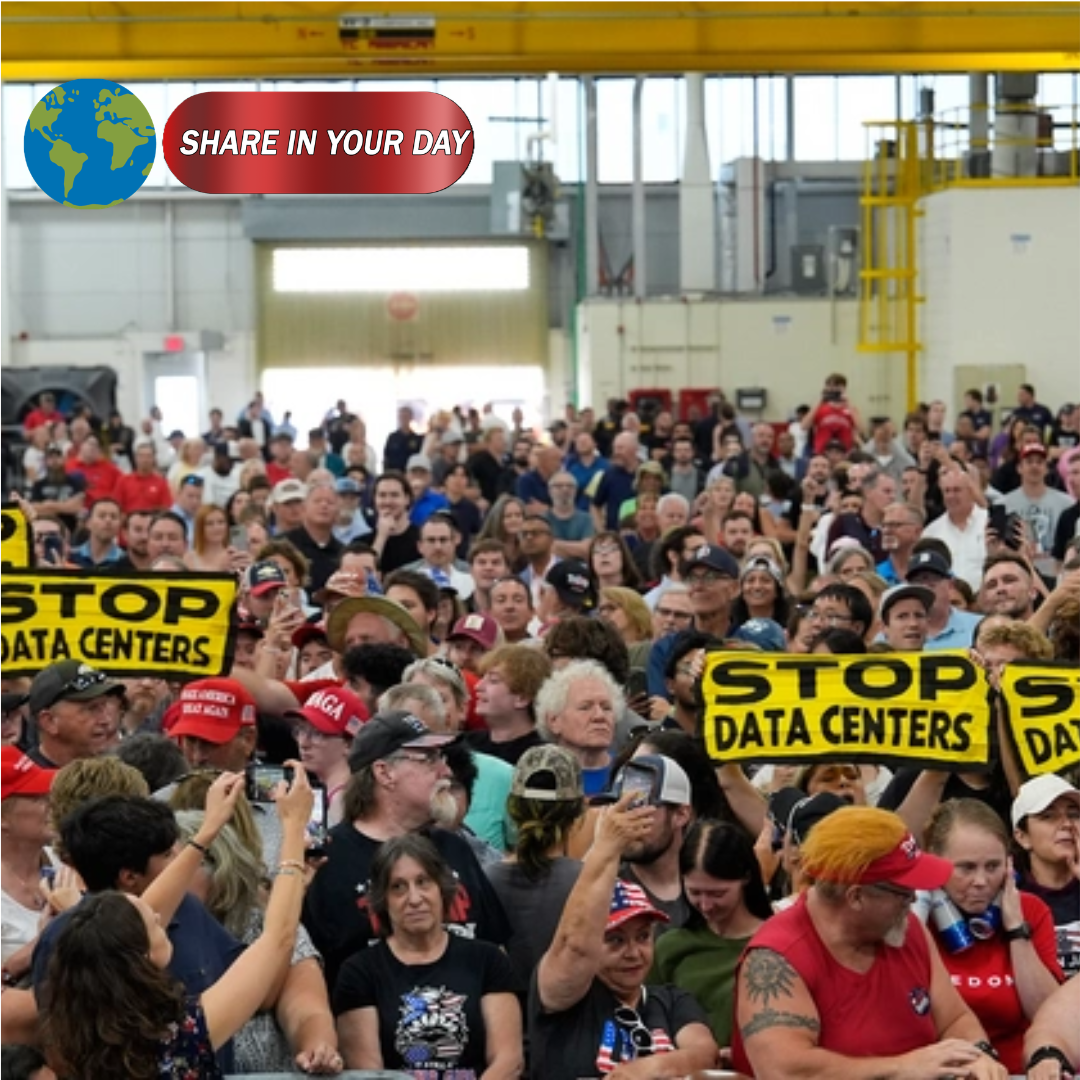
The data center backlash is being driven by several concerns that have converged at the same time.
Electricity is one of the biggest issues.
Large AI facilities can require enormous amounts of power. As companies compete to build more computing capacity, utilities and grid operators must determine how to connect those facilities without creating reliability problems or shifting unreasonable costs onto other customers.
That has turned data centers from a relatively specialized technology issue into a mainstream energy debate.
Residents who may never use an AI model directly can still be affected if new infrastructure increases pressure on electricity systems or requires expensive grid upgrades.
Water has also become a major source of controversy.
Some data centers use water-based cooling systems, although consumption varies substantially depending on the facility’s design, climate and cooling technology. In areas already dealing with water shortages, proposed projects can face intense opposition.
Then there is the question of land.
Data centers can occupy large sites and bring construction activity, transmission infrastructure, backup generation and industrial equipment into communities that may previously have expected different forms of development.
AI’s Power Problem Is Becoming a Political Problem
The rapid growth of AI has transformed electricity demand into one of the most important infrastructure questions facing the technology industry.
AI companies need increasingly powerful chips and computing systems. Those systems require data centers, and data centers require reliable electricity.
This creates a chain reaction.
More AI demand leads to more computing capacity. More computing capacity leads to more data centers. More data centers create additional electricity demand, which can require new generation, transmission lines and grid upgrades.
The industry has often argued that this investment will create jobs, attract capital and strengthen America’s technological competitiveness.
Those benefits remain important.
However, local residents increasingly want to know how the costs will be distributed.
That question is becoming particularly sensitive as electricity prices rise in some regions.
Trump Defends Data Center Expansion
President Donald Trump has continued to argue that communities should not block data center development, while emphasizing the economic and strategic importance of AI infrastructure.
Trump has said that communities opposing data centers are making a mistake, according to reporting cited in recent coverage of the growing political fight.
His position reflects a broader argument within the administration and technology sector: the United States needs enormous amounts of computing infrastructure if it wants to remain competitive with China and other countries in artificial intelligence.
But political support from Washington does not automatically resolve local opposition.
Data centers are ultimately built in specific communities.
That means local officials still have to deal with zoning decisions, electricity infrastructure, water supplies, roads, noise, environmental concerns and the expectations of residents.
Republicans Are Feeling the Pressure
One of the most politically significant aspects of the backlash is that opposition to data centers is no longer confined to traditional technology critics or environmental groups.
Republican politicians are increasingly expressing concerns about the industry’s expansion.
Texas Gov. Greg Abbott, a prominent Republican and longtime supporter of business development, recently delivered an unusually sharp warning to the industry. According to reports summarized by multiple outlets, Abbott said data center companies had effectively created the backlash themselves by failing to build sufficient community support.
That criticism matters because Texas has positioned itself as one of America’s leading destinations for technology and data center investment.
The state has attracted major technology projects partly because of its large energy market, available land and business-friendly policies.
But the same growth that made Texas attractive has also intensified debates about electricity demand and infrastructure.
The political calculation is changing.
Officials who once saw data centers primarily as engines of economic growth now have to consider whether supporting them could alienate voters.
The Issue Could Stretch Beyond the 2026 Elections
The political consequences may not disappear after the current election cycle.
Politico reported that some technology industry leaders fear the backlash could become a longer-term political crisis extending well beyond 2026 and potentially into the 2028 election cycle.
That would represent a major change for the industry.
Technology companies have traditionally enjoyed strong political support from both parties on issues involving innovation and economic growth. Artificial intelligence initially appeared to fit comfortably within that framework.
But data centers are different.
Unlike software, they are physical infrastructure.
They need land, electricity, cooling systems, transmission connections and often large construction projects. Their physical footprint makes them much more visible to communities.
A resident may never encounter an AI server directly.
A new data center campus, power substation or transmission line is impossible to ignore.
Data Centers Are Becoming a Local Political Issue
The most important change may be the localization of the debate.
National politicians can discuss AI leadership in broad terms. Local voters tend to ask much more specific questions.
How much electricity will the facility use?
Will household power bills increase?
How much water will it consume?
Will the project create permanent jobs?
What will happen to property values?
Will backup generators create pollution or noise?
Who pays for new transmission infrastructure?
These questions can transform a data center proposal into a neighborhood political campaign.
That dynamic has already appeared in communities across the country.
A national AI strategy can therefore run into local resistance when residents believe the costs are immediate while the benefits are uncertain or distributed elsewhere.
The Jobs Argument Is Facing Greater Scrutiny
Data center developers frequently point to construction employment and highly skilled technical jobs as evidence that projects can benefit local economies.
There is truth to that argument.
Building large facilities can require substantial construction work, while operational data centers need engineers, technicians, security personnel and other specialized workers.
However, communities are increasingly asking how many permanent jobs a facility will actually create relative to its size and electricity consumption.
That distinction matters.
A project that costs billions of dollars can generate enormous investment during construction but employ comparatively fewer people once it becomes operational.
Local officials may therefore demand broader economic benefits, such as infrastructure investment, tax revenue or commitments to reduce pressure on utility customers.
Electricity Costs Could Become the Biggest Flashpoint
Among all the issues surrounding the data center backlash, electricity costs could prove to be the most politically powerful.
Data centers need reliable power around the clock. In regions with rapidly growing demand, utilities may need to build or upgrade generation and transmission infrastructure.
Those projects cost money.
The central political question is who should pay.
Technology companies generally argue that they should pay their fair share. Critics worry that rate structures and utility regulations could leave ordinary customers responsible for some infrastructure costs.
This debate has already reached Washington.
Earlier this year, lawmakers and regulators were increasingly focused on how rapidly expanding data center demand could affect electricity markets and consumers.
As AI computing requirements increase, the issue is likely to become even more important.
The Data Center Industry Has a Messaging Problem
The backlash is not necessarily evidence that Americans oppose artificial intelligence itself.
Instead, it may indicate that the public is beginning to separate AI software from the physical infrastructure required to operate it.
People may support AI innovation while simultaneously opposing a data center proposed near their homes.
That distinction creates a communications challenge for technology companies.
Saying that data centers are essential for America’s AI leadership may be persuasive at the national level.
It may be less convincing to a homeowner concerned about electricity bills, water availability or industrial development next door.
The industry therefore faces pressure to demonstrate concrete local benefits rather than relying solely on national arguments about technological competition.
Companies May Need a New Approach
The most successful developers could increasingly be those that treat community relations as part of infrastructure planning rather than as a public-relations exercise after a project has already been announced.
That could mean earlier public consultations, clearer electricity-cost commitments and greater transparency about water use.
Developers may also need to invest more heavily in alternative cooling technologies, dedicated energy supplies and grid improvements.
Some companies are already exploring ways to secure their own power or build facilities closer to available energy resources.
The goal is to reduce the burden placed on existing infrastructure.
But these solutions can also create new complications.
Building private power plants, for example, can raise additional environmental and regulatory questions.
The AI Boom Is Meeting Political Reality
The United States remains deeply invested in winning the global AI competition.
The economic stakes are enormous.
AI is expected to reshape industries ranging from finance and manufacturing to transportation, healthcare and defense. Building enough computing infrastructure is therefore viewed by many policymakers as a strategic necessity.
But strategic necessity does not eliminate local political opposition.
The United States has a decentralized system in which communities, states, utilities and federal agencies all have influence over infrastructure decisions.
That makes the data center boom more complicated than simply finding a company willing to invest.
Projects need permits.
They need electricity.
They need land.
And increasingly, they need political support.
What Happens Next?
The future of the data center backlash will depend partly on whether the industry can convince voters that AI infrastructure produces tangible benefits.
If data centers bring significant tax revenue, high-paying jobs and infrastructure improvements while minimizing pressure on electricity and water systems, opposition could weaken.
If residents instead see rising electricity costs, environmental concerns and limited local employment, resistance could intensify.
The political stakes are already becoming clear.
Politico’s latest reporting describes an industry increasingly concerned that what began as local opposition could develop into a much broader political problem.
Meanwhile, other reporting shows that data center politics is becoming an increasingly important issue for both Republicans and Democrats. A July poll cited by Politico found that 41% of Americans would oppose a data center being built within three miles of where they live, up from 28% previously.
That kind of shift is difficult for politicians to ignore.
A New Test for America’s AI Strategy
The debate over data centers is ultimately about more than technology.
It is about who benefits from the AI revolution and who pays for the infrastructure needed to power it.
For years, the discussion around artificial intelligence focused primarily on algorithms, chips and software.
Now the conversation is moving toward electricity grids, water systems, land and local politics.
That could prove to be one of the biggest challenges facing the industry.
America may want to build more AI infrastructure.
Communities may want the investment.
But they also want assurances that the costs will not simply be passed to ordinary residents.
The coming years will test whether technology companies, utilities and policymakers can find a compromise.
If they cannot, the data center backlash could become a defining political issue of the AI era.
External Source References:
- Politico — original report supplied as the source for this article.
- Board of Certified Safety Professionals — background on infrastructure-related occupational safety considerations.
- Additional current reporting on the growing political response to data centers.
Internal Link Suggestions:
- AI industry news
- Artificial intelligence trends
- U.S. energy policy
- Electricity prices in America
- Technology and politics
- Data center investment
Recommended Image: Large AI data center or hyperscale computing facility with power infrastructure.
Image ALT Text: Data center backlash as AI facilities drive electricity demand