H5N1 Bird Flu Hits Mammal in Australia: 5 Key Risks
Australia is facing a major new development in its H5N1 bird flu Australia outbreak after the virus was detected in a long-nosed fur seal in South Australia. The discovery marks the country’s first confirmed detection of H5 bird flu in a mammal and raises fresh concerns about the potential impact on marine wildlife.
The detection comes after the virus spread rapidly among wild birds across several Australian states. Authorities and wildlife experts are now watching closely for signs that H5N1 could move into additional mammal species, particularly seals and sea lions that live near infected seabirds and contaminated coastal environments.
Australia’s federal Department of Agriculture, Fisheries and Forestry says testing by the CSIRO Australian Centre for Disease Preparedness confirmed H5 high-pathogenicity avian influenza in the seal found at Beachport, South Australia. The government describes it as the first detection of H5 bird flu in a mammal species in Australia.
The development does not mean that Australia is facing a new human pandemic. Health authorities continue to regard the risk to the general public as low. However, the event is significant because it shows that the virus has crossed the species barrier inside Australia’s wildlife ecosystem.
H5N1 Bird Flu Australia Reaches a Mammal
The infected animal was a long-nosed fur seal found dead near Beachport, roughly 300 kilometers south of Adelaide.
Officials said the seal had no obvious injuries, and investigators are examining how it became infected. One likely explanation is exposure to infected birds or environments contaminated by the virus. Seals can come into close contact with seabirds, making them particularly vulnerable when H5N1 becomes widespread in coastal ecosystems.
The detection is important because Australia’s outbreak had previously been concentrated in birds.
According to Australia’s agriculture department, H5 bird flu was first detected on mainland Australia in June 2026. By August, hundreds of detections had been recorded in wild birds across Western Australia, South Australia, Victoria, New South Wales and Queensland.
Wildlife Health Australia identifies the virus involved as highly pathogenic avian influenza H5N1. The organization notes that the virus was detected on mainland Australia for the first time in June 2026.
The spread has already produced several worrying wildlife events. More than 1,000 terns were among birds that died during one major mortality episode off South Australia, highlighting how quickly the virus can affect colonies of susceptible wildlife.
Why the First Mammal Case Matters
The appearance of H5N1 in a mammal does not automatically mean the virus has adapted to spread efficiently between mammals.
That distinction is crucial.
Bird flu viruses can infect mammals after direct or indirect exposure to infected birds. Mammalian infections have been documented in many countries during the current global H5N1 outbreak. But researchers are particularly concerned when infections become established within mammal populations or show evidence of mammal-to-mammal transmission.
Australia’s first infected seal therefore represents a warning sign rather than proof that H5N1 is now spreading efficiently among Australian mammals.
The concern is nevertheless serious because Australia’s coastal wildlife includes species that could be highly vulnerable to the virus.
Scientists have already warned that H5N1 could pose a major conservation threat to Australian seals and sea lions. The country has a relatively small population of Australian sea lions, and the species is already under pressure from other environmental threats.
1. Australian Sea Lions Could Face a Serious Threat
One of the biggest concerns surrounding H5N1 bird flu Australia is the potential impact on Australian sea lions.
These animals spend much of their lives around coastal areas where infected seabirds may gather. That creates opportunities for exposure to infected carcasses, bodily fluids or contaminated environments.
The Australian sea lion population is already vulnerable. Conservation experts have warned that a major H5N1 outbreak could compound existing pressures and cause substantial losses in colonies where the virus becomes established.
The international experience with H5N1 provides a troubling precedent.
The virus has caused large-scale mortality among marine mammals in other parts of the world. Previous outbreaks have killed thousands of seals and sea lions, demonstrating that marine mammals can suffer devastating consequences after exposure to highly pathogenic avian influenza.
Australia’s wildlife officials therefore face a difficult challenge: detect infections early enough to understand the pattern while attempting to protect species that may have limited resilience to a major outbreak.
2. More Mammal Species Could Be Exposed
The infected fur seal may not be an isolated event.
Australia’s outbreak has expanded geographically and affected numerous bird species. As infected birds move through coastal habitats, other mammals can potentially encounter the virus.
A dead seal currently being investigated near Geelong has also raised concerns in Victoria. Authorities collected samples from the carcass to determine whether bird flu played a role in its death.
Other investigations involving seals are also underway.
However, it is important not to treat suspected cases as confirmed infections. Testing is necessary because seals can die from many different causes, and a carcass found in an outbreak area does not necessarily mean H5N1 was responsible.
That distinction will become increasingly important as surveillance expands.
3. Australia Is Watching Its Penguin Colonies
Marine birds are another major concern.
Little penguins and other seabirds can live in dense colonies, creating conditions where infectious diseases can spread rapidly. Australia has already recorded H5 bird flu among wild birds, including penguins.
Authorities and scientists are consequently looking at protective measures for high-value wildlife populations.
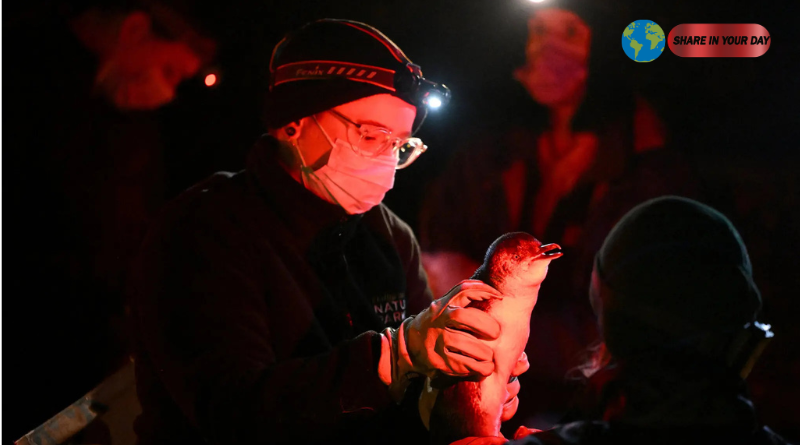
Reports indicate that vaccination efforts are being considered or implemented for vulnerable birds, including little penguins on Phillip Island. The objective is to reduce the risk of catastrophic mortality in populations that are important both ecologically and economically.
The experience also illustrates why wildlife vaccination is complicated.
Vaccinating wild animals is far more difficult than protecting domestic poultry. Researchers must capture animals safely, administer vaccines, monitor them and determine whether vaccination provides meaningful protection at the population level.
4. The Human Risk Remains a Key Question
For the public, the most obvious question is whether the spread of H5N1 among Australian wildlife means people are at greater risk.
At present, authorities say the general human health risk remains low.
That does not mean H5N1 is harmless to humans. Human infections with avian influenza viruses can be severe, particularly following close exposure to infected animals. The important point is that occasional animal-to-human transmission is very different from sustained human-to-human transmission.
There is currently no indication from the Australian outbreak that H5N1 has established sustained transmission between people.
Australians are nevertheless being advised to avoid handling sick or dead wild birds and to follow official reporting and hygiene guidance. People should also avoid unnecessary contact with wildlife found dead on beaches or in other affected areas.
This precaution is especially important for wildlife workers, veterinarians and others whose jobs bring them into close contact with potentially infected animals.
5. Australia Must Contain the Virus Before It Spreads Further
The biggest challenge now is controlling a virus that is already circulating in the natural environment.
Australia had remained one of the last major regions without widespread mainland H5N1 activity. That status changed in 2026 when the virus was detected in migratory birds and subsequently spread across multiple states.
Once H5N1 becomes established among wild birds, completely eliminating it becomes extremely difficult.
Instead, authorities have to focus on surveillance, rapid detection, wildlife protection and preventing infections from entering commercial poultry systems.
So far, Australia’s federal agriculture department says there have been no detections in poultry or the wider agricultural industry. That is an important distinction because an outbreak in commercial poultry could create significant economic and food-security consequences.
The government is therefore balancing two objectives: protecting Australia’s wildlife while preventing the virus from reaching farms.
What Happens Next?
The next phase of Australia’s response will depend heavily on surveillance results.
Authorities will need to determine whether additional seals become infected, whether infections appear in other mammal species and whether there is evidence of transmission between mammals.
Scientists will also monitor viral genetic changes.
Genomic surveillance can help researchers determine whether viruses detected in mammals remain closely associated with bird-origin infections or show characteristics that could indicate adaptation to a new host. Such information is essential for understanding the potential trajectory of an outbreak.
Meanwhile, wildlife organizations are likely to push for additional resources to protect endangered species.
Conservationists have already warned that Australia’s native wildlife could face severe consequences if H5N1 becomes entrenched. The country’s experience with previous wildlife emergencies shows how quickly an infectious disease can interact with existing threats such as habitat loss, food shortages and environmental change.
Australia’s H5N1 Outbreak Is Entering a New Phase
The first confirmed mammal infection represents a significant turning point in the H5N1 bird flu Australia outbreak.
It is not evidence that a human pandemic has begun. Nor does one infected seal prove that H5N1 is spreading efficiently from mammal to mammal.
But it does show that the virus has reached another part of Australia’s wildlife ecosystem.
That makes surveillance more important than ever.
The infected fur seal was found in South Australia, an area already heavily affected by H5 bird flu in wild birds. The virus has also been detected across other parts of the country, increasing the possibility that more wildlife infections could emerge.
For conservationists, the greatest concern is the possibility of large outbreaks among vulnerable marine mammals. For health officials, the priority is monitoring animal infections while maintaining precautions for people who have direct contact with infected wildlife.
For the public, the advice is straightforward: avoid touching sick or dead wild animals, report unusual wildlife deaths through official channels and follow local health and biosecurity guidance.
The coming weeks will reveal whether Australia’s first mammal case remains an isolated event or becomes the beginning of a broader wildlife outbreak.
Either way, the discovery has delivered a powerful warning. H5N1 is no longer a problem confined to Australia’s birds. The virus has now crossed into a mammal, placing the country’s seals, sea lions and other vulnerable wildlife firmly in the spotlight.