Congo Ebola Outbreak: 5 Shocking Updates
The Congo Ebola outbreak is escalating at an alarming pace, with more than 300 people dying in eastern Democratic Republic of Congo in just one week, according to government data reported by The Associated Press. The surge is among the highest weekly death tolls recorded since the outbreak began and is putting enormous pressure on already overstretched health workers.
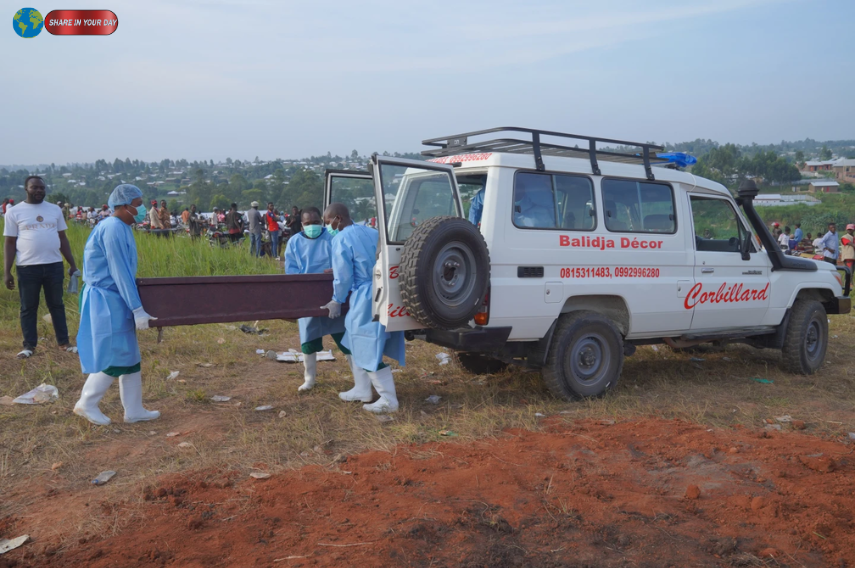
The outbreak is being driven by the rare Bundibugyo strain of Ebola, a virus that has received far less research and development attention than other Ebola variants. The lack of an approved vaccine specifically targeting Bundibugyo has made the response considerably more difficult.
As infections spread beyond known contacts, health authorities are struggling to track transmission. Remote communities, armed conflict, misinformation and weak infrastructure are adding further obstacles to containment.
The scale of the emergency is now raising fears that the outbreak could continue expanding unless vaccination, testing, treatment and community engagement are rapidly strengthened.
Congo Ebola Outbreak Records More Than 300 Deaths in One Week
The latest figures provide a stark picture of how quickly the Congo Ebola outbreak is accelerating.
More than 300 people died during the past week alone, according to government data cited by AP. As of Saturday, the outbreak had produced 5,514 confirmed cases and 2,642 confirmed deaths.
Those numbers are particularly concerning because confirmed cases do not necessarily represent the full scale of transmission.
Health authorities are facing major difficulties identifying infections in remote communities. Some patients may never reach medical facilities, while others may die before receiving laboratory confirmation.
The result is a serious risk of undercounting.
The World Health Organization previously reported that the outbreak had already become the largest Ebola outbreak ever documented in the Democratic Republic of Congo. By Aug. 12, WHO had recorded 4,665 confirmed cases and 2,184 deaths, with the case-fatality rate standing at 46.8%.
The much higher numbers reported by AP more recently illustrate how rapidly the outbreak has expanded in a matter of weeks.
The Rare Bundibugyo Virus Is Making the Crisis Harder
One of the biggest challenges in the Congo Ebola outbreak is the virus itself.
The outbreak is caused by Bundibugyo virus, a relatively rare Ebola strain that has previously caused outbreaks in Uganda and the Democratic Republic of Congo. It is less extensively studied than the Zaire strain responsible for several major Ebola epidemics.
That difference matters.
The Ebola vaccine that has been used successfully during previous outbreaks, Ervebo, was developed against the Zaire species. It has not been proven to protect people against Bundibugyo virus.
This leaves health authorities in an uncomfortable position.
They have access to a vaccine with an established record against another Ebola strain, but they do not yet have definitive evidence that it can stop the virus driving the current outbreak.
That uncertainty is one reason researchers are now studying whether existing vaccines could provide protection.
The WHO has reported that Congo received thousands of doses of Ervebo for use in the response, while clinical research is planned to evaluate its effectiveness against Bundibugyo virus.
Congo Begins Using an Ebola Vaccine Despite Uncertainty
The arrival of vaccine doses offers a potentially important tool in the response.
More than 16,000 doses of Ervebo had recently arrived in Congo, according to AP. The vaccine has previously been used effectively against the Zaire strain, but its effectiveness against Bundibugyo remains unproven.
A larger shipment has also been reported, with 70,000 doses planned for Congo. According to WHO-related reporting, 20,000 doses are intended for a clinical study while another 50,000 doses are intended for health workers and other frontline personnel.
The strategy reflects the urgency of the situation.
Waiting for perfect evidence could cost lives when the outbreak is already expanding rapidly. At the same time, scientists need reliable clinical data to determine whether the vaccine actually protects against the Bundibugyo virus.
This creates a difficult balance between emergency response and scientific evaluation.
Frontline health workers are among those facing the greatest danger. They are frequently exposed to infected patients, bodily fluids and contaminated environments while working in areas where protective equipment and infection-control resources can be difficult to maintain.
Protecting them is essential not only for their own safety but also for maintaining the health system needed to stop transmission.
Health Workers Are Struggling to Keep Up
The speed of the Congo Ebola outbreak is placing extraordinary pressure on the medical response.
Health workers need to identify suspected cases, isolate patients, perform laboratory testing, trace contacts, provide treatment and safely manage burials.
Every one of those steps becomes harder when an outbreak spreads into remote areas.
North Kivu has been particularly affected, with AP reporting a fatality rate approaching 69% in some areas compared with about 48% overall.
The situation is further complicated by insecurity and poor infrastructure.
Eastern Congo has experienced years of armed conflict and displacement. Communities can be difficult to reach, while medical teams may face security risks while traveling between health facilities and villages.
Misinformation is another major obstacle.
When communities distrust health authorities or believe false claims about Ebola, infected people may delay seeking care. Families may also hesitate to cooperate with contact tracing or safe burial procedures.
That can allow the virus to spread silently.
The experience of previous Ebola outbreaks has demonstrated that medical tools alone are not enough. Community trust can be just as important as vaccines, laboratories and treatment centers.
Most New Cases Are Outside Known Contacts
Another warning sign is that many new infections are being detected among people who were not already being monitored as contacts of known Ebola patients.
That makes containment much harder.
Contact tracing works best when health officials can identify everyone who may have been exposed and monitor them for symptoms. If infections repeatedly appear outside monitored networks, it suggests that transmission chains are being missed.
This is one of the clearest signs that the outbreak has moved beyond a relatively contained cluster.
In Ituri province, the current epicenter, many new cases are emerging outside established contact lists, according to AP.
That creates a cycle of difficulty.
More unidentified infections lead to more unidentified contacts. More unidentified contacts then create additional opportunities for transmission.
Breaking that cycle requires broader testing and surveillance, particularly in communities that have not previously been identified as outbreak hotspots.
Why the Congo Ebola Outbreak Is Spreading So Quickly
Several factors are combining to accelerate the Congo Ebola outbreak.
1. A Rare Virus
Bundibugyo virus is less studied than several other Ebola strains, leaving fewer proven medical tools specifically designed for it.
2. Conflict and Insecurity
Eastern Congo has experienced prolonged instability, making it difficult for health teams to safely reach some communities.
3. Weak Infrastructure
Remote roads, limited healthcare facilities and shortages of trained personnel can delay diagnosis and treatment.
4. Misinformation
False information can reduce trust in health workers and discourage people from seeking medical care.
5. Missed Transmission Chains
When new cases are found outside known contact networks, containment becomes much more difficult.
Together, these factors can transform an outbreak from a series of identifiable transmission chains into a much broader regional health emergency.
Treatment Trials Offer Another Potential Breakthrough
Vaccination is not the only medical response being explored.
Researchers have also begun studying potential treatments for the outbreak.
The Associated Press previously reported that researchers launched a study of two possible Ebola treatments as the outbreak worsened. The WHO announced the enrollment of the first participant in the study.
Treatment research is especially important because the current outbreak involves a strain for which established therapies are limited.
Scientists need to determine whether existing experimental drugs can work against Bundibugyo virus or whether treatments will need to be specifically developed for it.
The results could influence how future outbreaks are handled.
If an effective treatment is identified, doctors could have another tool for reducing deaths alongside vaccination, isolation and supportive medical care.
The Congo Ebola Outbreak Has Become an International Concern
Although the outbreak is centered in Congo, its consequences extend beyond the country’s borders.
People continue to cross borders for work, trade, family visits and other reasons. That means neighboring countries must maintain surveillance and preparedness while supporting Congo’s response.
Uganda has particular reason to remain vigilant because Bundibugyo virus was first identified during an outbreak in western Uganda in 2007.
The current crisis therefore has a strong regional dimension.
International organizations, governments and humanitarian agencies are providing support, but the scale of the outbreak is creating enormous resource requirements.
The WHO has warned that the response requires sustained financing, laboratory capacity, medical supplies and community-based efforts.
The longer transmission continues unchecked, the more difficult and expensive the response becomes.
Five Developments to Watch Next
The coming weeks could determine whether the Congo Ebola outbreak can be brought under control.
1. Vaccine Effectiveness
Scientists will closely monitor people receiving Ervebo to determine whether the vaccine offers protection against Bundibugyo virus.
2. New Case Numbers
Authorities will watch whether confirmed infections continue increasing exponentially or begin to stabilize.
3. Contact Tracing
A key measure of progress will be whether health officials can identify a larger share of new infections through known transmission chains.
4. Health Worker Safety
Protecting medical personnel will remain essential as more treatment centers and surveillance teams are deployed.
5. International Funding
The response will require sustained international support. A shortage of money, staff or supplies could allow transmission to accelerate further.
What Happens If the Outbreak Continues?
The longer the Congo Ebola outbreak continues, the greater the risk that transmission becomes established in additional communities.
That does not mean a global pandemic is inevitable. Ebola spreads primarily through direct contact with infected people’s bodily fluids, and it is not transmitted as easily as respiratory viruses such as influenza or COVID-19.
However, a rapidly expanding outbreak can still have devastating consequences locally and create significant cross-border risks.
The most important objective is therefore to stop transmission at its source.
That requires more than emergency treatment.
Communities need trusted health information. Families need access to safe medical facilities. Health workers need protection and reliable salaries. Laboratories need the capacity to test suspected infections quickly.
Vaccines and experimental treatments can help, but they work best when combined with strong surveillance and community cooperation.
Conclusion
The Congo Ebola outbreak has entered a deeply concerning phase, with more than 300 deaths recorded in a single week and confirmed fatalities surpassing 2,600, according to the latest figures reported by AP.
The rare Bundibugyo strain has made the emergency particularly challenging because existing Ebola vaccines and treatments were not specifically developed for it.
Health authorities are now moving ahead with vaccination efforts while scientists study whether Ervebo can provide protection. At the same time, researchers are testing potential treatments as medical teams attempt to contain transmission.
But the biggest challenge may be the speed of spread.
New cases appearing outside known contact networks, combined with conflict, poor infrastructure and misinformation, has made traditional outbreak-control measures much harder to execute.
The coming weeks will therefore be critical.
If vaccination, testing, treatment and community engagement can be expanded quickly, the outbreak may still be contained. If the response continues to fall behind transmission, however, the human cost could rise substantially.
For Congo and the international health community, the message is increasingly urgent: the Ebola outbreak is moving faster than the response, and closing that gap is now the central challenge.
Source: The Associated Press, Aug. 24–25, 2026