Nepal Flash Floods: 157 Dead, Rescue Race Intensifies
The Nepal Flash Floods have triggered a major humanitarian emergency along the country’s northern border with Tibet, with at least 157 people confirmed dead and hundreds of others still missing as rescue teams race to reach devastated communities. The disaster sent a powerful surge of water, mud, rocks and debris through river valleys in northern Nepal on August 26, destroying homes, roads, bridges and critical infrastructure.
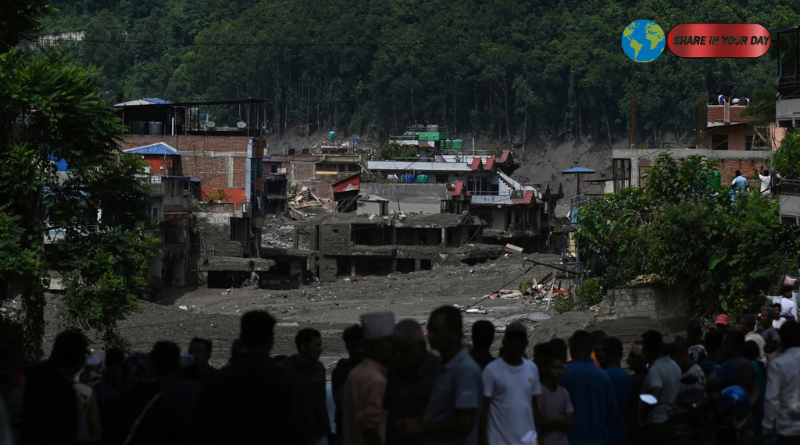
The disaster began suddenly in the mountainous Rasuwa district, where floodwaters surged through the Bhote Koshi River system before moving downstream toward the Trishuli River. Communities including Timure and Syapru Besi suffered extensive destruction, while the scale of the damage continued to emerge as authorities reached isolated areas.
Officials and rescue agencies are still working to establish the full number of casualties. Hundreds of travelers and foreign nationals were also reported missing, adding an international dimension to one of Nepal’s most serious recent disasters.
Nepal Flash Floods Leave Hundreds Missing
One of the most alarming aspects of the Nepal Flash Floods is the number of people who remain unaccounted for.
Nepal’s tourism authorities reported hundreds of missing travelers after the flood struck areas used by tourists, trekkers and pilgrims. An early list identified 384 travelers whose whereabouts had not been confirmed, including 291 foreign nationals and 93 Nepali citizens. The list was still being checked with travel companies, guides, local authorities and security agencies.
Foreign nationals from several countries were among those reported missing. Indian citizens made up a significant portion of the missing foreign travelers, while Australians, Britons, Americans, Canadians, Malaysians, South Africans and others were also reported among those whose status was being verified.
The figures are particularly difficult to establish because communication networks were damaged and roads were washed away. In some locations, emergency teams have struggled to reach affected communities.
That uncertainty means the death toll could change significantly as search teams move into areas that were cut off by the flood.
What Caused the Nepal Flash Floods?
The precise chain of events behind the Nepal Flash Floods is still being examined, but evidence increasingly points to a massive collapse of ice, rock and debris high in the Himalayas.
Initial reports suggested that an earthquake may have triggered a landslide that blocked a river before the accumulated water burst downstream. Later satellite analysis and geological investigations pointed toward a major glacial or ice-rock collapse as a likely trigger.
Reuters reported that satellite imagery indicated a large section of glacier at roughly 5,200 meters above sea level had broken away and plunged more than 1,200 meters into a valley. The resulting collapse released an enormous mixture of water, ice, rocks and sediment into the river system.
Experts have described the event as an ice-rock avalanche capable of producing a sudden and exceptionally destructive flood.
The speed of such an event is one reason it can be so deadly. Unlike ordinary river flooding, which may provide hours or days of warning, a debris-laden surge can move through narrow Himalayan valleys with little time for people downstream to escape.
The International Centre for Integrated Mountain Development said the flood sent water, sediment and boulders through the Bhote Koshi and Trishuli river systems and warned of possible downstream impacts.
Nepal Flash Floods Destroy Roads and Bridges
The human toll has been accompanied by severe infrastructure damage.
Floodwaters tore through roads, bridges and settlements in Rasuwa and neighboring districts. Some important transportation links were destroyed or buried beneath mud and debris, making it difficult for emergency teams to reach survivors.
The disaster also damaged hydropower infrastructure, an important part of Nepal’s economy and energy system. Several projects and facilities in the affected river corridors were hit by the flood.
The destruction of transportation infrastructure creates a dangerous cycle. Rescue teams need roads and bridges to move equipment, food and medical supplies, but many of those routes have themselves been destroyed.
Helicopters therefore became critical to the emergency response.
However, mountain weather and damaged landing areas complicated aerial operations. Search teams have had to work around unstable terrain, heavy debris and the possibility of additional landslides or flooding.
Rescue Teams Race Against Time
Nepal has mobilized security forces and emergency personnel to search for survivors and recover victims.
The Nepali Army, Nepal Police and Armed Police Force have been involved in rescue operations, with helicopters deployed to reach locations that cannot easily be accessed by road. Earlier in the response, the Nepali Army said multiple helicopters were being used for search-and-rescue missions.
The emergency response has focused on several priorities:
- Finding people trapped or stranded by the flood
- Evacuating survivors from dangerous areas
- Recovering bodies
- Providing medical treatment
- Restoring communications
- Reopening roads and transportation routes
- Checking the safety of foreign tourists
- Monitoring rivers for additional flooding
Humanitarian organizations are also preparing to support displaced families.
CARE Nepal said communities had lost homes, possessions and livelihoods and warned that damaged water and sanitation systems could increase the risk of waterborne disease. The organization said it was preparing emergency support, including shelter and hygiene supplies.
The humanitarian challenge is therefore expected to continue well beyond the initial rescue operation.
Nepal Flash Floods Hit a Vulnerable Himalayan Region
The disaster has renewed concerns about the growing risks facing Himalayan communities.
Nepal’s mountainous geography makes many settlements particularly vulnerable to landslides, flash floods and glacial hazards. Communities often develop along river valleys because flat land is scarce, while major roads, hydropower facilities and tourism routes also follow the same corridors.
That combination can create enormous exposure when a sudden flood occurs.
Glaciers are also changing rapidly across the Himalayas. Rising temperatures can contribute to glacier retreat and alter the stability of ice and rock formations in high-altitude areas.
Experts caution, however, that the exact cause of an individual disaster must be established scientifically. It would be premature to attribute the August 26 flood to a single factor without completing the investigation.
Still, the scale of the disaster highlights why early-warning systems and hazard monitoring are increasingly important in the Himalayan region.
A Cross-Border Disaster
The Nepal Flash Floods have also affected areas on the Chinese side of the border.
A major mudslide struck the Gyirong area of Tibet, damaging the border region and disrupting roads, communications and power. Chinese authorities reported deaths and hundreds of missing people as rescue efforts continued.
The geographical connection between the two disasters is significant.
Water and debris can cross national boundaries rapidly in mountainous river systems. A collapse upstream can therefore create devastating consequences far downstream, regardless of political borders.
That reality has increased the importance of cooperation between Nepal and China during the emergency.
Nepali officials have also sought assistance from neighboring countries as authorities attempt to identify missing foreign citizens and coordinate rescue efforts.
Foreign Tourists Among the Missing
The presence of foreign travelers has attracted international attention to the disaster.
The affected region is important for tourism and religious travel, with routes connecting Nepal and Tibet used by trekkers, pilgrims and organized tour groups.
Among those reported missing were travelers from India, Australia, the United Kingdom, the United States, Canada and several other countries. Authorities and diplomatic missions have been working to establish which travelers were in the affected areas and whether they have reached safety.
However, officials have stressed that preliminary missing-person lists can change.
Some people may be safe but unable to contact relatives because telecommunications networks are down. Others may have moved to safer areas without being registered with rescue authorities.
For that reason, the number of missing people should be treated as provisional until authorities complete verification.
Nepal Flash Floods Raise New Warning for Downstream Areas
Another concern is the possibility of additional flooding.
When enormous quantities of rocks, mud and debris enter a river system, they can create temporary blockages. If such blockages fail suddenly, another surge can move downstream.
Experts and disaster authorities have therefore urged people living near affected rivers to remain alert and move away from dangerous riverbanks.
The International Centre for Integrated Mountain Development said the initial surge raised concerns about further downstream impacts along the river system.
This is particularly important because the flood traveled through multiple river corridors rather than remaining confined to a single location.
Communities farther downstream may therefore face secondary hazards even after the initial disaster has passed.
The Human Cost Is Still Unfolding
For families in Rasuwa and surrounding districts, the disaster is more than a statistic.
Entire communities have been damaged within minutes. Homes, businesses and transportation links were swept away, while families have been left searching for relatives whose whereabouts remain unknown.
The destruction of roads and communication infrastructure makes that search even more difficult.
For emergency workers, the immediate challenge is finding survivors. For humanitarian agencies, the next challenge will be providing shelter, clean water, food, medical care and protection to displaced families.
Recovery will likely take much longer.
Nepal Flash Floods Could Reshape Disaster Preparedness
The Nepal Flash Floods are likely to intensify discussions about disaster preparedness in the Himalayas.
Early-warning systems can save lives when communities receive enough notice to move to higher ground. Monitoring glaciers, unstable slopes and rivers can provide valuable information about emerging threats.
But technology alone is not enough.
Warnings must reach people quickly. Local communities need clear evacuation routes. Emergency responders need access to helicopters, roads, communications equipment and medical facilities. Cross-border information sharing can also become critical when hazards originate near international boundaries.
The August disaster demonstrates how quickly a mountain hazard can become a national emergency.
It also shows why preparedness cannot focus only on conventional rainfall-based flooding. Glacial collapses, landslides, debris flows and sudden river blockages can produce different types of threats that require specialized monitoring.
What Happens Next?
Search-and-rescue operations remain the immediate priority.
Authorities will continue identifying victims, locating missing people and assessing the condition of damaged communities. They will also need to restore roads and communications so humanitarian supplies can reach isolated areas.
At the same time, investigators will continue studying what triggered the massive surge.
Understanding the sequence — whether involving glacier collapse, rockfall, seismic activity or a combination of factors — will be essential for improving future warnings.
The international response is also likely to expand as governments work to account for their citizens and humanitarian groups assess the needs of affected communities.
For Nepal, the disaster is a stark reminder of the risks created by its extraordinary but fragile Himalayan landscape.
Internal Link Suggestion
For the target website, add an internal link here to a relevant existing page such as “Latest Nepal News,” “Asia News,” “World News,” or “Natural Disasters”. The exact URL should be supplied from the site’s existing content rather than invented.
Conclusion
The Nepal Flash Floods have developed into a major disaster involving widespread destruction, a rapidly rising death toll and hundreds of people still unaccounted for.
At least 157 people had been confirmed dead in the latest reporting, while hundreds remained missing. Communities along the Bhote Koshi and Trishuli river systems have suffered extensive damage, and rescue teams continue working in difficult mountainous terrain.
The likely role of a massive glacial or ice-rock collapse has also raised wider concerns about hazards in a warming Himalayan environment. Yet investigators are still working to establish the precise chain of events.
For now, the priority remains clear: find survivors, support affected families and prevent further loss of life.
As the rescue operation continues, the full human and economic cost of the disaster is likely to become clearer. What is already evident is that the August 26 flood has left a deep mark on northern Nepal and underscored the urgent need for stronger early-warning systems, resilient infrastructure and coordinated disaster preparedness across the Himalayas.
Source: CNN and corroborating reports from Reuters, ICIMOD, Kathmandu Post and humanitarian organizations.