JWST Planet Formation: A Stunning Race Against Time
JWST planet formation observations are giving astronomers an unprecedented look at the short window during which young worlds must grow before their supply of gas disappears. New research using NASA’s James Webb Space Telescope has revealed how winds change as young planetary systems mature, helping scientists understand one of the most important stages in the creation of planets.
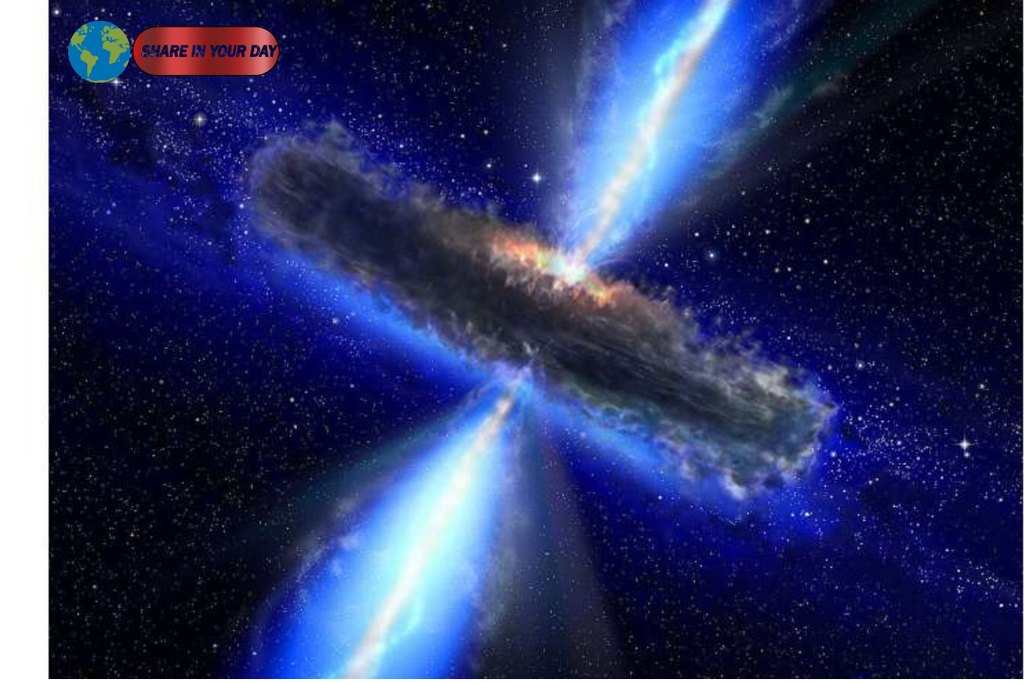
The study examined 72 young, Sun-like stars and their surrounding protoplanetary disks. These disks contain the gas and dust from which planets are built. Researchers found that different kinds of winds dominate at different stages of a planetary system’s early evolution.
The result offers a powerful new perspective on why planet formation is essentially a race against time.
JWST Planet Formation Reveals a Critical Cosmic Clock
Planets do not appear suddenly around newborn stars.
They begin forming inside enormous disks of gas and dust that surround young stars. Over millions of years, material in these disks can collide, clump together and eventually build planets.
However, the disk does not remain intact forever.
Gas gradually escapes into space. Some of it is carried away by powerful winds and jets, while radiation from the young star can eventually heat the remaining gas until it escapes.
That creates a natural deadline for planet formation.
For gas-rich planets such as Jupiter and Saturn, the deadline is especially important. These worlds need substantial amounts of gas to build their massive atmospheres. If the surrounding disk disappears before that process is complete, there may not be enough material left to create a gas giant.
The new research shows that this dispersal process changes significantly as planetary systems age.
Webb Studies 72 Young Planetary Systems
The research team, led by Naman Bajaj of the University of Arizona and including SETI Institute scientist Uma Gorti, analyzed archival observations from the James Webb Space Telescope’s Mid-Infrared Instrument, or MIRI.
The researchers studied 72 young stars similar to the Sun.
Rather than observing one planetary system at a single moment, the collection of systems provides something closer to a time sequence. Each young system represents a different stage in the evolution of a planet-forming disk.
Researchers can therefore compare the systems and reconstruct how the process develops over time.
This is particularly valuable because individual planetary systems evolve over millions of years. Astronomers cannot watch one system progress from infancy to maturity during a human lifetime.
Instead, they can examine many systems at different ages and piece together the story.
The approach effectively turns JWST observations into frames of a cosmic movie.
Gas Is the Key Ingredient for Giant Planets
The significance of the findings comes down to one basic ingredient: gas.
A young planetary system can contain a huge amount of gas compared with the amount of dust. The early Solar System, for example, is thought to have contained a much more substantial disk than the relatively empty environment that surrounds the Sun today.
Most of that original gas eventually disappeared.
For rocky planets, the loss of disk gas does not necessarily create the same problem. But gas giants require enormous quantities of material to build their thick atmospheres.
Jupiter and Saturn are the clearest examples in our own Solar System.
If their planet-forming environment had dispersed too quickly, they might never have accumulated their massive gaseous envelopes.
The new JWST observations help scientists understand what controls that clock.
JWST Detects Winds Leaving Young Planetary Systems
One of the major breakthroughs in the research is the ability to distinguish different types of escaping material.
The team looked for two important signals: molecular hydrogen and ionized neon.
Molecular hydrogen is particularly important because it is the most common molecule in protoplanetary disks. Ionized neon, meanwhile, can help researchers identify jets and winds associated with energetic processes around young stars.
JWST’s sensitivity allowed researchers to trace these signatures across a large number of systems.
The study found extended emissions from molecular hydrogen and ionized neon in 66 of the 72 disks examined.
Researchers identified conical molecular hydrogen winds in 46 systems and fast-moving neon jets in 40.
Every system with a neon jet also showed evidence of a wind traced by molecular hydrogen or oxygen.
These observations provide evidence that disk dispersal is not controlled by a single mechanism.
Instead, several processes become important at different stages.
Young Systems Have Powerful Magnetic Winds
In the youngest systems, material is still actively falling toward the central star.
These systems show strong jets and broad winds containing both molecular and atomic gas.
Researchers believe magnetic fields play an important role.
Magnetic field lines passing through the disk can channel gas away from the system. As material leaves, it carries mass and angular momentum with it.
This process can gradually reduce the amount of gas available for planet formation.
The effect is especially important during the earliest stages of planetary development because the disk can lose significant material while planets are still trying to grow.
The new observations support theoretical predictions that researchers have developed over many years.
JWST Confirms Earlier Predictions About Molecular Winds
The findings also build on earlier work conducted before JWST became operational.
In 2020, researchers led by Ilaria Pascucci studied how jets and winds evolve in young planetary systems. At that time, astronomers could not directly observe molecular hydrogen in the same way that JWST now can.
Researchers predicted that molecular winds should exist and could be massive enough to influence the radiation environment inside young disks.
JWST has now provided direct observations supporting those predictions.
This is an important demonstration of the telescope’s scientific value.
Rather than simply producing spectacular images, JWST can reveal physical processes that were previously difficult or impossible to observe directly.
The observations are helping scientists connect theoretical models with what is actually happening around young stars.
Older Systems Shift From Magnetic Winds to Photoevaporation
As planetary systems age, the situation changes.
Less material continues to fall onto the central star. As a result, the strongest jets weaken.
The winds also become increasingly dominated by atomic gas.
At this stage, high-energy radiation from the young star can penetrate deeper into the thinning disk. That radiation heats the gas, allowing it to escape into space.
The process is known as photoevaporation.
Photoevaporation has been studied theoretically for decades. It is believed to become increasingly important as a protoplanetary disk loses material and becomes less dense.
The JWST observations now provide a broader observational picture of how this transition occurs across many young planetary systems.
JWST Planet Formation Shows There Is No Single Dispersal Process
One of the most important conclusions from the study is that planetary disks do not simply disappear through one mechanism.
Instead, the dominant processes evolve.
Early in a system’s life, strong magnetic forces can drive powerful jets and winds. Later, as accretion declines and the disk becomes thinner, atomic winds and photoevaporation become increasingly important.
That means the lifetime of a planet-forming disk depends on a changing combination of physical processes.
The distinction matters because the timing of disk dispersal can influence which planets ultimately form.
A disk that survives longer may provide more time for planetary cores to grow and accumulate gas.
A disk that disappears rapidly could leave behind a very different planetary architecture.
The Race to Build Jupiter-Like Worlds
The findings are especially relevant to gas giants.
Jupiter and Saturn contain enormous amounts of hydrogen and helium. Their formation therefore required access to a substantial gas reservoir during the early history of the Solar System.
The new study suggests that such planets effectively face a deadline.
They must assemble their cores and accumulate enough gas before winds and radiation remove too much material from their birth environment.
This does not mean every planetary system has exactly the same timeline.
Stars differ in their activity, disks differ in their structure and mass, and planets can form at different distances from their stars.
But the basic competition remains.
Planet growth needs material.
Disk dispersal removes that material.
The outcome depends partly on which process wins the race.
Why Protoplanetary Disks Matter So Much
A protoplanetary disk is more than a cloud surrounding a newborn star.
It is the raw construction site for an entire planetary system.
Dust grains within the disk can collide and grow. Over time, larger bodies emerge. Eventually, some can become planetary embryos and planets.
The distribution of gas and dust also helps determine where different kinds of planets can form.
Close to the star, temperatures can be high enough to favor rocky worlds. Farther out, colder conditions can allow icy materials to accumulate and potentially create the massive cores needed by gas giants.
But none of these processes occurs in isolation.
The disk itself is constantly changing.
Gas accretes onto the star. Winds carry material away. Radiation alters the remaining disk. Planets may also disturb the material around them.
The JWST observations provide new evidence for how these competing processes interact.
A Larger JWST Planet Formation Picture Is Emerging
This latest study is part of a broader effort to use JWST to investigate how planetary systems emerge.
In 2024, Bajaj, Gorti and colleagues used JWST observations to capture evidence of gas being carried away from the planet-forming disk around the young star T Cha.
That observation demonstrated that JWST could investigate disk dispersal in an individual system.
The new research expands the approach dramatically by examining dozens of young stars.
Instead of asking what is happening in one system, scientists can now ask how the process changes across many systems at different stages.
That broader sample provides a stronger foundation for understanding planetary evolution.
What Scientists Still Need to Discover
Despite the progress, major questions remain.
Researchers want to determine exactly how much gas these winds remove from planetary systems over time.
They also want to identify where within the disk the escaping material originates.
Those answers could help scientists calculate how long different types of planetary systems remain capable of producing planets.
Another important question is how disk winds affect planets that have already begun forming.
If a planet is growing while the disk is losing gas, its final size and composition could depend heavily on when and where it forms.
The answers may eventually help astronomers explain why planetary systems around other stars can look so different from our own Solar System.
JWST Could Help Explain Why Planetary Systems Differ
Thousands of exoplanets have now been identified, revealing extraordinary diversity.
Some systems contain giant planets orbiting extremely close to their stars. Others have multiple rocky worlds packed into compact orbits.
There are also planetary systems with giant planets much farther from their stars.
Understanding their differences requires looking back to the moment when those systems were born.
That is where observations of young stars become crucial.
If astronomers can establish how quickly disks lose gas and how those losses vary from system to system, they may be able to connect early disk conditions with the planets observed billions of years later.
JWST is making that connection increasingly possible.
A Cosmic Race That Shapes Planetary Systems
The latest findings offer a striking conclusion: planet formation is a race against time.
Young stars begin life surrounded by the material needed to build planets. But that supply is temporary.
Magnetic winds and jets can remove gas early in a system’s development. Later, as the disk becomes thinner, high-energy radiation can drive photoevaporation and accelerate the loss of material.
Eventually, the planet-forming environment disappears.
For worlds that need large amounts of gas, the consequences can be profound.
The new JWST study therefore does more than explain how gas escapes from young stars. It helps identify the clock that determines how long planets have to grow.
Key Takeaways
- JWST observations examined 72 young, Sun-like stars and their protoplanetary disks.
- Researchers detected extended molecular hydrogen and ionized neon emissions in 66 of 72 systems.
- Molecular hydrogen winds were identified in 46 systems.
- Fast-moving neon jets appeared in 40 systems.
- Younger planetary systems show stronger magnetically driven jets and winds.
- Older systems increasingly show atomic winds and photoevaporation.
- Disk dispersal limits the amount of gas available for planet formation.
- Gas giants such as Jupiter and Saturn must accumulate their atmospheres before their gas supply disappears.
- The findings strengthen scientists’ understanding of how planetary systems evolve from infancy.
Suggested external links: Link to NASA’s James Webb Space Telescope resources, the SETI Institute research page, The Astronomical Journal study, and related astronomy research.
Suggested internal links: Link to existing articles about JWST discoveries, exoplanets, planet formation, young stars, the Solar System, Jupiter, Saturn and NASA space missions.