Daisy Chain Fields Raises $20 Million for Women
Daisy Chain Fields has turned Olivia Rodrigo’s passion for music and women’s rights into a major philanthropic achievement, raising $20 million for organizations supporting women and girls.
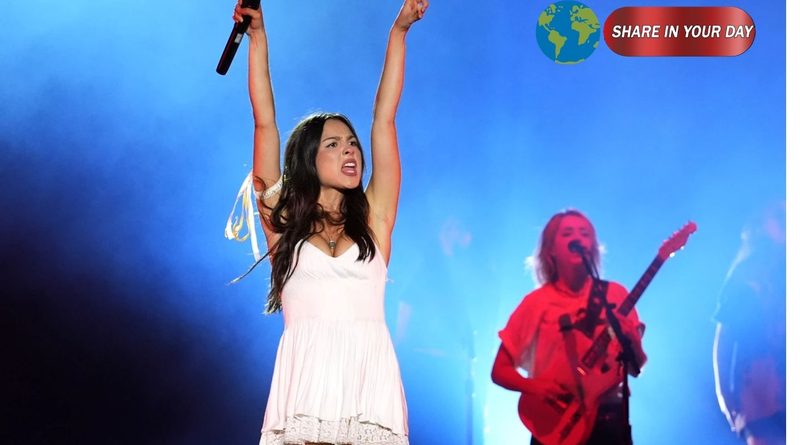
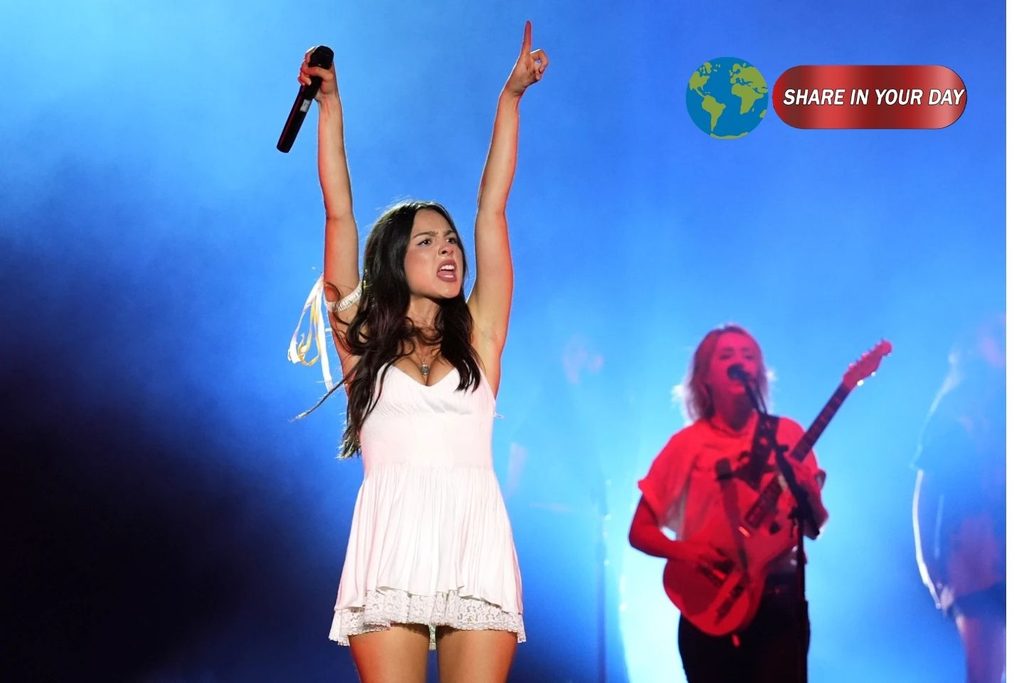
The inaugural festival, held Saturday at Great Park in Irvine, California, brought together a wide-ranging lineup of women-led musical acts, activists and nonprofit organizations. The event combined live music with fundraising and education, creating a platform where fans could connect directly with causes affecting women’s health, legal rights and workplace protections.
Rodrigo had announced before the festival that $10 million had already been raised for 10 nonprofit partners. The total then doubled after philanthropist Melinda French Gates pledged another $10 million through her organization, Pivotal Ventures.
The result was a landmark opening for a festival designed not simply as a concert, but as a meeting point between music, activism and philanthropy.
Daisy Chain Fields Gets a $10 Million Boost
The biggest financial moment came when Melinda French Gates appeared unexpectedly at the beginning of Rodrigo’s set.
French Gates announced that Pivotal Ventures would contribute an additional $10 million, matching the $10 million already raised through the event.
The contribution immediately brought the festival’s fundraising total to $20 million.
French Gates praised Rodrigo for helping introduce a younger generation to activism and philanthropy. Her appearance also underscored the broader ambitions of Daisy Chain Fields, which sought to turn the energy surrounding a major music event into long-term support for organizations working on issues affecting women and girls.
The money is being directed toward 10 nonprofit partners.
Among the organizations named by the festival are Planned Parenthood, the National Women’s Law Center and Black Mamas Matter Alliance. Other beneficiaries include groups working on reproductive rights, maternal health, mental health and related areas of women’s well-being.
For Rodrigo, the fundraising success represents a significant expansion of her role beyond music.
At just 23, the pop star has already established herself as one of the most influential young performers in the world. Daisy Chain Fields gives her a new way to use that influence by connecting her audience with organizations working on social issues.
Olivia Rodrigo Builds a Festival Around Women’s Voices
Daisy Chain Fields was deliberately designed around female musical talent.
The lineup included Chappell Roan, Doechii, Bikini Kill, Mitski, the Breeders and other artists representing different generations and genres. The festival also brought together established stars whose careers helped shape the music Rodrigo grew up listening to.
That intergenerational approach was central to the festival’s identity.
Rather than presenting one dominant headliner surrounded by supporting acts, Rodrigo sought to create an environment where artists could share the spotlight.
The concept was partly inspired by Lilith Fair, the groundbreaking women-led festival created by Sarah McLachlan in the 1990s.
McLachlan herself performed at Daisy Chain Fields, providing a direct connection between the festival’s modern audience and the history that inspired Rodrigo.
The result was a lineup that crossed generations.
Fans could see artists who helped establish women-centered alternative music alongside performers who represent the current generation of pop and hip-hop.
A Modern Take on Lilith Fair
The influence of Lilith Fair was evident throughout Daisy Chain Fields.
McLachlan’s original festival became an important cultural event because it created opportunities for female musicians at a time when women often faced significant barriers in the live music industry.
Rodrigo’s event updated that idea for a younger audience.
Daisy Chain Fields combined the festival atmosphere with a strong focus on activism. Instead of treating social causes as a secondary feature, organizers made them part of the event itself.
Attendees could visit a dedicated “philanthropy village” and interact with nonprofit organizations.
That approach was designed to make activism more accessible.
Rather than simply asking fans to donate money, the festival gave them opportunities to learn about specific issues and organizations.
The model reflects a broader challenge facing nonprofit groups: reaching younger generations who may be highly engaged with social issues but less familiar with traditional forms of philanthropy.
Rodrigo’s enormous fan base offered a direct connection to that audience.
Daisy Chain Fields Connects Music With Activism
The festival’s organizers wanted the event to feel like more than a fundraising exercise.
Rodrigo said the artists and activists involved in the event gave her hope despite what she described as a regression in women’s rights.
The name itself reflects that philosophy.
Rodrigo explained that she was drawn to “Daisy Chain” because it represented individual parts coming together to create something stronger.
That idea became the central theme of the festival.
Artists brought their music. Nonprofits brought their expertise. Fans brought their attention and financial support. Together, those elements created a large-scale fundraising effort.
The concept also reflects the way younger audiences increasingly engage with social issues.
For many Gen Z fans, music, identity and activism are closely connected. A festival that combines all three can therefore feel more natural than a traditional charity campaign.
That may help explain why the event was able to generate such a large fundraising total.
Chappell Roan and Doechii Join Major Lineup
The lineup gave Daisy Chain Fields substantial cultural influence even before the fundraising total was announced.
Chappell Roan was among the most prominent younger artists participating. Doechii added another major contemporary voice, while Bikini Kill represented an earlier generation of feminist punk and riot grrrl music.
Mitski and the Breeders further expanded the musical range.
The lineup was not limited to one genre.
Pop, alternative rock, punk and hip-hop were all represented, allowing Rodrigo to bring together different sections of her audience.
That diversity was intentional.
The festival’s goal was to create a community rather than a competition between artists. Acts were presented as part of a larger collective message rather than as competitors for the biggest audience.
That structure helped reinforce the central theme of solidarity.
Stevie Nicks Creates a Generational Moment
One of the festival’s most memorable performances came when Stevie Nicks joined Rodrigo onstage.
The two performed Fleetwood Mac’s “Landslide,” creating a striking connection between two generations of female musicians.
Nicks also performed her own set at the festival.
Her participation was particularly meaningful because Daisy Chain Fields was built around the idea of connecting established musical pioneers with younger performers.
Nicks represents one of the most influential generations in American rock music, while Rodrigo has emerged as one of the defining pop artists of her own generation.
Their appearance together gave the festival a symbolic quality that went beyond the performance itself.
Nicks praised Rodrigo’s work and expressed admiration for what the young singer had accomplished in bringing the event together.
Sarah McLachlan Pays Tribute to Dolly Parton
Sarah McLachlan also joined Rodrigo during the festival for several performances.
The pair performed “Building a Mystery” and “Angel,” with “Angel” becoming a tribute to Dolly Parton, who died earlier in August at age 80.
The tribute added another emotional dimension to an event already focused on the contributions of women in music.
Parton’s legacy extended far beyond her recording career. She was also widely recognized for philanthropy and for programs supporting children’s literacy and education.
Honoring her at Daisy Chain Fields therefore fit naturally with the festival’s broader focus on using cultural influence to support social causes.
The performance also reinforced the event’s intergenerational character.
McLachlan represented the generation that inspired Rodrigo, while Rodrigo used the stage to celebrate artists who came before her.
Daisy Chain Fields Gives Fans Direct Access to Nonprofits
One of the festival’s most distinctive elements was its emphasis on direct engagement.
The event included spaces where attendees could learn about nonprofit organizations and the issues they address.
That allowed fans to move beyond simply watching performances.
Organizations participating in the festival focused on areas including reproductive health, maternal health, workplace protections and legal rights.
The strategy was especially relevant to Rodrigo’s young audience.
Nonprofit organizations have often struggled to establish lasting relationships with younger donors. Younger people may support causes strongly but prefer informal, digital and community-based forms of participation.
A music festival provides an opportunity to meet those preferences.
Fans already arrive with a sense of community. Adding nonprofit organizations to that environment can turn emotional enthusiasm into practical action.
The $20 million fundraising result demonstrates the potential of that approach.
Why the $20 Million Matters
The amount raised by Daisy Chain Fields is significant because it combines two different forms of support.
The first $10 million came from the festival itself, including proceeds associated with tickets and the event’s fundraising efforts.
The second $10 million came from French Gates’ matching contribution.
Together, the donations create a substantial financial boost for organizations working on women’s issues.
But organizers also hope the festival will have an impact beyond the immediate money raised.
The event exposed thousands of fans to nonprofit organizations and their work.
That exposure could potentially lead to future donations, volunteering and advocacy.
In that sense, the festival’s value cannot be measured solely by its $20 million fundraising total.
Its larger goal is to create a lasting connection between music fans and organizations supporting women and girls.
A New Role for Pop Stars
Daisy Chain Fields also illustrates how the role of major pop stars continues to evolve.
Artists with enormous audiences increasingly have the ability to influence conversations far beyond music.
Rodrigo has previously used her public platform to speak about women’s rights and reproductive health. The festival represents a more organized extension of that activism.
Instead of simply making statements from a stage or social media account, she created an entire event around the issues she wanted to highlight.
That required bringing together musicians, nonprofit organizations, sponsors, fans and philanthropic partners.
The result demonstrates the organizational power that can come with celebrity influence.
It also gives artists an opportunity to create tangible outcomes rather than relying solely on public messaging.
Gen Z and the Future of Philanthropy
Another important aspect of Daisy Chain Fields is its focus on Gen Z.
Rodrigo’s audience includes millions of young people who have grown up in an environment where social issues are constantly discussed online.
For nonprofit organizations, reaching those audiences can be difficult.
Traditional fundraising campaigns may not always connect with younger donors. Music, however, can create an emotional connection almost instantly.
The festival used that connection as a bridge.
By placing nonprofits alongside popular performers, Daisy Chain Fields made philanthropy part of the entertainment experience.
One attendee, Grace Slevin, 24, described the power of that connection by emphasizing that people are more likely to mobilize when they feel connected to a group.
Music can create precisely that kind of connection.
Daisy Chain Fields Could Become an Annual Tradition
The success of the inaugural festival could create a foundation for future editions.
Daisy Chain Fields has already demonstrated that there is an audience for a large-scale event combining women-led music with philanthropy.
It also showed that major artists can work together across generations without competing for attention.
If the festival returns, organizers could potentially expand its nonprofit partnerships, educational programs and fundraising efforts.
The event could eventually become an annual platform for women in music and organizations working on women’s well-being.
That would give Rodrigo an opportunity to build something with a lasting cultural identity rather than a one-time benefit concert.
The first edition has already established a strong blueprint.
Music, Community and a $20 Million Beginning
Daisy Chain Fields ended its first chapter with a remarkable financial achievement and a powerful cultural message.
Olivia Rodrigo brought together some of the biggest names in contemporary and classic music, while Melinda French Gates helped double the event’s fundraising total to $20 million.
The beneficiaries include organizations working on some of the most consequential issues affecting women and girls, from reproductive rights and maternal health to legal protections and workplace equality.
Yet the festival’s significance goes beyond the money.
It created a space where young fans could experience music while learning about organizations working to create change. It connected Rodrigo’s generation with artists who came before her. And it demonstrated how entertainment can become a vehicle for community action.
With performances from artists such as Chappell Roan, Doechii, Bikini Kill, Sarah McLachlan and Stevie Nicks, the event celebrated women’s contributions across decades of music.
Most importantly, Daisy Chain Fields showed that a festival can be both a cultural celebration and a serious philanthropic platform.
The $20 million raised is an impressive first result. The larger question now is whether the community Rodrigo created in Irvine can continue growing long after the final song has ended.