Gulf Stocks Fall as Fed Rate Hike Bets Surge
Gulf stocks fell on Sunday as investors reacted to a sharp increase in expectations for a U.S. Federal Reserve interest rate hike following hawkish comments from Fed Chair Kevin Warsh. The shift in monetary policy expectations added pressure to regional markets, with Saudi Arabia and Qatar among the markets posting declines.
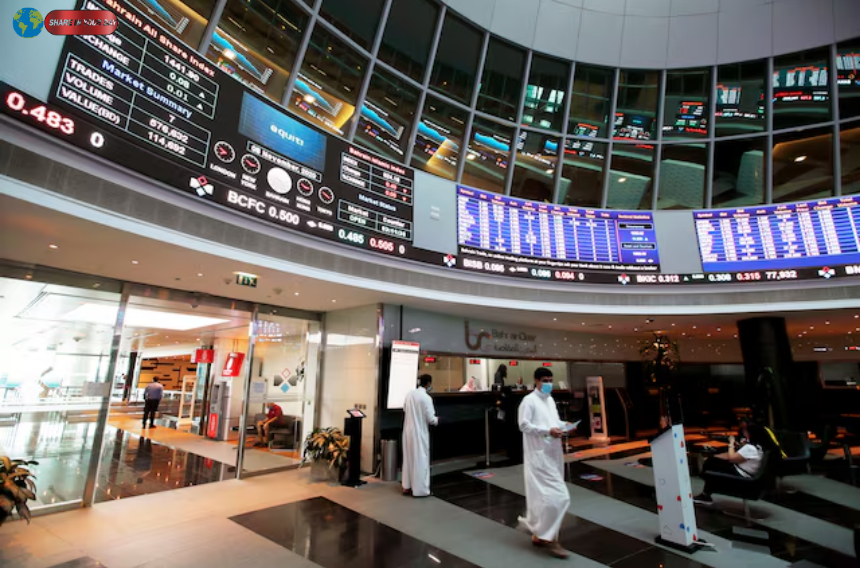
The market reaction highlights the close relationship between U.S. monetary policy and Gulf economies. Several major Gulf currencies are pegged to the U.S. dollar, meaning changes in Federal Reserve interest rates can influence domestic monetary conditions and borrowing costs across the region.
Investor sentiment was already being shaped by geopolitical risks, oil prices and developments around the Strait of Hormuz. Warsh’s comments added another source of uncertainty as traders reassessed the outlook for U.S. interest rates.
Gulf Stocks React to Hawkish Fed Signals
The latest decline in Gulf stocks followed comments from Warsh at the Jackson Hole economic symposium. His remarks reinforced concerns that the Federal Reserve may need to raise interest rates further if inflation remains too high.
The change in expectations was significant. According to CME Group’s FedWatch tool, the probability assigned by markets to a rate increase at the Fed’s September meeting climbed to 55.7%, compared with 35.4% previously.
That shift matters for global investors because higher U.S. interest rates can increase the attractiveness of dollar-denominated assets while raising financing costs elsewhere.
For Gulf markets, the effect can be particularly important.
Central banks in the region often maintain monetary policies closely aligned with the Federal Reserve because of their currency arrangements with the U.S. dollar. As a result, a higher Federal Reserve rate can increase pressure for Gulf central banks to maintain or adjust their own rates.
Saudi Arabia Leads the Gulf Market Decline
Saudi Arabia’s benchmark index was one of the major Gulf indicators affected by the change in sentiment.
The Saudi benchmark fell 0.7% for a second consecutive session, according to Reuters. Saudi Arabian Mining Co. declined 3.3%, while Saudi National Bank fell 1.2%.
The decline demonstrates how broader interest-rate expectations can quickly affect individual companies.
Higher interest rates can raise financing costs for businesses and consumers. They can also influence how investors value stocks because future corporate earnings become less attractive when alternative investments offer higher yields.
Banks can experience mixed effects from higher rates because stronger lending margins may benefit earnings, while weaker economic activity and higher borrowing costs can hurt loan demand and increase credit risks.
For Saudi investors, the reaction also needs to be considered alongside oil-market developments and the country’s broader economic transformation program.
Saudi Arabia remains heavily influenced by the global energy market. Changes in crude prices can affect government revenues, corporate earnings expectations and investor sentiment.
Qatar Stocks Also Move Lower
Qatar’s benchmark index slipped 0.1% as investors responded to the broader regional pressure.
Financial stocks were among the areas weighing on the market. Doha Bank and The Commercial Bank both recorded declines, according to Reuters.
However, not every Qatar-related stock moved lower.
Industries Qatar and Gulf International Services gained, supported by strength in companies connected to the country’s energy sector.
The divergence highlights an important feature of Gulf markets.
While higher U.S. interest rates can create broad pressure, individual sectors can respond differently depending on their exposure to energy prices, financing costs and international demand.
Energy-linked companies may benefit when oil and gas prices remain elevated. Financial companies, meanwhile, can be more sensitive to changing interest-rate expectations and domestic liquidity conditions.
Why the Fed Matters to Gulf Markets
The relationship between the Federal Reserve and Gulf stocks is rooted partly in currency policy.
Several Gulf states maintain currencies that are pegged to the U.S. dollar. This arrangement provides exchange-rate stability, but it also means local monetary policy is closely connected to decisions made by the Federal Reserve.
When the Fed raises rates, Gulf central banks can face pressure to follow.
If they do not adjust rates in line with U.S. policy, the interest-rate differential between local currencies and the dollar can change. That could potentially affect capital flows and currency stability.
As a result, investors in Gulf stocks monitor Federal Reserve decisions even though the Fed does not directly control monetary policy in Riyadh, Doha or other Gulf financial centers.
The latest reaction is therefore not simply about U.S. investors.
It reflects the interconnected nature of global financial markets.
Kevin Warsh Raises Inflation Concerns
Warsh’s comments were closely watched because they represented a stronger signal that inflation remains a major concern for the Federal Reserve.
At the Jackson Hole symposium, Warsh emphasized the importance of getting inflation under control and suggested that additional monetary tightening could be necessary.
His comments came at a critical point for financial markets.
Investors had been trying to determine whether the Federal Reserve would eventually move toward lower rates or remain focused on inflation risks. Warsh’s remarks shifted expectations toward the possibility of another rate increase.
Reuters reported that the market-implied probability of a September hike rose from 35.4% to 55.7% following the comments.
That change was reflected across financial markets, including stocks, bonds, currencies and commodities.
Higher U.S. Rates Could Keep Pressure on Gulf Stocks
If the Federal Reserve ultimately raises rates, Gulf stocks could face additional pressure.
Higher interest rates can increase the cost of capital for companies. Businesses that rely heavily on borrowing may face higher financing expenses, while consumers can also become more cautious when credit becomes more expensive.
Higher U.S. Treasury yields can create another challenge.
Investors often compare the expected return from stocks with the yield available from relatively lower-risk government bonds. When Treasury yields rise, some investors may reduce exposure to equities or demand lower stock valuations.
This does not necessarily mean Gulf markets will experience a prolonged selloff.
The impact will depend on several factors, including oil prices, corporate earnings, local economic growth and the ultimate path of U.S. monetary policy.
Oil Prices Remain a Key Factor
Oil remains another major variable for Gulf stocks.
The region’s largest economies include some of the world’s most important energy producers and exporters. Changes in crude prices can therefore influence government revenues, investment plans and corporate earnings.
The geopolitical situation surrounding the Strait of Hormuz adds another layer of uncertainty.
Recent military developments involving Iran and the strategic waterway have contributed to volatility in energy markets. Reuters reported that oil prices jumped more than 2% after a U.S. strike on Iranian launchers on Larak Island, with Brent crude moving above $90 a barrel.
Higher oil prices can support energy-producing economies, but they can also contribute to inflation.
That creates a complicated situation for central banks.
If higher energy prices feed into broader inflation, central banks may have less room to cut interest rates. If monetary policy remains tight for longer, financial markets can face additional pressure.
Egypt Offers a Different Market Story
While Gulf stocks broadly weakened, Egypt provided an example of how company-specific developments can overcome wider market pressure.
Abu Qir Fertilizers gained 4.8% after the company announced higher ammonia production and lower gas consumption, according to Reuters.
The performance shows why investors cannot look only at broad market trends.
Company earnings, production increases, cost reductions and operational improvements can provide individual stocks with support even when regional sentiment is weak.
For investors, this creates a two-level market environment.
At the macro level, interest rates and geopolitical developments influence overall risk appetite. At the company level, earnings and operational performance determine whether individual shares can outperform.
Gulf Stocks Face Several Sources of Volatility
The latest decline comes as Gulf markets navigate several competing forces.
The Federal Reserve’s interest-rate outlook is one of them. Oil prices are another. Geopolitical developments in the Middle East add further uncertainty.
Bond yields also matter.
If U.S. yields rise, global financial conditions can become tighter. This can influence capital allocation across emerging and developing markets, including the Gulf.
The situation around the Strait of Hormuz is particularly important because the waterway is a major route for global energy shipments.
Any escalation that threatens shipping could push oil prices higher. Conversely, signs of de-escalation could reduce the geopolitical risk premium in crude prices.
Investors therefore face a market where monetary policy and geopolitics can move in opposite directions.
What Investors Will Watch Next
The next major focus for markets will be incoming U.S. economic data and signals from Federal Reserve officials.
Investors will be looking closely at inflation and employment figures because those indicators could determine whether Warsh’s hawkish stance translates into an actual rate increase.
A stronger-than-expected economy or persistent inflation could reinforce expectations for tighter monetary policy.
On the other hand, weaker employment data or evidence that inflation is cooling could reduce the likelihood of another hike.
Gulf investors will also monitor oil prices and developments around the Strait of Hormuz.
Those factors could determine whether energy-related stocks outperform the broader market or whether geopolitical risks become an additional source of market weakness.
Could Gulf Stocks Recover?
The recent decline does not necessarily indicate a long-term bearish trend.
Gulf markets have several structural advantages, including substantial energy resources, government investment programs and efforts to diversify economies beyond hydrocarbons.
Saudi Arabia, for example, continues to pursue large-scale economic transformation projects aimed at developing sectors such as tourism, technology, infrastructure and entertainment.
Qatar also benefits from its significant natural gas resources and expanding role in global energy markets.
These long-term factors can provide support even when global monetary conditions become more difficult.
However, valuations and liquidity conditions remain important.
If U.S. interest rates stay higher for longer, investors may demand stronger earnings growth before committing additional capital to equities.
That could result in greater differentiation between companies and sectors.
The Bigger Picture for Gulf Markets
The latest decline in Gulf stocks demonstrates how quickly global monetary policy can affect regional financial markets.
Warsh’s hawkish remarks changed expectations for the Federal Reserve’s September meeting. The resulting rise in rate-hike bets contributed to weaker sentiment across Gulf exchanges, with Saudi Arabia and Qatar among the markets affected.
Yet the market reaction is not occurring in isolation.
Oil prices, geopolitical risks, bond yields and regional economic conditions will continue to shape investor decisions.
For Gulf markets, the most important question may be whether the Fed’s hawkish message becomes a temporary adjustment in expectations or the beginning of a longer period of tighter U.S. monetary policy.
If rate-hike expectations continue to rise, Gulf stocks could remain under pressure. If inflation data softens and investors begin to price a less aggressive Fed, regional equities could regain momentum.
For now, investors are watching both Washington and the Middle East.
The direction of U.S. interest rates, combined with oil-market and geopolitical developments, will likely remain central to the outlook for Gulf stocks in the weeks ahead.