
US Strikes Iran Larak Island in Major New Escalation
The US strikes Iran Larak Island on Sunday, August 30, marked a major new escalation in the confrontation between Washington and Tehran. US forces hit two Iranian launchers on Larak Island after American officials said Iran’s Islamic Revolutionary Guard Corps was preparing to launch rockets carrying sea mines into the strategically important Strait of Hormuz.
The attack was the first known US strike on Iranian territory since late July. It immediately raised concerns about a renewed cycle of military retaliation between the United States and Iran, particularly because the targeted area sits near one of the world’s most important energy and shipping routes.
Iran’s Revolutionary Guards said the attack killed and wounded several soldiers and civilians. Tehran also warned that the US action would receive a “response and punishment,” according to Iranian state media. The statement adds another layer of uncertainty to an already fragile regional situation.
US Strikes Iran Larak Island Over Sea Mine Threat
According to a US official cited by Reuters, American forces observed Revolutionary Guard personnel preparing launchers to fire rockets carrying sea mines into the Strait of Hormuz.
The official said two Iranian launchers on Larak Island were subsequently targeted. The United States has repeatedly emphasized the importance of keeping international shipping routes open through the strait, where any new deployment of mines could pose a serious threat to commercial vessels.
The precise weapons used by US forces were not disclosed by the American official. However, Iran’s semi-official Tasnim news agency reported that the attack was carried out using drones.
The reported strike came after a period of relative restraint. The last known US attacks on Iran occurred in late July, meaning Sunday’s operation represented a significant return to direct military action.
That timing is important. Recent weeks had seen Washington increasingly emphasize economic pressure and sanctions while diplomatic efforts continued behind the scenes. The new strike suggests that the military option remains firmly available if the United States believes Iranian actions threaten shipping or American forces.
Why Larak Island Matters
Larak Island is located in Iran’s Hormozgan province, close to the Strait of Hormuz. Its position gives it considerable strategic importance.
The Strait of Hormuz connects the Persian Gulf with the Gulf of Oman and the Arabian Sea. It is one of the world’s most critical maritime chokepoints, particularly for global energy supplies.
Any military activity around the strait can therefore have consequences far beyond Iran and the United States.
A mine-laying operation would be especially concerning because sea mines can threaten commercial shipping even after the vessels or units that deployed them have left the area. Detecting and removing mines can also be a slow and dangerous process.
That is why Washington has treated the possibility of new Iranian mine deployments as a major security issue.
Iran Vows Retaliation After Larak Island Attack
Iranian authorities reacted sharply to the US operation.
The Revolutionary Guards said several Iranian fighters and civilians were killed or wounded. However, Iranian authorities did not provide a precise casualty figure.
The Guards also promised that the attack would be met with a response and punishment. That language is likely to intensify concerns that the Larak Island strike could become the beginning of another round of attacks rather than an isolated military operation.
Tehran has several potential ways to respond.
Iran could target US military positions in the region, increase pressure on commercial shipping, attempt further actions around the Strait of Hormuz or use other military and asymmetric capabilities.
The precise response remains uncertain.
For Washington, the challenge will be preventing retaliation from developing into a broader confrontation while maintaining pressure on Iran to keep the waterway open.
Strait of Hormuz Becomes the Center of the Crisis
The Strait of Hormuz is at the heart of the latest escalation.
The waterway has long been viewed as one of the most important strategic points in the global energy system. Any sustained disruption can affect crude oil prices, shipping costs, insurance rates and fuel prices around the world.
The latest US operation therefore attracted immediate attention from energy markets.
Reuters reported on Monday that oil prices rose more than 2% following the strike. Brent crude climbed above $90 a barrel, while US West Texas Intermediate also recorded a sharp increase.
The market reaction illustrates how quickly military developments around the strait can translate into economic pressure.
Even the possibility of a disruption can cause traders to price in additional risk.
If Iran were to deploy new sea mines or threaten commercial shipping, the consequences could become significantly larger. Shipping companies could face higher insurance premiums, longer routes and increased security costs.
For consumers, prolonged disruption could eventually translate into higher energy prices.
US Says Iran Had Been Preparing Launchers
The US justification for the attack centers on the alleged preparations by Iran’s Revolutionary Guards.
The American official said Iranian forces were observed preparing to launch rockets with sea mines into the Strait of Hormuz. The US therefore presented the strike as a preventive action designed to stop a potentially dangerous operation before it could take place.
The distinction is significant.
Rather than describing the attack as part of a broader bombing campaign, Washington has framed the operation around an immediate maritime security threat.
That could allow US officials to argue that the action was limited and targeted.
However, Iran is likely to view the strike differently.
From Tehran’s perspective, the attack represents another direct US military action on Iranian territory and could be used as justification for retaliation.
This creates a familiar escalation problem: one side describes an operation as defensive or preventive, while the other sees it as an act of aggression.
A New Test for the US-Iran Conflict
The US strikes Iran Larak Island development comes as the broader conflict has entered a complicated phase.
The confrontation has already caused significant disruption across the Middle East. The United States has continued applying economic pressure against Iran, while Tehran has maintained its ability to threaten key regional interests.
Reuters has reported that the conflict has also placed increasing pressure on Iran’s economy, with sanctions and restrictions worsening inflation and trade difficulties.
At the same time, diplomatic efforts have not completely disappeared.
Regional countries have sought to encourage dialogue and reduce the possibility of a wider war. Qatar and Pakistan have been involved in efforts aimed at keeping diplomatic channels open, according to recent reporting.
The Larak Island strike complicates those efforts.
Military action can make negotiations more difficult, especially when casualties are reported and both sides publicly threaten further action.
Could the Larak Island Strike Trigger a Wider War?
That remains one of the biggest questions following the attack.
A limited strike does not automatically mean the United States and Iran are heading toward an unlimited military confrontation. The US operation targeted two launchers rather than announcing a broad new campaign against Iranian infrastructure.
However, the risk comes from what happens next.
If Iran responds militarily, Washington could face pressure to retaliate again. A second American operation could then produce another Iranian response.
That type of cycle can quickly become difficult to control.
The Strait of Hormuz makes the situation even more sensitive. Military activity near commercial shipping creates risks that can affect countries with no direct role in the US-Iran confrontation.
For that reason, governments across the Gulf and other major energy-consuming countries will be watching the situation closely.
Oil Markets React to the US Attack
The immediate rise in oil prices demonstrates the economic importance of the incident.
Reuters reported that Brent crude futures rose by $2.22, or 2.52%, to $90.32 a barrel. US West Texas Intermediate crude gained $2.01, or 2.41%, to $85.41.
Those increases reflect more than concern about the destruction of two launchers.
Investors are assessing whether the attack could lead to a broader confrontation that threatens oil transportation through the Gulf.
If shipping through the Strait of Hormuz becomes more dangerous, energy markets could experience additional volatility.
That could put pressure on governments already dealing with inflation and elevated fuel costs.
The longer-term market impact will depend heavily on whether the current escalation remains limited.
What Happens Next?
The next few days could be critical.
The immediate priority for Washington will likely be monitoring Iranian military activity around the Strait of Hormuz and other potential targets in the region.
Iran, meanwhile, must decide how to respond to the attack without necessarily triggering a much larger US military operation.
A limited response could allow both sides to avoid a major escalation.
A major attack against American personnel, ships or regional partners could produce a much stronger US response.
Diplomatic pressure could also increase as regional governments attempt to prevent another prolonged military confrontation.
The situation remains fluid, and new developments could quickly change the calculations of both governments.
Larak Island Strike Raises Global Concerns
The significance of the US strikes Iran Larak Island operation extends beyond the immediate military confrontation.
Larak Island sits close to a waterway that has an outsized role in the global economy. Any prolonged threat to commercial navigation could affect oil prices, shipping routes and international markets.
The reported Iranian preparations involving sea mines were therefore viewed by Washington as a serious potential threat.
At the same time, Iran’s promise of retaliation creates a new security challenge.
The central question is whether Sunday’s attack will remain a limited operation aimed at removing a specific threat or whether it will trigger another round of US-Iran military exchanges.
For now, the answer is unclear.
What is certain is that the Larak Island strike has ended a period of relative restraint and placed the Strait of Hormuz back at the center of the US-Iran confrontation.
As Washington and Tehran weigh their next moves, global markets, commercial shipping companies and governments across the Middle East will be watching closely.
The coming days could determine whether the latest strike becomes a brief episode or the opening move in another dangerous phase of the conflict.
Image Recommendation
Suggested image: A licensed news photograph or satellite image showing Larak Island and the Strait of Hormuz.
Image ALT: US strikes Iran Larak Island as tensions rise in the Strait of Hormuz
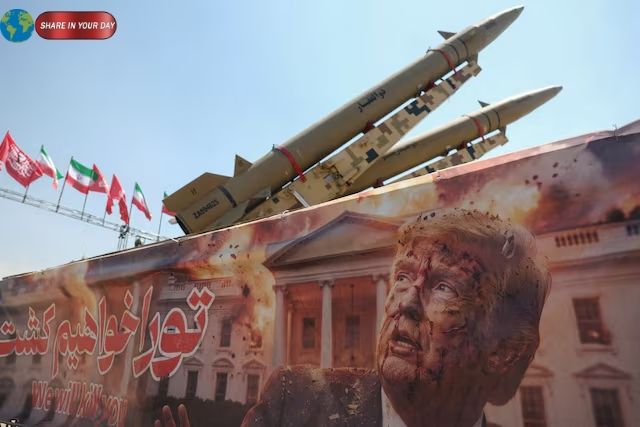
Image caption: US forces struck two Iranian launchers on Larak Island after Washington said Iranian forces were preparing to deploy sea mines into the Strait of Hormuz.
Sources
- Reuters — US forces strike two Iranian launchers on Iran’s Larak Island.
- Reuters — Iran’s Revolutionary Guards vow response to US attack on Larak Island.
- Reuters