FULL ARTICLE (1200+ words)
The United States is facing a growing and increasingly serious challenge in maintaining its Merchant Marine workforce, particularly in the area of sealift operations. These jobs—often invisible to the public—play a critical role in national defense, global trade, and emergency military logistics. However, recent reporting highlights a widening shortage of qualified mariners, raising concerns about whether the country can sustain its maritime readiness in a future crisis.
The issue is not just about employment trends. It is directly tied to national security, military supply chains, and the ability of the U.S. to project power overseas.
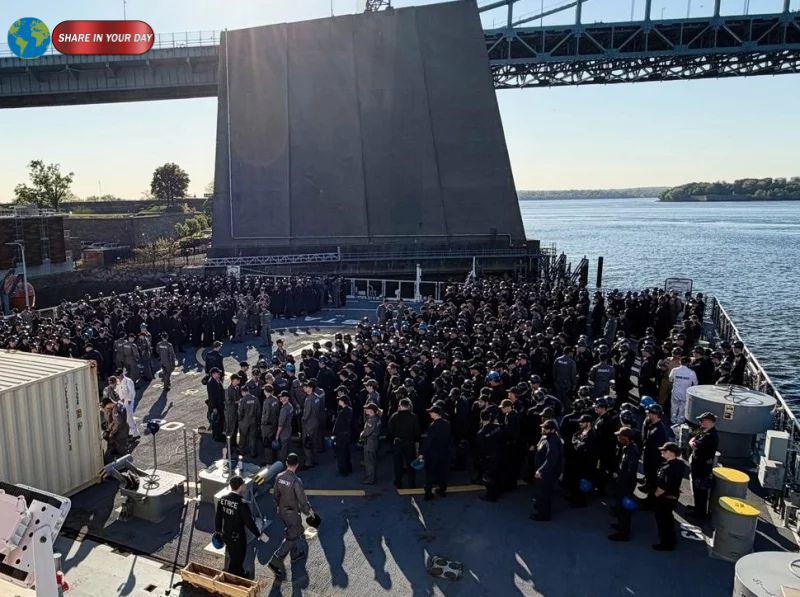
Understanding Merchant Marine Sealift Jobs
Merchant Marine sealift jobs refer to civilian maritime positions responsible for operating cargo ships that transport military equipment, fuel, and supplies across oceans. These vessels are not combat ships, but they are essential to military operations.
When the U.S. military deploys abroad, it relies heavily on sealift capacity to move massive volumes of cargo that aircraft cannot carry efficiently. This includes tanks, helicopters, ammunition, and humanitarian supplies.
According to reporting from U.S. maritime defense discussions, the sealift system is considered a backbone of military logistics, especially during large-scale operations or wartime mobilization.
Why Sealift Work Is Critical to National Security
The U.S. Merchant Marine acts as a bridge between commercial shipping and military logistics. In times of crisis, civilian mariners can be activated to support the Department of Defense through programs such as the Military Sealift Command.
However, recent concerns highlighted in NPR reporting show that this system is under strain. A shortage of trained personnel means fewer crews are available to operate ships when demand spikes.
This shortage could create a bottleneck in military readiness. Without enough merchant mariners, even fully functional ships cannot sail.
A Shrinking Workforce and Aging Fleet
One of the most pressing issues is the shrinking pool of qualified mariners. Industry data shows that the number of U.S.-flagged commercial ships is limited, and many rely on federal support to remain operational.
In addition, maritime experts warn that the workforce is aging. Many experienced mariners are approaching retirement, while fewer younger workers are entering the field.
A related concern is the long-term decline in U.S. shipbuilding capacity. Industry testimony has noted that the country has not built a major commercial ship for the global market in decades, contributing to structural weaknesses in maritime infrastructure.
Global Tensions Highlight the Problem
The urgency of the sealift workforce issue has become more visible due to recent geopolitical tensions in key shipping corridors such as the Strait of Hormuz.
Reports show that military operations and maritime disruptions in the region have left hundreds of ships and thousands of sailors stranded or delayed.
The U.S. has attempted to establish protected shipping lanes and escort commercial vessels through contested waters. However, even with military support, shipping companies remain cautious due to ongoing risks.
Some vessels have only been able to transit safely under U.S. military guidance, highlighting how dependent global shipping has become on coordinated naval and civilian maritime operations.
Why Merchant Marine Jobs Are Hard to Fill
Despite being essential, Merchant Marine sealift jobs are difficult to recruit for. Several factors contribute to this:
- Long periods away from home at sea
- Physically demanding working conditions
- Cyclical employment patterns tied to shipping demand
- Competition from more stable land-based logistics jobs
- Limited awareness among younger workers
While maritime academies train new officers, industry experts argue that the pipeline is not large enough to replace retirees or expand capacity.
National Security Implications
The shortage of merchant mariners is not just a labor issue—it is a strategic vulnerability.
If the United States needed to rapidly deploy military forces overseas, it would rely heavily on sealift operations. Without enough trained personnel, ships could remain idle even during emergencies.
This has raised concerns among defense planners who view maritime logistics as a “silent backbone” of military readiness.
Officials have warned that sealift capability is essential for sustained operations, especially in large-scale conflicts where air transport alone would be insufficient.
The Role of Military Sealift Command
The Military Sealift Command (MSC) is one of the key institutions that coordinates sealift operations. It operates a fleet of civilian-crewed ships that support military missions worldwide.
MSC depends on a mix of government-employed civilian mariners and contracted commercial shipping personnel. This hybrid system allows flexibility but also increases reliance on the broader maritime labor market.
If that labor pool shrinks further, MSC operations could face delays or staffing shortages during critical missions.
Efforts to Address the Shortage
To address the growing gap, policymakers and industry leaders have proposed several solutions:
- Expanding maritime academy enrollment
- Increasing federal incentives for U.S.-flag shipping
- Investing in new shipbuilding programs
- Improving wages and job stability for mariners
- Strengthening recruitment pipelines from military and civilian sectors
However, these solutions take time to implement, and the workforce gap is already present.
The Future of Sealift Jobs in the U.S.
The future of Merchant Marine sealift jobs depends on whether the U.S. can rebuild both its workforce and shipping infrastructure simultaneously.
Without sustained investment, the gap between demand and available personnel could widen further. This would not only affect military readiness but also the broader global supply chain, which depends heavily on maritime transport.
Experts warn that maritime logistics is not something that can be quickly scaled up during a crisis. Training a qualified merchant mariner takes years, not months.
Conclusion
The crisis facing Merchant Marine sealift jobs reflects a deeper structural challenge in U.S. maritime policy. While often overlooked, these roles are essential to both economic stability and national defense.
As global tensions rise and shipping routes become more contested, the importance of a strong and well-trained maritime workforce becomes even clearer. The question is no longer whether sealift jobs are important—but whether the United States can sustain enough workers to meet future demands.
Image ALT Text
Merchant Marine sealift jobs and U.S. maritime workforce operating cargo ship during naval logistics operations