
Hungary State Media Propaganda Move Sparks Major Political Shift Under PM-Elect Péter Magyar
Hungary’s political landscape has entered a dramatic new phase after prime minister-elect Péter Magyar announced plans to suspend state-run news broadcasts, calling them part of a long-standing Hungary state media propaganda system. The move marks one of the first major policy signals from the incoming leader following his decisive election victory over long-time ruler Viktor Orbán.
The decision has already triggered intense debate across Europe, raising questions about press freedom, government control of information, and the future direction of Hungarian democracy.
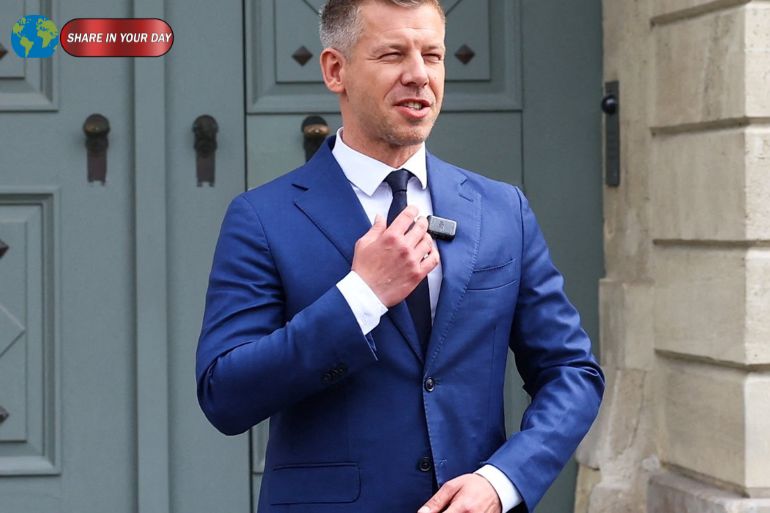
Hungary State Media Propaganda Accusations Drive Reform Agenda
Magyar’s announcement came shortly after his election win, in which his Tisza party secured a strong parliamentary mandate. He stated that Hungary’s public broadcasters had been operating as a “propaganda machine” under the previous administration, shaping narratives in favor of Orbán’s government for years.
According to Magyar, the Hungary state media propaganda system has distorted public debate and weakened trust in journalism. His proposed response includes suspending state news services temporarily until structural reforms are implemented.
He emphasized that public media must return to serving citizens rather than political interests.
Sharp Break From the Orbán Era
For more than 16 years, Viktor Orbán’s government maintained close control over much of Hungary’s media ecosystem, including public broadcasting institutions. Critics have long argued that this system blurred the line between government communication and independent journalism.
Magyar’s move represents a clear and immediate break from that legacy. His administration has signaled plans to introduce a new media law designed to ensure editorial independence and reduce political interference.
The suspension of news programming is expected to be temporary, but it underscores the urgency of dismantling what the new leadership describes as entrenched Hungary state media propaganda structures.
EU Alignment and Democratic Reform Plans
Beyond media reform, Magyar has outlined broader governance changes aimed at strengthening Hungary’s relationship with the European Union. His government is expected to pursue transparency reforms, judicial independence, and anti-corruption measures.
Brussels has previously frozen significant funding to Hungary over concerns about rule of law and media independence. Magyar’s reforms could unlock billions in EU support if successfully implemented.
The new administration has positioned itself as pro-European and reform-oriented, signaling a departure from Orbán’s more confrontational stance toward EU institutions.
Political Fallout and Domestic Reactions
The suspension of state media news services has sparked mixed reactions within Hungary. Supporters argue it is a necessary step toward restoring democratic integrity and ending years of biased reporting.
Critics, however, warn that suspending public broadcasting—even temporarily—could create information gaps and raise concerns about transparency during a politically sensitive transition period.
Media watchdog groups across Europe are closely monitoring the situation, emphasizing the importance of ensuring that reforms strengthen, rather than weaken, press freedom.
A Turning Point in Hungarian Media Landscape
The Hungary state media propaganda controversy highlights a broader transformation underway in the country’s political system. With Orbán’s long rule coming to an end, institutions once tightly aligned with his government are now facing rapid restructuring.
Experts say Magyar’s approach could redefine public broadcasting in Hungary, potentially moving it closer to Western European models that emphasize editorial independence and public accountability.
However, the success of these reforms will depend on how quickly new regulatory frameworks are implemented and whether political neutrality can be maintained in practice.
International Attention and European Implications
The situation in Hungary is being closely watched by European leaders, particularly as media freedom remains a key condition for EU membership standards.
If Magyar succeeds in reforming state media and reducing perceived propaganda influence, Hungary could regain access to previously frozen EU funds and rebuild trust with Brussels.
At the same time, the scale and speed of the changes raise broader questions about how post-authoritarian media transitions should be managed in modern democracies.
Conclusion
Péter Magyar’s decision to suspend state-run news broadcasts marks a defining moment in Hungary’s political transition. By directly confronting what he calls the Hungary state media propaganda system, the new leadership is signaling a decisive shift away from the Orbán era.
While supporters see it as a long-overdue reform toward media independence, critics caution that the process must be carefully managed to avoid new imbalances.
What remains clear is that Hungary is entering a new and highly uncertain chapter in its democratic evolution.
