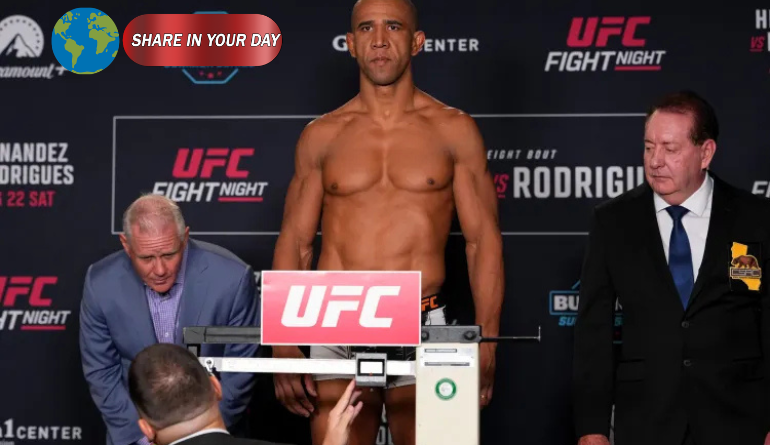
UFC Sacramento Weights Reveal a Stunning 25.5-Pound Gain
The UFC Sacramento weights have revealed a striking difference between official weigh-in numbers and the fighters’ weights on fight night, with Gregory Rodrigues weighing only 2.2 pounds more than Anthony Hernandez despite both gaining substantial weight after stepping on the scale.
The California State Athletic Commission released the fight-night weight figures following UFC Sacramento, providing a closer look at how much weight fighters regained between the official weigh-ins and their bouts. The numbers once again highlight the dramatic weight fluctuations that can occur in mixed martial arts.
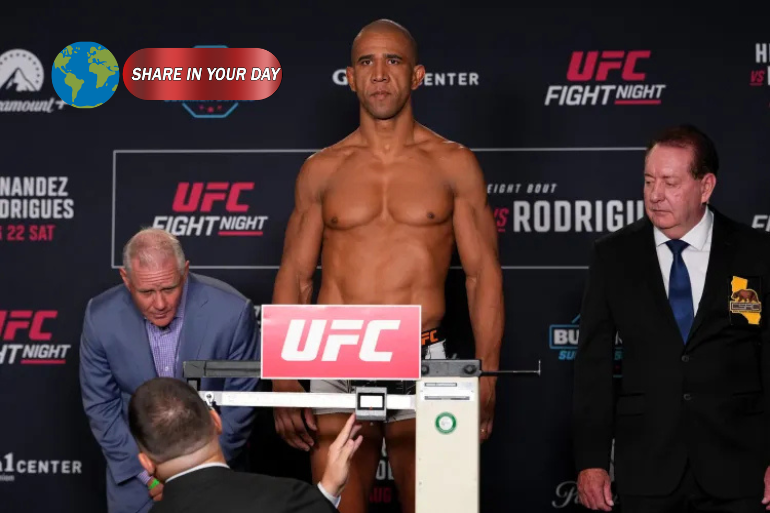
Rodrigues, who weighed 185 pounds at Friday’s official weigh-in, entered the Octagon at 204.4 pounds. Hernandez, meanwhile, went from 186 pounds at the official weigh-in to 202.2 pounds by fight night.
That left only a 2.2-pound difference between the two headliners when they actually competed.
The figures are particularly interesting because Rodrigues has developed a reputation as one of the larger middleweights on the UFC roster. Yet despite his substantial weight gain, Hernandez was almost the same size when the fight began.
The broader UFC Sacramento numbers were even more dramatic.
Marcio Barbosa recorded the largest increase on the card, jumping from 145.5 pounds at weigh-ins to 171 pounds on fight night. That represented a remarkable 25.5-pound increase.
Gregory Rodrigues Gained 19.4 Pounds Before UFC Sacramento
Gregory Rodrigues entered the UFC Sacramento main event at 185 pounds after successfully making the middleweight limit.
By fight night, however, his weight had climbed to 204.4 pounds.
That represents a gain of 19.4 pounds, or more than 10 percent of his official weigh-in weight.
Rodrigues’ size has long been considered one of his physical advantages at middleweight. His nickname, “Robocop,” has become closely associated with his aggressive fighting style, durability and knockout power.
The latest figures show just how different his physical dimensions can be between the weigh-in and the actual fight.
Yet the numbers also show that Hernandez was not significantly smaller once both men entered the cage.
Anthony Hernandez weighed 186 pounds at the official weigh-in and reportedly reached 202.2 pounds by fight night.
That means Hernandez added 16.2 pounds after weighing in.
The difference between the two fighters therefore narrowed considerably compared with what their official weights suggested.
MMA Fighting reported that the California State Athletic Commission’s fight-night data was designed in part to provide more information about extreme weight cutting and post-weigh-in weight gain.
Anthony Hernandez Added 16.2 Pounds
Hernandez’s 16.2-pound increase is significant, but it was still smaller than Rodrigues’ 19.4-pound gain.
The important detail is what happened after both fighters stepped onto the scale.
At the official weigh-ins, Rodrigues was one pound lighter than Hernandez.
By fight night, Rodrigues was only 2.2 pounds heavier.
In practical terms, the two middleweights entered their five-round contest at remarkably similar weights.
That is an important distinction when evaluating weight-cutting strategies.
A fighter who weighs 185 pounds at the official weigh-in can look dramatically different from the same athlete 24 hours later. Water, food and electrolyte replacement can all contribute to a substantial increase.
Because fighters compete in weight classes, the official weigh-in is only one snapshot of their physical size.
The fight-night numbers provide another.
Marcio Barbosa Recorded the Biggest Gain
While Rodrigues and Hernandez’s numbers attracted the most attention because they headlined UFC Sacramento, another fighter produced the largest weight increase on the entire card.
Marcio Barbosa went from 145.5 pounds to 171 pounds.
That is a gain of 25.5 pounds.
The increase was enough to create a reported 17.9-pound fight-night weight advantage over his opponent Ryan Kuse, who went from 144.5 pounds to 153.1 pounds.
The figures demonstrate how dramatically fighters in lighter weight classes can regain weight after official weigh-ins.
Barbosa’s increase was also substantially larger than the gains recorded by Rodrigues and Hernandez.
Other UFC Sacramento fighters posted major increases as well.
Stan Dorsainvil gained 23.5 pounds, while Gauge Young added 24.7 pounds. Jackson McVey gained 22.8 pounds.
Those figures suggest that large post-weigh-in weight increases were not isolated to a single fighter.
UFC Sacramento Weights Highlight MMA’s Weight-Cutting Debate
Weight cutting has been one of the most persistent issues in MMA.
Fighters routinely reduce their body weight before competition, often primarily through manipulation of water levels. Once the official weigh-in is complete, they begin the process of restoring fluids and nutrients before competing.
The practice is deeply embedded in combat sports.
However, extreme weight cutting has also raised safety concerns.
The California State Athletic Commission’s collection and publication of fight-night weight data provides regulators with more information about how much weight athletes are losing and regaining.
That information can potentially help officials understand whether existing weight classes adequately reflect the physical differences between competitors.
It also raises a larger question: Should fighters be competing in the weight class where they weigh in, or the weight class closest to their actual fight-night size?
There is no simple answer.
Moving fighters into higher divisions could reduce extreme cuts, but it could also create new competitive disadvantages for athletes who are naturally smaller.
Meanwhile, fighters who have spent years developing a successful weight-cutting strategy may not want regulations that force them into a heavier division.
Rodrigues vs. Hernandez Produced a Major Result
The fight-night weight figures are even more notable because of what happened inside the Octagon.
Rodrigues defeated Hernandez by unanimous decision after five rounds in the UFC Sacramento main event.
The victory was one of the biggest wins of Rodrigues’ UFC career and significantly strengthened his position in the middleweight division. MMA Fighting reported that Rodrigues entered the contest ranked No. 15 while Hernandez was ranked No. 5.
The result also ended Hernandez’s attempt to rebound from his previous defeat.
Hernandez had entered the fight after an eight-fight winning streak was snapped by Sean Strickland. Rodrigues, meanwhile, was riding strong momentum and had established himself as one of the more dangerous middleweights outside the division’s top tier.
The fight ultimately went the full 25 minutes.
That was significant for Rodrigues because much of his reputation has been built around power and finishing ability.
Instead of relying on an early knockout, he demonstrated that he could maintain his performance over five rounds.
MMA Fighting described the victory as a performance that could propel Rodrigues into the title picture at 185 pounds.
All 26 Fighters Made Weight
Another notable detail from the UFC Sacramento weigh-ins was that every fighter on the card successfully made weight.
According to MMA Fighting’s official weigh-in report, all 26 athletes hit their respective limits ahead of the event.
That included the six main-card bouts.
Hernandez weighed 186 pounds, while Rodrigues came in at 185.
In the heavyweight co-main event, Serghei Spivac weighed 257 pounds and Vitor Petrino weighed 246.
Reinier de Ridder weighed 205 pounds for his light heavyweight return, while Roman Dolidze came in at 206.
MarQuel Mederos and Mason Jones both weighed 156 pounds for their lightweight matchup.
Carli Judice weighed 125.5 pounds, while Jeisla Chaves weighed 124.5.
The heavyweight matchup between Anthony Wint and Terrance Chatman showed an even larger difference at the official weigh-in, with Wint at 231 pounds and Chatman at 266.
But the fight-night figures show that official weigh-ins tell only part of the story.
Why Fight-Night Weight Matters
Fight-night weight data can provide useful context when analyzing MMA matchups.
A fighter who cuts a small amount of weight may enter the cage close to his or her natural walking weight. Another athlete might undergo a much more substantial cut and regain a large amount before competing.
That can potentially influence strength, durability and physicality.
However, weight alone does not determine the outcome.
Technique, cardio, strategy, experience and conditioning remain crucial.
Rodrigues’ victory over Hernandez is a good example.
Despite the relatively small difference in fight-night weight, Rodrigues was able to execute his game plan effectively over five rounds.
He also defended against Hernandez’s wrestling pressure and maintained enough output to secure a unanimous decision.
The fight demonstrated that physical size is only one component of a successful MMA performance.
The Numbers Behind UFC Sacramento’s Biggest Gains
The California State Athletic Commission’s figures provide an unusual glimpse into what happens after the official scale.
Here are some of the most notable increases reported from UFC Sacramento:
- Marcio Barbosa: 145.5 to 171 pounds — +25.5 pounds
- Gauge Young: substantial gain of 24.7 pounds
- Stan Dorsainvil: +23.5 pounds
- Jackson McVey: +22.8 pounds
- Gregory Rodrigues: 185 to 204.4 pounds — +19.4 pounds
- Anthony Hernandez: 186 to 202.2 pounds — +16.2 pounds
The Rodrigues-Hernandez comparison is particularly striking because the two fighters were almost identical in fight-night weight.
At the official weigh-in, Hernandez had a one-pound advantage.
By fight night, Rodrigues had a 2.2-pound advantage.
That is a relatively small gap considering how much both athletes had regained.
Rodrigues Now Has Bigger Targets
The win has also changed the conversation surrounding Rodrigues’ future.
Following his victory, Rodrigues called for major opponents and specifically mentioned former UFC champion Dricus du Plessis as a preferred target. He also expressed interest in facing Khamzat Chimaev.
That ambition reflects the significance of his performance.
Before UFC Sacramento, Rodrigues was ranked outside the top 10.
After defeating a fighter ranked fifth in the division, he has a strong argument for a significant step up in competition.
A matchup against a top-three contender could be the logical next stage.
Whether the UFC gives him that opportunity remains to be seen.
What the Weight Numbers Really Tell Us
The UFC Sacramento weights offer more than an interesting statistic.
They illustrate one of MMA’s most complicated realities.
Official weight classes are based on measurements taken before the fight. But athletes can change dramatically during the hours between the weigh-in and the opening bell.
Rodrigues went from 185 to 204.4 pounds.
Hernandez went from 186 to 202.2.
Barbosa went from 145.5 to 171.
Those numbers show why weight cutting remains an important subject for regulators, fighters and fans.
At the same time, the numbers should not be interpreted as proof that a particular fighter had an unfair advantage. Weight regain involves hydration and nutrition as well as body mass, and the effect varies from athlete to athlete.
What the data does demonstrate is that the scale on Friday morning does not necessarily represent the body size that fans see on Saturday night.
UFC Sacramento May Add Fuel to the Weight-Cutting Debate
The latest data is likely to keep the debate alive.
Some argue that fighters should be encouraged to compete closer to their natural weight. Others believe athletes should retain the freedom to choose their competitive division.
The challenge for regulators is finding a system that protects fighters without unnecessarily limiting competition.
Fight-night weight monitoring could become increasingly valuable in that discussion.
If regulators can collect enough data over time, they may be able to identify patterns across divisions and determine whether certain weight classes experience more extreme fluctuations than others.
For now, however, the UFC Sacramento numbers provide a fascinating snapshot.
Gregory Rodrigues gained nearly 20 pounds.
Anthony Hernandez gained more than 16 pounds.
And yet, when the two middleweights finally fought, there was only a 2.2-pound difference between them.
That statistic may be one of the most revealing details to emerge from the event.
Rodrigues ultimately proved that he could go the distance and defeat a top-five opponent. The weight data simply adds another layer to an already significant UFC Sacramento story.
Final Takeaway
The UFC Sacramento weights reveal just how dramatically MMA fighters can change between official weigh-ins and fight night.
Gregory Rodrigues entered the cage at 204.4 pounds after weighing 185 pounds the previous day. Anthony Hernandez reached 202.2 pounds after officially weighing 186.
The difference was only 2.2 pounds.
But the biggest gain belonged to Marcio Barbosa, who added 25.5 pounds.
Those numbers underline why weight cutting remains one of the most debated issues in combat sports. They also show why fight-night measurements can provide valuable context that official weigh-ins alone cannot capture.
For Rodrigues, the statistics are now part of an even bigger story.
He left Sacramento with a career-defining victory, a four-fight winning streak and a renewed claim for contention among the UFC’s middleweight elite.
Suggested Featured Image: Gregory Rodrigues and Anthony Hernandez during UFC Sacramento fight-night coverage.
Image ALT Text: UFC Sacramento weights show Gregory Rodrigues and Anthony Hernandez after significant weight gains