Pennsylvania Infant Measles Death Confirmed in 2026
A Pennsylvania infant measles death has been confirmed by the Lancaster County coroner, providing the clearest confirmation yet that measles caused one of the two deaths associated with the state’s growing outbreak.
Lancaster County Coroner Stephen Diamantoni said Friday that the infant contracted measles and that the virus caused the child’s death. The confirmation comes after weeks of uncertainty and a public dispute between Pennsylvania officials and federal health authorities over how the deaths should be classified.
The infant was approximately six weeks old and died Aug. 18, according to reporting by The Washington Post. The child had been receiving palliative care after birth and had a rare genetic condition known as Amish lethal microcephaly, which can make infants particularly vulnerable to respiratory infections.
The confirmation marks an important development in Pennsylvania’s measles outbreak, which has expanded as health officials continue to monitor cases across the state.
Pennsylvania Infant Measles Death Confirmed by Coroner
The Lancaster County coroner’s determination is significant because the cause of death had previously been surrounded by uncertainty.
Pennsylvania health officials announced two “measles-associated” deaths in Lancaster County on Aug. 25. At the time, officials provided few details, citing privacy concerns. One of the deaths involved an infant who had tested positive for measles, but the exact role of the virus in that child’s death remained under investigation.
The situation became politically contentious after federal Health and Human Services Secretary Robert F. Kennedy Jr. questioned whether measles had caused the deaths.
That debate intensified because Pennsylvania uses the term “measles-associated” when laboratory or epidemiological evidence of measles is present, even if a medical certifier or coroner does not identify measles as the immediate cause of death. FactCheck.org reported that the state’s definition contributed to confusion over the two cases.
The latest determination is more direct.
Diamantoni said the infant contracted measles and that measles caused the death. The Washington Post reported that the infant died at home after receiving palliative care soon after birth.
Why the Infant Was Especially Vulnerable
The Pennsylvania infant measles death involved a child with Amish lethal microcephaly, a rare genetic neurological condition found primarily within the Amish community.
According to the Lancaster County coroner, infants with the condition generally have very limited life expectancy and are highly vulnerable to respiratory infections. The infant in this case was born in July and was placed into palliative care soon after birth.
The condition is important to understanding the case, but it does not change the coroner’s determination that measles caused the death.
Diamantoni said the infant’s underlying condition made the child especially susceptible to severe illness, including respiratory complications and low oxygen associated with measles infection.
Health experts have long warned that measles can be particularly dangerous for young children.
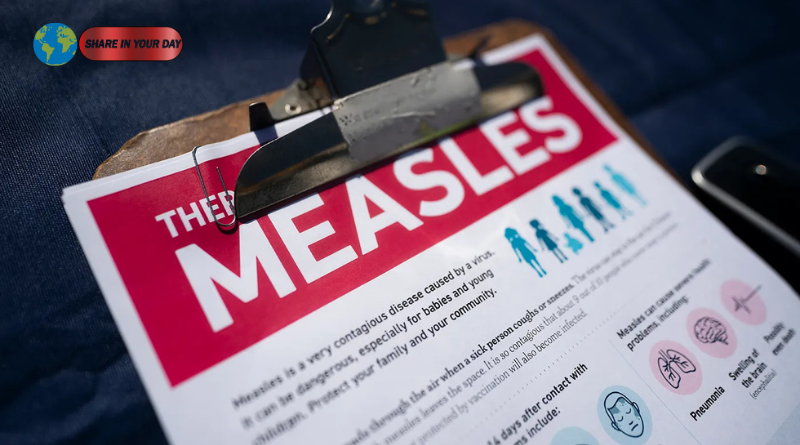
The virus can cause pneumonia, inflammation of the brain and other serious complications. Pennsylvania’s Department of Health says children younger than 5 are among those at increased risk of serious complications.
Pennsylvania Measles Outbreak Continues to Grow
The Pennsylvania infant measles death comes as measles continues to spread across the United States.
The CDC reported that as of Sept. 3, 2026, the United States had recorded 3,134 confirmed measles cases. Of those cases, 95% were associated with outbreaks. The CDC also reported 38 new outbreaks during 2026.
Pennsylvania is among the states reporting cases this year, with Lancaster County emerging as an important center of the outbreak.
Measles spreads extremely easily. The virus can remain infectious in the air for extended periods, meaning an infected person can expose others even without prolonged direct contact.
The Pennsylvania Department of Health’s measles information page warns that measles is highly contagious and can lead to serious illness and death.
Two Pennsylvania Deaths Created Confusion
The latest confirmation does not mean every question surrounding the two Pennsylvania deaths has been resolved.
The first infant death involved a child who tested positive for measles after being born to a mother who had measles. The Lancaster County coroner previously said the primary cause of that child’s death was a ruptured spleen rather than measles.
The second infant is the case now confirmed by the coroner as having died from measles.
Pennsylvania health officials have indicated that the two cases announced in August correspond to the deaths that have since been investigated.
The Pennsylvania Department of Health said Friday that the coroner had publicly confirmed a second infant death involving measles and that there were no additional measles-associated deaths to report at that time.
This distinction matters because earlier reports created uncertainty about whether Pennsylvania had identified two deaths caused directly by measles or whether one or both deaths involved people who happened to have measles infections.
RFK Jr. Disputes Part of Pennsylvania’s Account
The Pennsylvania infant measles death has also become part of a broader political dispute over the outbreak.
Kennedy previously questioned Pennsylvania’s announcement of two measles-associated deaths and suggested that the state’s classification could be inaccurate. The dispute drew criticism from Pennsylvania Gov. Josh Shapiro and public health experts.
On Friday, however, Kennedy acknowledged that the Lancaster County coroner had publicly determined that measles caused the death of one infant.
Reuters reported that Kennedy continued to dispute the classification of the second case while noting that federal officials were reviewing the records.
The CDC’s national data had not yet reflected a measles death for 2026 as of the latest reports. Reuters reported that the CDC had also added a note saying it was reevaluating how measles deaths were classified in national statistics.
That means the local coroner’s determination and the federal surveillance numbers may not immediately match.
Why Measles Remains a Public Health Concern
The confirmation of a Pennsylvania infant measles death underscores why health authorities continue to emphasize vaccination.
Measles was declared eliminated from the United States in 2000, but elimination does not mean the virus disappeared globally. Imported cases can trigger outbreaks when they reach communities where vaccination coverage is insufficient.
The CDC describes measles as one of the most contagious infectious diseases and says the measles, mumps and rubella vaccine provides the best protection.
Pennsylvania health officials likewise say that two doses of MMR or MMRV vaccine provide the strongest protection against measles, with most vaccinated people receiving long-lasting protection.
This is particularly important for infants because babies are not immediately eligible for the routine childhood measles vaccination schedule.
As a result, protecting newborns also depends heavily on reducing transmission in the wider community.
What Parents Should Know About Measles Symptoms
Parents should be aware of the early signs of measles, particularly if a child may have been exposed.
Typical symptoms can include:
- Fever
- Cough
- Runny nose
- Red or watery eyes
- A characteristic rash that usually develops several days after the initial symptoms
The illness can progress to more serious complications, including pneumonia and encephalitis. Pennsylvania health officials emphasize that young children are among those at greater risk of severe disease.
People who believe they may have been exposed should contact a health care provider before arriving at a medical facility. Calling ahead allows medical staff to take appropriate precautions and reduce the risk of exposing other patients.
The CDC’s clinical guidance for measles recommends isolation and appropriate infection-control measures for people with suspected or confirmed measles.
The Bigger Picture Behind the Pennsylvania Infant Measles Death
The Pennsylvania infant measles death is more than an isolated case.
It comes during a year when measles outbreaks have expanded across multiple parts of the United States. The CDC’s Sept. 3 figures show that confirmed cases in 2026 have already surpassed the total reported during all of 2025, when 2,289 confirmed cases were recorded.
That trend has renewed concerns about declining or uneven vaccination coverage in some communities.
A CDC analysis published in August noted that large measles outbreaks are becoming increasingly common in the United States and often affect communities with low vaccination coverage.
Lancaster County’s outbreak is therefore being watched closely by public health officials.
The immediate concern is limiting additional transmission while ensuring that suspected cases are identified quickly and that people who may have been exposed receive appropriate medical guidance.
What Happens Next in Pennsylvania?
The latest confirmation is likely to add pressure for clearer communication about measles deaths and outbreak statistics.
The controversy surrounding the two deaths demonstrated how differences between state health surveillance, medical certification and county coroner investigations can create confusion.
In this case, the Lancaster County coroner has now publicly stated that measles caused the infant’s death. Federal health officials are still working through how that determination should be reflected in national statistics.
For Pennsylvania residents, however, the public health message remains straightforward: measles is highly contagious, potentially severe and preventable through vaccination.
The Pennsylvania Department of Health continues to provide information about measles prevention, symptoms and vaccination resources.
As the outbreak continues, health officials will be watching case numbers, vaccination coverage and possible new clusters.
The confirmed Pennsylvania infant measles death is a stark reminder that measles remains capable of causing severe illness and death, even in an era when the disease is preventable through vaccination.
For families, the case also highlights the importance of recognizing symptoms, responding quickly after potential exposure and following public health guidance. For officials, it reinforces the need for clear, consistent communication about how measles cases and deaths are classified.
With more than 3,100 confirmed measles cases already reported nationwide in 2026, the Pennsylvania outbreak is part of a much larger public health challenge.
The focus now is on preventing the next preventable infection — and, ultimately, the next preventable death.