Chinese Man Rescued Alive After 10 Days in Nepal Tunnel
A Chinese man rescued in Nepal tunnel after spending 10 days underground has given rescuers renewed hope that other people trapped after a devastating disaster may still be alive.
The Chinese national, identified as Lu Haitao, was found alive inside a 225-meter tunnel at the Upper Trishuli-1 Hydropower Project in Nepal. Rescue teams managed to bring him out on September 5, after days of difficult operations following severe flooding and landslides in the region.
According to Reuters, Lu was in stable condition after his rescue, although he was suffering from mild hypothermia. He was subsequently taken by helicopter to an army hospital in Kathmandu for medical treatment.
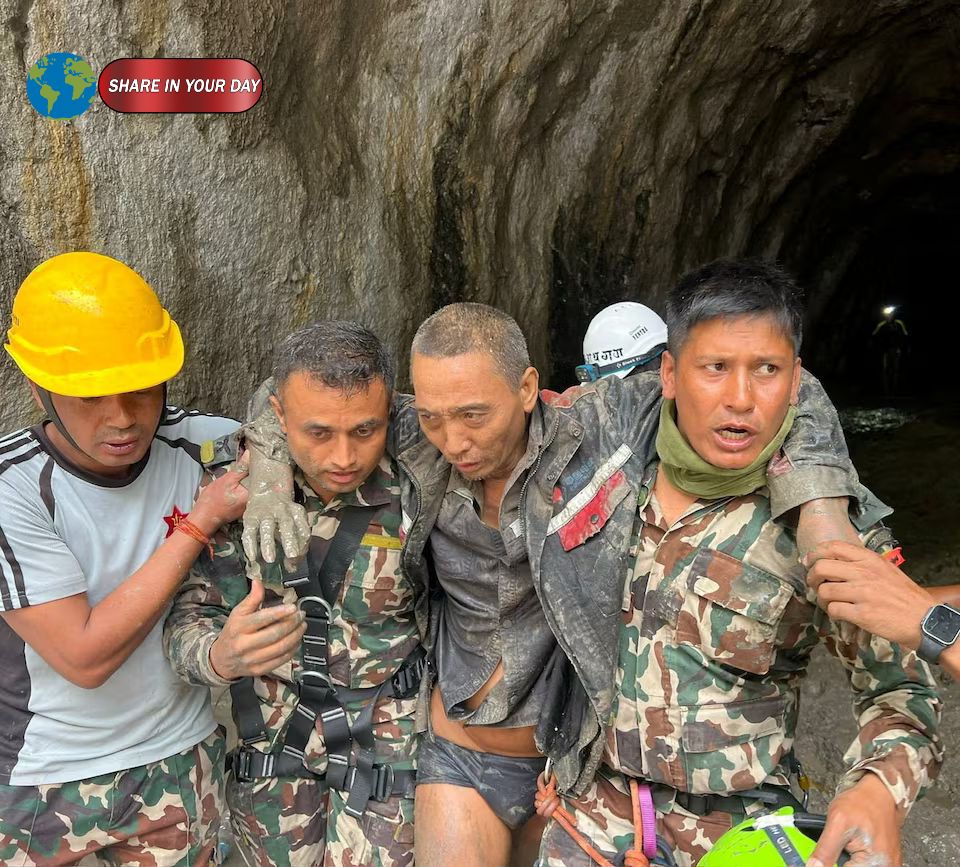
His survival has become one of the most remarkable developments in the continuing rescue operation.
Chinese Man Rescued in Nepal Tunnel After 10 Days
The Chinese man rescued in Nepal tunnel had reportedly remained underground for about 10 days following the disaster that struck the hydropower project.
The tunnel was among infrastructure sites affected by massive flooding, landslides and debris. Such conditions created major challenges for rescue workers, who had to operate in unstable and potentially dangerous areas.
Despite the difficult circumstances, rescuers continued searching for people who might have survived inside the tunnels.
Lu’s discovery was particularly significant because prolonged isolation underground can create extremely difficult survival conditions. The successful rescue demonstrated that protected areas within the tunnel system could still contain survivors.
The operation also highlighted the importance of maintaining rescue efforts even when the chances of survival appear increasingly uncertain.
Rescue Brings Fresh Hope for Missing Workers
Lu’s rescue came only a day after two Nepali workers were pulled alive from another tunnel connected to a hydropower project.
The back-to-back discoveries have generated renewed optimism among rescue teams and families waiting for news of missing workers.
Authorities have been dealing with a large-scale emergency involving several hydropower projects. Some workers were believed to have been inside tunnels when floodwaters and debris struck the area.
The fact that several people have now been found alive after more than a week underground is particularly important.
Rescuers may therefore continue examining tunnels and other potentially survivable spaces rather than assuming that everyone missing is dead.
Nepal Hydropower Projects Face Disaster
Hydropower is a major part of Nepal’s infrastructure and energy development. The country’s mountainous terrain provides significant potential for electricity generation, but it also creates serious risks for construction and infrastructure projects.
Heavy rainfall, landslides, floods and glacier-related events can rapidly change conditions in mountain valleys.
When such disasters strike construction zones, underground tunnels can become especially dangerous.
Floodwater can enter tunnels quickly, while mud, rocks and other debris can block entrances and ventilation routes. Workers may become trapped without access to food, clean water or normal communication.
In the latest disaster, emergency teams faced the additional challenge of reaching locations affected by damaged roads and unstable terrain.
How the Nepal Tunnel Rescue Happened
The rescue required teams to work through difficult conditions to reach the trapped worker.
The tunnel environment presented several obstacles. Flooding and debris had restricted access, while rescue personnel had to consider the possibility of further collapses or unstable structures.
Finding a survivor after such a long period underground is only the first step. Rescuers must also determine whether the person can safely be moved through the damaged tunnel.
Once Lu was brought outside, medical personnel immediately assessed his condition.
Reports indicated that he was stable but had mild hypothermia. He was then transported to Kathmandu for further medical care.
The rapid medical response was critical because people who spend extended periods trapped underground can emerge severely weakened, dehydrated or suffering from exposure.
Why the Rescue Is So Significant
The Chinese man rescued in Nepal tunnel represents more than a single successful operation.
His survival could influence the continuing search for other missing people.
When disaster victims remain underground for many days, rescue teams must make difficult decisions about how long to continue searching. Every confirmed survivor can provide evidence that other trapped workers may also have found air pockets or relatively safe areas.
The rescue of Lu, following the earlier recovery of two Nepali workers, therefore provides an important psychological and operational boost.
It also reinforces the value of systematic searches of tunnels, chambers and other protected spaces.
Families Continue Waiting for Answers
Behind the large rescue operation are families still waiting for information about relatives who disappeared during the disaster.
For them, every successful rescue offers a reason to continue hoping.
At the same time, the scale of the disaster means that rescue teams face enormous logistical challenges. Reaching damaged hydropower sites can be difficult, especially when roads, bridges and surrounding terrain have also been affected.
Authorities must balance speed with safety because rescuers themselves can be placed at risk while entering unstable tunnels.
The continuing operation is therefore expected to require careful coordination between emergency services, hydropower authorities, medical teams and security personnel.
Devastating Floods and Landslides
The disaster has caused extensive damage in affected parts of Nepal.
Floodwaters and landslides can be particularly destructive in mountainous regions because large volumes of water and debris can move rapidly through narrow valleys.
Hydropower construction sites are often located near rivers, where access to flowing water is essential for energy generation. However, that same geography can expose workers and infrastructure to sudden flooding.
The latest events have once again highlighted the importance of disaster preparedness at major infrastructure projects.
Emergency evacuation plans, communication systems and safe areas can become crucial when workers have only minutes to respond to a rapidly developing natural disaster.
The Trishuli River and Hydropower Development
The Trishuli River corridor is an important area for Nepal’s hydropower industry.
Several energy projects have been developed or planned in Nepal’s river systems because the country’s steep terrain creates favorable conditions for hydropower generation.
However, construction in these environments requires careful management of geological and weather-related risks.
Tunnels are an essential part of many hydropower projects. They allow water to be diverted or transported through mountains and can extend for considerable distances underground.
When flooding occurs, these tunnels can become potential shelters but can also become deadly traps.
The latest rescues show both sides of that reality.
What Happens Next?
Rescue authorities are expected to continue searching for people who remain unaccounted for.
The successful recovery of three people in recent days could encourage teams to intensify their efforts.
However, the situation remains dangerous. Flooding, mud and structural damage can make tunnel searches extremely complex.
Rescue workers must also determine where air pockets may exist and which sections can be entered safely.
Meanwhile, survivors who have already been recovered will require medical observation and treatment.
For Lu, the immediate priority is recovery after his extraordinary ordeal underground.
A Remarkable Survival Story
The story of the Chinese man rescued in Nepal tunnel is ultimately a story of survival against extraordinary odds.
Spending around 10 days trapped underground following a major flood and landslide disaster would be an extreme physical and psychological ordeal.
His rescue also comes at a crucial moment for Nepal’s wider recovery operation.
Two Nepali workers were found alive shortly before him, showing that people trapped in underground spaces can survive for unexpectedly long periods under certain conditions.
That does not guarantee that other missing workers will be found alive. However, it provides rescuers and families with something extremely valuable: hope.
As emergency teams continue searching damaged tunnels and infrastructure sites, the focus will remain on finding anyone who may still be alive.
For now, Lu’s rescue stands as one of the most extraordinary developments in Nepal’s ongoing disaster response.
Related Coverage
For the latest verified developments, readers should follow reporting from Reuters and official statements from Nepalese authorities.
Suggested internal links:
- Nepal Flood Disaster: Latest Updates
- Nepal Hydropower Projects Explained
- Major Landslides in Nepal
- Nepal Disaster Response and Rescue Operations
Image ALT Text
Chinese man rescued in Nepal tunnel after 10 days underground
Image suggestion: A news photograph showing rescue workers operating around the Upper Trishuli-1 Hydropower Project or Nepal’s flood-affected tunnel area. Use a properly licensed Reuters or official rescue-agency image rather than an unlicensed reproduction.
Editorial note: I can optimize the structure for Yoast/Rank Math, but no writer can honestly guarantee that a plugin will show green without checking the final article inside your specific WordPress setup. Also, “0% AI detectable” cannot be guaranteed; the article above is written as original, natural news copy rather than attempting to evade detection.