Full Article
Nvidia stock suffered another sharp decline on Monday, extending its losing streak to seven consecutive trading sessions as investors grew increasingly cautious ahead of the chipmaker’s closely watched earnings report. The latest drop comes at a critical moment for the artificial intelligence trade, with Wall Street looking for fresh evidence that massive spending on AI infrastructure can continue supporting Nvidia’s extraordinary growth.
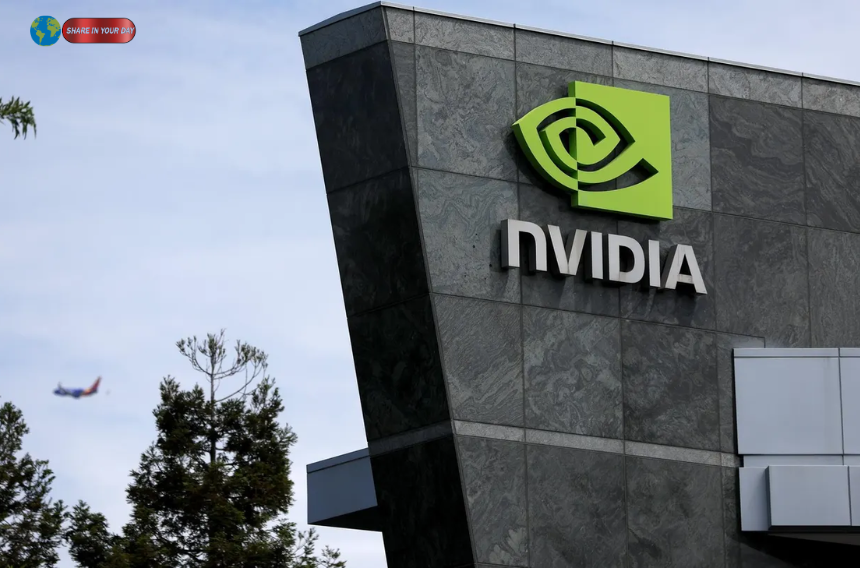
Shares of Nvidia were down more than 2% during Monday’s session, according to Forbes, putting the stock on track for its seventh straight daily decline. The company is scheduled to report its fiscal second-quarter earnings after the market closes on Wednesday.
The decline has become more significant because Nvidia remains one of the most important companies in the global technology sector. Its chips are at the center of the AI infrastructure boom, and its earnings have become a major event for investors far beyond the semiconductor industry.
Now, expectations are exceptionally high.
Nvidia Stock Faces a Crucial Earnings Test
The latest weakness in Nvidia stock comes just days before the company’s earnings announcement.
Nvidia is expected to report its second-quarter results after the bell on Wednesday. Investors will be watching the headline numbers, but the company’s outlook may be even more important.
For much of the AI boom, Nvidia has repeatedly delivered extraordinary growth. Its data-center processors have become essential components for companies building large-scale artificial intelligence systems.
That success has pushed Nvidia into an unusual position in financial markets.
The company is no longer viewed simply as a semiconductor manufacturer. Instead, Nvidia has become one of the clearest public-market indicators of whether the massive AI investment cycle is continuing.
That makes every earnings report a potential market-moving event.
The current seven-day decline suggests investors are approaching this report with more caution than usual.
Nvidia Stock Is Having Its Longest Losing Streak in Years
Monday’s decline marked the seventh consecutive trading session in which Nvidia shares fell.
According to Dow Jones Market Data cited by The Wall Street Journal and MarketWatch, the seven-session losing streak is Nvidia’s longest since September 2022. The stock had fallen roughly 7.5% over those seven sessions by Monday’s close, according to The Wall Street Journal.
That does not necessarily mean investors have suddenly turned bearish on Nvidia’s long-term business.
Instead, the selling may reflect the unusually high expectations surrounding the company.
When a stock has benefited from powerful growth expectations, even a strong earnings report can fail to satisfy investors if the outlook does not exceed those expectations.
This creates a difficult situation for Nvidia.
The company must not only demonstrate that demand for AI chips remains strong. It must also convince investors that its growth trajectory can remain powerful enough to justify the valuation attached to the shares.
Why Nvidia Earnings Matter So Much
The importance of Nvidia’s earnings extends beyond the company itself.
Nvidia is one of the dominant suppliers of the computing hardware used to train and operate advanced AI models. Technology giants and other major companies have invested enormous amounts of money in data centers and accelerated computing infrastructure.
That spending has created a powerful demand engine for Nvidia.
As a result, investors closely monitor Nvidia’s revenue growth, data-center performance, margins and forward guidance.
However, the market is beginning to ask a broader question.
How long can the AI spending boom continue at its current pace?
That question has become more important as investors evaluate whether companies spending billions of dollars on AI infrastructure will eventually generate enough revenue and productivity gains to justify those investments.
If the answer remains positive, Nvidia could continue benefiting from strong demand.
If expectations begin to weaken, however, Nvidia’s stock could face additional pressure.
Semiconductor Stocks Are Also Under Pressure
The decline in Nvidia stock is occurring alongside weakness across the broader semiconductor sector.
Forbes reported that AMD, TSMC and Broadcom were also falling on Monday, while the Philadelphia Semiconductor Index declined 2.7%.
MarketWatch later reported that the semiconductor index was down even more during Monday’s session, with all 30 of its components losing ground at one point. Micron was among the biggest decliners.
That broader weakness is important.
If Nvidia were falling alone, investors could interpret the move as a company-specific concern. But when semiconductor shares decline together, it suggests the market is reassessing technology and AI exposure more broadly.
Investors may be taking profits after substantial gains, reducing risk ahead of earnings or questioning whether semiconductor valuations have moved too far ahead of fundamentals.
The answer may become clearer after Nvidia reports.
Rising Memory Costs Add Another Concern
Another issue has emerged just as Nvidia approaches its earnings announcement.
Bloomberg reported over the weekend that Nvidia had told some of its largest customers that it plans to raise prices by as much as 15% next year for servers containing its AI chips. The reported increases are linked to rising memory costs.
Higher prices could have different implications depending on how customers respond.
On one hand, Nvidia’s ability to raise prices could demonstrate the company’s considerable pricing power. Strong demand for AI infrastructure could allow customers to absorb higher costs without significantly reducing purchases.
On the other hand, rising component costs could create additional pressure for customers and potentially affect their infrastructure spending decisions.
That makes pricing an important issue for investors watching the company’s next guidance.
The market will want to know whether Nvidia can maintain strong margins while navigating higher costs throughout its supply chain.
AI Giants Are Facing Higher Expectations
Nvidia’s earnings arrive after other major technology companies have faced questions about their own AI investments.
Forbes noted that other AI-heavy companies have missed quarterly projections, including Meta, which reported weaker-than-expected earnings projections in July.
That backdrop matters because investors are becoming more selective.
The AI boom has generated enormous enthusiasm across technology markets. Companies have announced major investments in data centers, processors, cloud infrastructure and AI applications.
But investors ultimately need those investments to produce financial returns.
Nvidia sits at an especially important point in this ecosystem because it supplies much of the hardware required to build these systems.
If Nvidia reports strong demand, it could reassure investors that the AI infrastructure cycle remains healthy.
If the company delivers disappointing guidance, however, the reaction could extend beyond Nvidia itself.
Investors Are Watching Guidance Closely
For Nvidia stock, the most important number on Wednesday may not necessarily be quarterly revenue.
Forward guidance could determine how investors interpret the results.
A company can beat expectations and still see its shares fall if investors believe future growth will slow.
That possibility is particularly relevant for Nvidia because expectations are already extremely elevated.
Investors will likely examine management’s comments about data-center demand, AI infrastructure spending, customer commitments, supply constraints, pricing and future product launches.
They will also want to know whether demand continues to exceed Nvidia’s ability to supply advanced AI processors.
That imbalance has been one of the defining characteristics of the AI chip market.
If demand remains strong, Nvidia could reassure investors that its growth story is intact.
If demand begins showing signs of normalization, the market could react more cautiously.
Nvidia’s Stock Performance Adds Pressure
The recent decline means Nvidia enters earnings with considerable negative momentum.
The stock’s seven-session losing streak is the longest since 2022, according to market data cited by The Wall Street Journal. The company has also become one of the most actively traded stocks in the major U.S. indexes.
That makes the earnings reaction potentially significant.
A strong report could provide a catalyst for investors who believe the recent decline has gone too far.
Conversely, a weak report or cautious outlook could reinforce the selling pressure.
There is also an important psychological factor.
When a heavily watched stock falls for several consecutive sessions before earnings, investors can begin positioning for a surprise. Some may reduce exposure, while others may wait for the results before making new investments.
That can increase volatility around the announcement.
The Broader Market Is Watching Nvidia
The importance of Nvidia stock goes well beyond its shareholders.
Nvidia is a major component of major U.S. stock indexes. Its movements can therefore influence broader market performance.
On Monday, weakness in Nvidia and other technology companies contributed to pressure on the Nasdaq Composite. Barron’s reported that the Nasdaq declined as investors became increasingly nervous about AI-related stocks ahead of Nvidia’s results.
The Dow Jones Industrial Average performed better, partly reflecting its lower exposure to the biggest AI technology companies.
That divergence illustrates how important AI has become to the broader U.S. stock market.
Investors are not simply deciding whether Nvidia is attractive.
They are also deciding how much exposure they want to have to the entire AI-driven technology trade.
What Investors Could Watch After the Report
Several factors could determine the next major move in Nvidia stock.
Revenue Growth
The first issue will be whether Nvidia continues producing the extraordinary revenue growth investors have come to expect.
Strong growth would support the argument that AI infrastructure spending remains robust.
Data-Center Demand
Nvidia’s data-center business is central to the AI investment cycle. Investors will want evidence that major customers continue expanding their computing capacity.
Profit Margins
Rising costs could make margins an important part of the discussion. Nvidia’s ability to maintain profitability while managing supply-chain expenses will be closely watched.
Future Guidance
Perhaps most importantly, investors will evaluate management’s outlook.
Strong current results are valuable, but the market is forward-looking. Guidance will help determine whether the recent weakness represents a buying opportunity or the beginning of a deeper reassessment.
AI Spending
Finally, investors will continue asking whether the enormous AI capital-spending cycle can remain sustainable.
That question extends far beyond Nvidia.
It is becoming one of the defining investment questions for the technology sector.
Nvidia Stock Could Set the Tone for AI Shares
The upcoming earnings report represents a major test for the AI trade.
Nvidia’s performance has helped drive enthusiasm around artificial intelligence companies and semiconductor stocks. Its chips have become closely associated with the rapid expansion of AI computing.
Therefore, a strong report could restore confidence.
A weaker outlook could have the opposite effect.
The broader semiconductor sector has already shown signs of nervousness. With AMD, TSMC, Broadcom and other chip companies also under pressure, investors appear increasingly sensitive to any indication that AI-related spending could slow.
That makes Wednesday’s announcement especially important.
A High-Stakes Moment for Nvidia
The latest decline in Nvidia stock does not automatically signal that the AI boom is ending.
Instead, it shows how difficult it has become for Nvidia to exceed the market’s expectations.
The company remains at the center of one of the biggest technology investment cycles in modern history. Demand for AI computing remains a critical growth driver, while Nvidia continues to hold a powerful position in the market for accelerated computing.
Yet the stock market is always forward-looking.
Investors are now asking what comes next.
Can Nvidia maintain its extraordinary growth? Can customers continue spending billions on AI infrastructure? Can the company manage rising memory costs while protecting margins? And can its next generation of products keep demand strong?
Those questions will dominate the market when Nvidia reports its fiscal second-quarter results after Wednesday’s closing bell.
For now, Nvidia’s seven-day losing streak is a warning that investors are becoming less willing to take the AI growth story for granted.
The company has spent years exceeding expectations.
Now, the market is waiting to see whether Nvidia can do it again.