Shark Graveyard: 7 Species Found in Egypt Desert
A remarkable shark graveyard has been discovered in a place that today appears almost completely hostile to marine life: Egypt’s Western Desert.
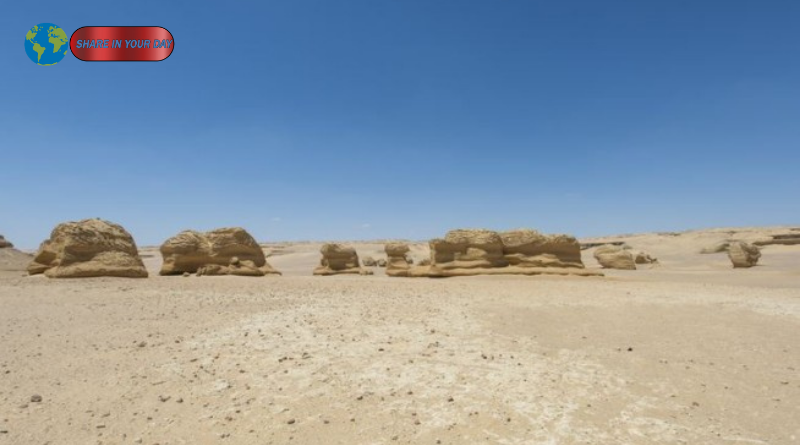
Scientists studying the Abu-Tartur Plateau have identified fossilized teeth belonging to at least seven shark species. The discovery provides new evidence that the region, now dominated by dry desert landscapes, was once covered by a thriving marine ecosystem during the Cretaceous Period.
The fossils were collected during expeditions between 2020 and 2022. Researchers found 14 additional fossilized shark teeth representing at least five species, adding to two shark species previously identified at the site. Their findings were published Aug. 18, 2026, in Cretaceous Research.
The discovery is significant not simply because shark fossils are present in Egypt. What makes the site especially interesting is the diversity of sharks found together in the same geological area.
The fossils suggest that the landscape we now recognize as desert was once part of a warm, productive sea filled with predators, fish and other marine animals.
Shark Graveyard Reveals Egypt’s Watery Past
The Abu-Tartur Plateau sits in Egypt’s Western Desert, far from any modern ocean.
Yet its rocks preserve unmistakable evidence of an ancient marine environment.
During the Cretaceous Period, which lasted from about 145 million to 66 million years ago, global conditions were substantially different from those of today. Temperatures were generally warmer, while sea levels could reach as much as 170 meters higher than modern levels. Those conditions allowed shallow seas to spread across areas that are now dry land.
The Abu-Tartur region was one of those places.
The area is associated with the Duwi Formation, a Late Cretaceous geological formation extending across parts of Egypt’s Eastern and Western deserts. Previous research had already identified fossils of fish, sea turtles and marine reptiles in the formation.
The new shark discovery adds another important piece to that ancient ecosystem.
Rather than representing a barren prehistoric landscape, the fossils indicate that this part of North Africa once supported a complex marine food web.
Seven Shark Species Were Identified
Researchers initially knew of two shark types from earlier work.
Further expeditions produced 14 fossilized teeth from at least five additional species. Together, those discoveries bring the known shark diversity at the site to at least seven species.
Among the newly identified sharks was Scapanorhynchus raphiodon, an ancient relative of today’s goblin shark.
The finding is particularly important because this species had not previously been reported from Africa.
Researchers also identified Serratolamna serrata and Squalicorax bassanii, two species that had not previously been recorded in Egypt.
The fossils therefore do more than establish that sharks once lived in the area.
They expand scientists’ understanding of where these ancient predators lived and how widespread different shark lineages were during the Late Cretaceous.
What Makes the Shark Graveyard So Important?
Finding fossilized shark teeth is not unusual in paleontology.
Sharks have existed for hundreds of millions of years, and their teeth are among the most commonly preserved remains because they are made of extremely durable materials.
The unusual part of the Abu-Tartur discovery is the concentration and diversity.
Researchers found teeth from multiple shark species in the same general geological area. That suggests the region once provided conditions capable of supporting a varied marine predator community.
However, scientists are careful not to overstate what the fossils prove.
The presence of seven species in one location does not necessarily mean all seven sharks lived there at exactly the same time.
The remains could have accumulated over long periods. Geological processes can move and concentrate fossils, meaning a single fossil deposit may represent multiple generations or different ecological periods.
Still, the diversity is a powerful clue.
It indicates that the broader environment was capable of sustaining a productive marine ecosystem over time.
Egypt’s Desert Was Once a Tropical Sea
Perhaps the most surprising aspect of the discovery is the contrast between the ancient environment and the modern landscape.
Today, the Western Desert is one of the driest regions on Earth. The idea that sharks once swam across parts of it seems almost impossible without geological evidence.
The fossils provide that evidence.
During the Cretaceous, much of North Africa was affected by extensive marine environments. Higher sea levels allowed shallow waters to occupy areas that are now far inland and arid.
The Abu-Tartur Plateau’s geological record preserves the remains of that lost world.
The Duwi Formation is particularly valuable because it contains phosphorite-rich rocks. Phosphorite is a sedimentary material often associated with environments where large amounts of marine biological material accumulated.
That makes the formation an important window into ancient marine ecosystems.
The shark teeth are therefore not isolated curiosities. They are part of a much larger geological story about how Earth’s landscapes have changed.
A Rich Marine Food Chain Once Existed Here
Sharks sit near the top of many marine food chains.
Their presence in large numbers generally requires enough prey to sustain them.
That is one reason scientists are particularly interested in the diversity of sharks found at Abu-Tartur.
A marine ecosystem capable of supporting several shark species would likely have included substantial populations of smaller fish and other organisms.
The researchers say the discovery points toward a nutrient-rich and complex ecosystem.
That interpretation is supported by other fossils found in the region.
Fish and marine reptiles had previously been identified in the same broader geological setting. Together with the shark teeth, these fossils paint a picture of a productive ancient sea rather than an impoverished marine environment.
In other words, the sharks were not simply passing through an empty ocean.
They were part of a much larger ecosystem.
Ancient Shark Species Were More Diverse Than Many Realize
Modern sharks are often associated with familiar species such as great white sharks, tiger sharks and hammerheads.
But the ancient oceans contained an enormous variety of shark lineages.
Some had body shapes and feeding strategies unlike those of modern species. Others belonged to evolutionary branches that eventually disappeared.
The Abu-Tartur fossils provide a glimpse into that lost diversity.
The discovery of Scapanorhynchus raphiodon is especially fascinating because the shark was related to the modern goblin shark. Goblin sharks survive today but are rarely encountered because they generally inhabit deep ocean environments.
Their distinctive elongated jaws and unusual appearance have made them one of the most recognizable deep-sea sharks.
The ancient relative found in Egypt demonstrates that this broader evolutionary lineage has a much deeper history than its modern appearance might suggest.
What the Shark Teeth Tell Scientists
Shark teeth are valuable fossils because their shapes can reveal information about the animals that possessed them.
Different tooth forms are adapted to different feeding strategies.
Some sharks have sharp, narrow teeth suitable for gripping prey. Others possess broader or serrated teeth that can help cut through flesh.
By comparing fossil teeth with known species, paleontologists can identify evolutionary relationships and reconstruct aspects of ancient ecosystems.
The Abu-Tartur collection contains enough variation to show that multiple shark types occupied the ancient sea.
That diversity helps scientists understand not only the sharks themselves but also the ecological conditions in which they lived.
The discovery therefore contributes to paleontology at several levels.
It expands the fossil record of sharks in Egypt, provides information about ancient marine biodiversity and helps reconstruct the environmental history of North Africa.
The Sharks May Not Have Lived Together
Despite the dramatic phrase shark graveyard, scientists caution against imagining a single mass-death event in which seven shark species suddenly died together.
The fossils do not necessarily support that scenario.
Instead, the teeth may have accumulated in the same sediment over an extended period. Different species could have occupied the region at different times.
This distinction is important.
A fossil site can preserve an environmental record rather than a single moment in history.
In the Abu-Tartur case, that may actually make the discovery more useful. If the deposits accumulated over a long period, they could provide information about changes in the marine ecosystem through time.
Researchers can potentially compare fossils from different layers and investigate whether the composition of the shark community changed.
That could reveal clues about shifts in climate, sea level, food availability or other environmental factors.
Why the Discovery Matters Beyond Sharks
The Egyptian shark graveyard is not only a story about ancient predators.
It is also a reminder that Earth’s environments are constantly changing.
A region that is now a desert was once beneath the sea. A place where researchers can now walk across dry rock once supported marine animals that evolved to hunt in warm ocean waters.
That dramatic transformation illustrates the enormous timescales involved in geology.
It also shows why fossil discoveries remain important today.
Modern landscapes can hide evidence of environments that existed tens of millions of years ago. By studying rocks and fossils, scientists can reconstruct those lost ecosystems and understand how the planet responded to changes in temperature and sea level.
The Abu-Tartur discovery is another example of how Earth’s present appearance can be misleading.
The desert tells only a small part of the region’s geological history.
Scientists Plan More Research in the Area
Researchers believe the Abu-Tartur Plateau still has much more to reveal.
The team plans to continue investigating the region and exploring surrounding areas for additional fossils.
That work could produce new shark species, additional marine animals or evidence that helps establish exactly how the ancient ecosystem changed over time.
Every new fossil can add another piece to the puzzle.
The researchers may also be able to determine whether certain shark species preferred particular environments within the ancient sea. Differences in tooth size and shape could provide clues about diet and habitat.
Such information would help scientists reconstruct the ancient food web in greater detail.
A Lost Ocean Hidden Beneath the Desert
The discovery of a shark graveyard in Egypt’s Western Desert is a striking reminder of how dramatically the planet has changed.
Millions of years ago, the region was not a sea of sand. It was part of a marine environment where sharks hunted among fish and other sea creatures.
Today, the same geological record lies beneath an arid landscape.
The fossilized teeth discovered at Abu-Tartur preserve evidence of that extraordinary transformation. At least seven shark species are now known from the area, including species that had not previously been recorded in Egypt and one that had not previously been reported in Africa.
The study also demonstrates why fossil discoveries are valuable even when they consist of something as small as a tooth.
A handful of teeth can reveal the presence of an entire predator community.
And in this case, those teeth are helping scientists reconstruct a tropical sea that disappeared millions of years ago.
As researchers continue exploring the Abu-Tartur Plateau, the Egyptian desert may reveal even more evidence of its remarkable past.
What looks today like one of the world’s driest landscapes was once home to a thriving marine ecosystem.
The sharks are gone.
Their teeth remain.