Storm Shadow Ukraine: UK Unveils Major Missile Plan
The Storm Shadow Ukraine partnership has entered a significant new phase after the United Kingdom agreed to share classified technical information that could help Ukraine produce its own version of the long-range cruise missile. The move could strengthen Kyiv’s ability to manufacture advanced weapons domestically while reducing its reliance on finished missile deliveries from foreign partners.
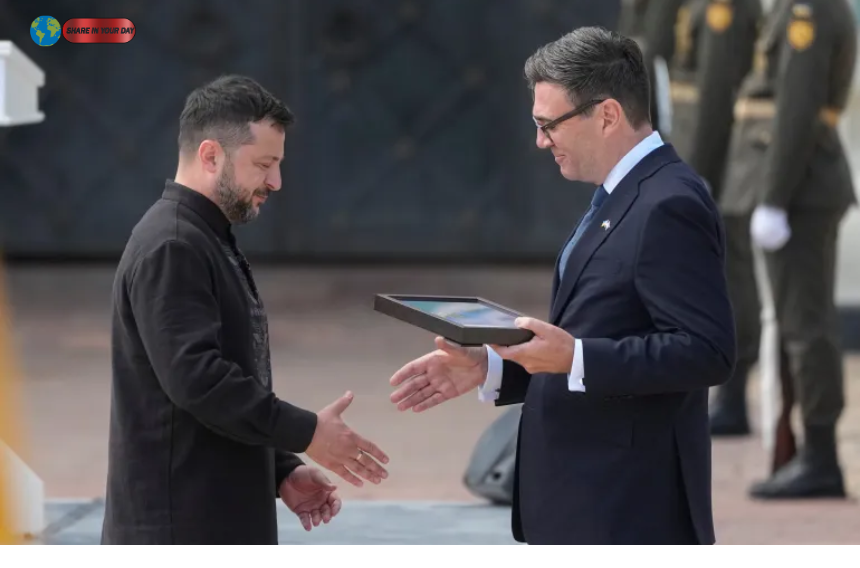
The announcement came on August 24, 2026, during a visit to Kyiv by British Prime Minister Andy Burnham as Ukraine marked its 35th Independence Day.
Britain said defense company MBDA would be permitted to release information about British-made components used in the SCALP missile. SCALP is the French designation for the missile known as Storm Shadow in Britain. The weapon was developed jointly by Britain and France.
For Ukraine, the decision represents more than another military aid package.
Instead of simply receiving finished missiles, Kyiv is being given access to technical knowledge that could support domestic production.
That could become increasingly important if the war continues for years and Ukraine needs a reliable supply of long-range weapons.
What Is Storm Shadow?
Storm Shadow is a long-range, air-launched cruise missile developed jointly by Britain and France. France uses the name SCALP for its version.
According to Al Jazeera, the missile has a range of about 560 kilometers and is capable of striking targets roughly 240 kilometers inside Russian territory. Its capabilities allow it to attack hardened and heavily defended targets that may be difficult to reach with simpler long-range drones.
The missile also uses advanced navigation systems that allow it to operate in difficult weather and at night.
Britain began supplying Storm Shadow missiles to Ukraine in 2023. The weapons gave Ukrainian forces a major long-range strike capability and expanded the range at which Kyiv could threaten important military infrastructure.
The importance of Storm Shadow is therefore not simply its range.
It is also designed to attack high-value targets with precision.
That can include military facilities, logistics infrastructure and fortified positions.
Why the Storm Shadow Ukraine Deal Matters
The most important part of the new Storm Shadow Ukraine agreement is the transfer of classified technical information.
The British government has agreed to allow MBDA to share information about UK-made components used in the missile. The move is intended to help Ukraine and France establish local assembly lines in Ukraine.
This represents a significant change in the nature of Western military assistance.
A conventional weapons shipment gives Ukraine a fixed number of missiles.
Technology transfer can potentially create a continuing production capability.
That difference could become crucial over the long term.
Western governments have their own military requirements and limited stockpiles. Ukraine therefore cannot depend indefinitely on allies transferring finished missiles from their existing inventories.
Domestic production could eventually give Kyiv greater control over its supply.
It could also make Ukraine’s long-range strike capabilities more resilient.
Ukraine’s Growing Defense Industry
Ukraine has rapidly expanded its domestic defense industry since Russia launched its full-scale invasion.
The country has developed large numbers of drones and has also invested heavily in longer-range missiles and missile-drone systems.
Those capabilities provide an important foundation for more advanced domestic weapons production.
Al Jazeera reported that Ukrainian long-range weapons have already demonstrated the ability to strike targets deep inside Russia. However, Ukrainian systems often focus on targets that are less heavily protected, while Storm Shadow provides a capability against more hardened and defended targets.
Domestic Storm Shadow production could therefore complement Ukraine’s existing weapons programs.
Instead of replacing Ukrainian-designed missiles and drones, the system could become another part of a broader long-range arsenal.
The combination could give Ukrainian planners more options when selecting weapons for different types of targets.
Britain Shares Sensitive Missile Technology
The decision to share classified information is particularly significant because advanced military technology is normally closely protected.
The information being released concerns British components used in the Storm Shadow/SCALP missile family.
MBDA, the European defense company involved in the missile program, will play a role in transferring the relevant technical information.
The decision demonstrates how far Britain and France are prepared to go in supporting Ukraine’s defense industry.
France has already been involved in efforts to establish local production of SCALP missiles.
Britain’s decision to make information about its own components available could help create a more complete production system inside Ukraine.
The arrangement could also become an important precedent for future Western technology transfers.
Al Jazeera noted that British and French willingness to transfer classified missile-production knowledge could influence future allied cooperation.
Domestic Production Could Reduce Ukraine’s Dependence
One of the biggest potential advantages of the Storm Shadow Ukraine agreement is greater independence.
At present, Ukraine relies heavily on its allies for many advanced weapons.
When a country supplies finished missiles, Kyiv depends on that country’s stockpiles, political decisions and production schedules.
Domestic production could eventually change that situation.
If Ukrainian factories can manufacture long-range cruise missiles, Kyiv could gain greater control over the number of weapons produced and the pace of deliveries.
That would not make Ukraine completely independent.
Advanced missile production requires sophisticated components, specialized equipment and international supply chains.
Ukraine would still benefit from cooperation with European defense companies.
However, manufacturing a major Western-designed weapon domestically would represent an important step toward military self-reliance.
France’s Role Is Also Important
The British decision is closely linked to French involvement.
Storm Shadow and SCALP are national names for the Anglo-French missile system.
France has been working with Ukraine on plans to establish local production.
The British transfer of information about British-made components could help Ukraine move toward a more complete domestic manufacturing capability.
The arrangement effectively extends the original British-French defense partnership into Ukraine.
That could create a new three-way industrial relationship between British, French and Ukrainian defense companies.
The experience could eventually be applied to other military technologies.
The Immediate Battlefield Impact Will Be Limited
Despite the importance of the announcement, Ukraine will not immediately receive large quantities of domestically produced Storm Shadow missiles.
Establishing missile production is technically difficult.
Factories must be prepared.
Production equipment must be installed.
Engineers and technicians must be trained.
Supply chains must be established.
The finished missiles must then undergo testing and validation.
The Associated Press reported that operational Ukrainian-assembled missiles may not become available until next year.
That means the new agreement should primarily be viewed as a long-term strategic investment.
Ukraine will continue to depend on existing Western missile supplies and its own domestic weapons programs while the new production capability is developed.
The announcement is therefore more important for Ukraine’s future military capacity than for its immediate battlefield strength.
Air Defense Remains a Critical Need
The Storm Shadow announcement comes as Ukraine continues to face major Russian missile and drone attacks.
That means Kyiv has two different but connected military priorities.
It needs offensive weapons capable of striking Russian military targets at long distances.
At the same time, it needs defensive systems capable of protecting Ukrainian cities and infrastructure.
Reuters reported that Ukrainian President Volodymyr Zelenskyy was seeking at least 300 US-made Patriot interceptors amid continuing Russian attacks.
Storm Shadow and Patriot systems serve very different purposes.
Storm Shadow is an offensive long-range weapon.
Patriot is primarily an air-defense system designed to intercept incoming missiles and aircraft.
Ukraine therefore needs both capabilities as it attempts to defend its territory while maintaining pressure on Russian military infrastructure.
Russia Reacts to the British Decision
The British decision has triggered a strong reaction from Moscow.
Russian officials have accused Britain of escalating its involvement in the war by helping Ukraine develop domestic production of long-range missiles.
The Kremlin has criticized the decision as an escalation and warned about the consequences of increased Western military support for Kyiv.
British officials have rejected the characterization that supporting Ukraine makes Britain a direct participant in the conflict.
The disagreement highlights the sensitivity surrounding Western long-range weapons.
Russia has repeatedly warned Western countries against providing Ukraine with weapons capable of reaching deep behind Russian lines.
Ukraine, meanwhile, argues that long-range capabilities are necessary because Russian military infrastructure and launch facilities can be located far from the front line.
The new production agreement is therefore likely to remain a major point of tension between Moscow and London.
Ukraine Could Gain Greater Long-Range Strike Capacity
The potential long-term benefit of domestic Storm Shadow production goes beyond simply having more missiles.
Ukraine could potentially establish a more predictable supply of advanced long-range weapons.
That could allow Kyiv to plan sustained operations against military infrastructure more effectively.
Storm Shadow is particularly valuable because it can attack targets that are more heavily protected than many conventional drone targets.
Al Jazeera reported that the missile’s capabilities give Ukraine an option for attacking hardened targets while its domestically developed long-range weapons can reach even farther in some cases.
If Ukraine eventually produces Storm Shadow at scale, Russian military planners could face greater pressure to protect facilities far from the front line.
Russia could be forced to relocate important assets, strengthen air defenses or disperse military infrastructure.
However, the scale of that impact will depend heavily on production capacity.
Challenges Could Slow Ukrainian Production
The technology transfer does not guarantee immediate mass production.
Ukraine will face several major challenges.
The first is cost.
Advanced cruise missiles require expensive materials, electronics and manufacturing processes.
The second is supply chains.
Some components may still need to come from foreign suppliers.
The third is security.
Military production facilities could become targets for Russian attacks.
The fourth is technical complexity.
Producing one successful prototype is very different from establishing a reliable production line capable of manufacturing large quantities.
The fifth challenge is time.
Even with access to classified technical information, engineers must translate that knowledge into practical manufacturing processes.
These challenges mean that the British announcement should not be interpreted as Ukraine suddenly gaining an unlimited supply of Storm Shadow missiles.
What the Deal Means for Europe
The Storm Shadow Ukraine agreement could also have broader implications for European defense policy.
The war has exposed weaknesses in Europe’s defense-industrial capacity.
Several European countries have discovered that their existing weapons stockpiles are not designed for a prolonged high-intensity conflict.
Helping Ukraine build weapons domestically could provide a new model for European military cooperation.
It would allow European companies to work more closely with Ukrainian manufacturers while strengthening Ukraine’s ability to defend itself.
Ukraine’s battlefield experience could also provide valuable lessons for European defense companies.
The war has accelerated innovation in drones, electronic warfare, precision strikes and long-range weapons.
Closer cooperation could allow European defense industries to benefit from Ukraine’s experience while providing Kyiv with access to advanced technology.
A New Model of Western Support
The Storm Shadow Ukraine agreement reflects a broader change in Western military assistance.
Early in the war, much of the support focused on transferring weapons from existing stockpiles.
The approach is increasingly moving toward joint production, technology transfer and industrial partnerships.
That could become more sustainable if the conflict continues.
Ukraine cannot rely indefinitely on allies giving up weapons from their own military inventories.
At the same time, European countries need to expand their own defense production.
Joint manufacturing offers a potential solution.
Instead of simply delivering finished weapons, Western countries can help Ukraine build the capacity to produce them.
That gives Kyiv greater independence while strengthening links between Ukrainian and European defense industries.
Ukraine’s Defense Industry Could Become a Long-Term Asset
The most important result of the agreement may ultimately be the industrial capability that Ukraine develops.
If Ukrainian manufacturers successfully learn to produce a sophisticated Western cruise missile, that knowledge could support other future weapons programs.
The country could emerge from the war with one of Europe’s most experienced defense industries.
That would matter not only for Ukraine’s own security but also for Europe’s broader military strategy.
Ukraine could become an important supplier, research partner and manufacturing center within the European defense industry.
Its experience with drones, electronic warfare and long-range weapons could make it particularly valuable.
What Happens Next?
The next step is turning the political agreement into an operational production program.
British and French defense companies will need to work with Ukrainian manufacturers.
Factories must be prepared.
Technical information must be transferred.
Supply chains must be established.
Production systems must be tested.
The finished weapons will then need to undergo verification before they can enter operational service.
Current reporting indicates that Ukrainian-produced missiles are unlikely to have an immediate battlefield impact and could take until at least next year to become operational.
Until then, Ukraine will continue relying on Western missile deliveries alongside its expanding domestic weapons programs.
But the strategic direction is clear.
Ukraine is moving from being primarily a recipient of Western weapons toward becoming a more important producer within Europe’s defense-industrial network.
Why the Storm Shadow Ukraine Plan Could Matter for Years
The significance of the agreement may ultimately extend beyond the current war.
If Ukraine develops the ability to manufacture a sophisticated Western cruise missile, it could gain a lasting industrial capability.
That could support Ukraine’s defense even after the current conflict ends.
It could also create new opportunities for European-Ukrainian cooperation.
For Britain and France, the project could provide another way to integrate Ukraine into Europe’s defense-industrial system.
For Ukraine, it could provide greater control over its military production.
For Russia, it could create a new long-term security challenge.
Conclusion
The Storm Shadow Ukraine agreement marks a major development in Britain’s military partnership with Kyiv.
By allowing classified information about British missile components to be shared, London is helping Ukraine move toward domestic production of a powerful long-range cruise missile.
The immediate battlefield effect will be limited because production will take time.
But the long-term consequences could be significant.
Ukraine could eventually gain greater control over its long-range missile supply, reduce some dependence on foreign deliveries and strengthen its domestic defense industry.
For Britain and France, the agreement represents a deeper form of defense-industrial cooperation with Ukraine.
For Russia, the prospect of Ukrainian-produced Storm Shadow missiles creates another strategic challenge.
Ultimately, the Storm Shadow Ukraine plan is about more than one missile.
It represents a shift toward helping Ukraine build the industrial capacity needed to sustain its own military capabilities.
If the production program succeeds, Ukraine could become not only a major user of Western weapons but also an increasingly important producer within Europe’s defense network.
That could make the August 2026 announcement an important milestone in the evolution of the Russia-Ukraine war and Europe’s wider security strategy.