Nepal Floods: 900+ Dead in Shocking Disaster
The Nepal floods have become one of the country’s most devastating disasters in years, with the confirmed death toll rising above 900 as rescuers continue searching for thousands of missing people across the Himalayan nation.
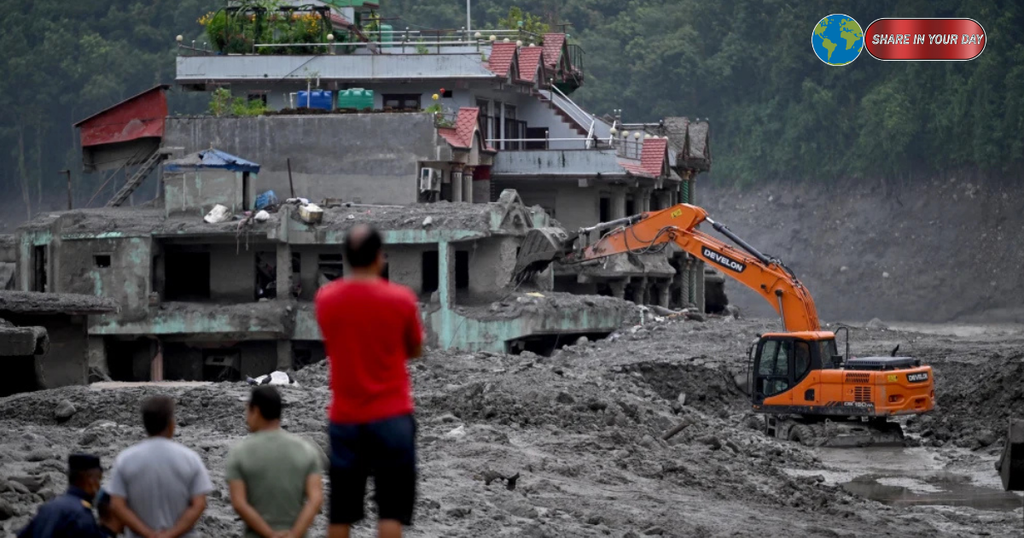
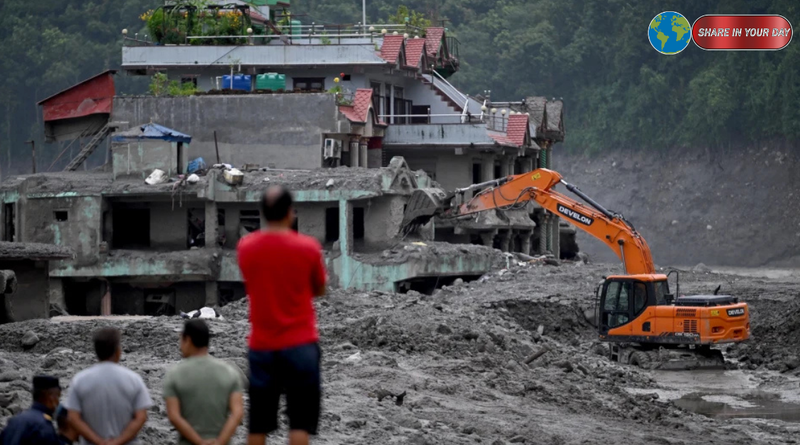
The disaster began after a catastrophic glacier collapse near the Nepal-China border unleashed an enormous torrent of ice, rock, mud and water into mountain river systems. The resulting flood swept through communities, damaged infrastructure and severely disrupted hydropower projects.
As rescue operations entered another critical phase on Monday, Aug. 31, officials were still trying to determine the full scale of the disaster. Reuters reported that Nepal’s death toll had reached 903, while more than 4,247 people remained missing. Hundreds of those missing are believed to be workers trapped inside hydropower tunnels. RReuters
The numbers are expected to change as rescue teams reach areas that remain inaccessible.
Nepal floods leave thousands missing
The scale of the missing-person crisis has become one of the most difficult aspects of the disaster.
Earlier reports placed the number of missing people considerably lower. However, as authorities expanded their search and received additional reports from affected communities, the figure climbed sharply.
The latest figures include hundreds of hydropower workers believed to be trapped inside tunnels and other underground structures.
Nepali authorities said 933 workers were believed to be trapped at 11 hydropower projects in the hard-hit districts of Rasuwa and Nuwakot. Rescue teams have been working to reach workers who may have survived inside blocked tunnels. RReuters
The situation is particularly dangerous because many access routes have been destroyed.
Roads and bridges were swept away. Electricity supplies were disrupted. Heavy debris has blocked entrances to tunnels and buried sections of infrastructure.
For rescuers, every additional hour increases the difficulty of finding survivors.
What caused the Nepal floods?
The disaster was triggered by a massive collapse of ice and rock in the Himalayas.
The material crashed into a mountain river, creating a sudden surge of water, mud and debris that moved rapidly downstream.
The event was not simply a conventional rainstorm or seasonal flood.
Instead, it was a cascading high-altitude disaster in which a glacier-related collapse produced a devastating flash flood.
Reuters reported that the disaster struck on Aug. 26 and affected areas on both sides of the Nepal-China border. The torrent destroyed infrastructure in Nepal and also caused extensive damage in Tibet. RReuters+1
The extreme geography of the region made the disaster especially destructive.
Mountain valleys can channel enormous quantities of water and debris into relatively narrow areas. Once the flood began moving downstream, communities and infrastructure had little time to respond.
Nepal floods devastate hydropower projects
Nepal’s hydropower industry has been particularly hard hit.
The country has invested heavily in hydropower because its mountain rivers provide enormous potential for electricity generation.
However, many hydropower projects rely on tunnels, access roads and other infrastructure built in challenging mountain environments.
The latest disaster exposed the vulnerability of those facilities to sudden geological events.
Reuters reported that around 933 workers were believed to be trapped at 11 hydropower projects in Rasuwa and Nuwakot. Rescue teams have been using excavators, controlled blasts, searchlights and other equipment to clear debris and reach blocked areas. RReuters
The damage also affected Nepal’s electricity infrastructure.
Earlier reporting indicated that the disaster disrupted roughly 10% of the country’s power generation capacity. RReuters
That creates a second crisis beyond the immediate loss of life.
Communities need electricity for communications, hospitals, water systems and emergency operations. Hydropower facilities are also important to Nepal’s economy.
Rescue teams race against time
Rescue workers are facing extraordinary conditions.
Thousands of soldiers, police officers and emergency personnel have been mobilized. Heavy machinery has been transported to damaged locations, while specialized teams from neighboring countries have offered assistance.
Chinese and Indian experts are helping Nepal with the rescue operation, particularly as authorities try to reach workers trapped underground. RReuters
At some sites, rescuers have had to clear enormous amounts of mud and rock before they can even determine whether tunnels remain structurally safe.
The operation is therefore a race against time and geography.
A tunnel may provide protection from floodwaters, but it can also become a deadly trap if entrances are blocked and ventilation or oxygen supplies are disrupted.
Rescuers are using cameras, oxygen equipment and heavy machinery as they attempt to determine whether people remain alive inside.
Families wait for news
Behind the statistics are thousands of families waiting for information.
The uncertainty surrounding missing people has made the disaster especially painful. Some relatives have spent days searching for loved ones or traveling to hospitals and temporary identification centers.
Authorities have also struggled to identify recovered bodies.
In some locations, the number of bodies arriving at medical facilities has overwhelmed available mortuary capacity. Reuters reported that Nepal began mass burials of unidentified victims after decomposition made identification increasingly difficult. RReuters
Officials have collected DNA samples and burial records to preserve the possibility of future identification.
The process is difficult but essential.
Families may eventually need DNA testing to determine whether a recovered body belongs to a missing relative.
Nepal begins mass burials
The recovery operation has taken a grim turn in some parts of the country.
Authorities in Chitwan established a temporary burial area in Devghat forest for unidentified victims whose remains had been recovered from rivers and debris.
Reuters reported that 96 unidentified bodies were buried there on Saturday, with additional burials planned as recovery teams continued finding victims. RReuters
Officials said the decision was driven partly by public-health concerns.
The hot and humid conditions accelerated decomposition, while hospitals and mortuaries struggled to handle the volume of remains.
The mass burials are among the clearest signs of the unprecedented scale of the disaster.
They also demonstrate why authorities are racing to improve the identification process while continuing the search for survivors.
More than 90,000 people affected
The disaster has reached far beyond the communities where people were killed or reported missing.
The International Federation of Red Cross and Red Crescent Societies said more than 90,000 people had been directly affected by the catastrophe. RReuters
Thousands of residents have faced displacement, damaged homes and disrupted access to essential services.
Health authorities are also concerned about secondary risks.
When large populations are displaced and sanitation systems are damaged, the danger of infectious disease can rise. Crowded shelters can create additional pressure on medical services.
The World Health Organization reported damage to six health facilities and said eight healthcare workers were missing. RReuters
That means the disaster is not ending simply because the floodwaters recede.
The humanitarian emergency could continue for weeks or months.
Nepal and China face questions over early warnings
The disaster has also raised questions about regional cooperation and early-warning systems.
Nepal has previously sought more information from China concerning glacier movements, water levels and other hazards in high-altitude areas near the border.
Reuters reported that Nepali officials had asked for improved access to information about early glacier movements. China, meanwhile, said its data-sharing cooperation had been timely and that it would continue supporting Nepal’s disaster-response efforts. RReuters
The issue is complicated by the geography of the Himalayas.
Some of the most dangerous glaciers and mountain valleys are located in remote regions where monitoring is difficult.
Real-time information can therefore be extremely valuable.
If authorities receive an early indication that a glacier is becoming unstable or a sudden flood is developing, even a relatively short warning could allow communities to move away from vulnerable river valleys.
Climate change adds another layer of concern
Scientists have increasingly warned that climate change is destabilizing high-mountain environments.
Rising temperatures can accelerate glacier melt and alter the physical conditions around ice, rock and frozen ground.
That does not mean every individual flood can automatically be attributed to climate change.
However, a warming climate can change the conditions in which glaciers and mountain slopes exist, potentially increasing the risk of certain types of instability.
Reuters reported that Nepal has already experienced significant glacier ice loss over recent decades and that scientists are increasingly concerned about the destabilization of high-altitude environments. RReuters
The Nepal floods therefore carry implications beyond the immediate humanitarian crisis.
They are also a warning about the risks facing communities across the Himalayas.
Nepal’s mountain geography increases the danger
Nepal is particularly vulnerable because of its geography.
The country contains some of the world’s highest mountains, steep valleys and fast-flowing rivers.
These features make Nepal vulnerable to landslides, flash floods, glacier-related disasters and earthquakes.
At the same time, communities increasingly depend on roads, hydropower facilities and tourism infrastructure built in mountainous areas.
That combination creates difficult disaster-management challenges.
A single event can simultaneously destroy transportation networks, power facilities, communications systems and homes.
When roads disappear, rescuers cannot easily reach affected communities.
When communications fail, families cannot report missing relatives.
And when bridges collapse, humanitarian supplies can become stranded far from the people who need them.
A disaster that crossed borders
The effects were not confined to Nepal.
The disaster also struck China’s Tibet region, where the Gyirong border area suffered severe damage.
Earlier reporting said at least 16 people had died in China and hundreds remained missing, according to figures cited by Reuters. The affected area included a strategically important border crossing that was heavily damaged by the torrent of water and debris. RReuters+1
The cross-border nature of the disaster makes cooperation especially important.
Mountain rivers and glaciers do not follow political boundaries.
A hazard that begins in one country can rapidly affect communities in another.
That reality has increased pressure for stronger cooperation between Nepal, China and other Himalayan countries on weather monitoring, glacier surveillance and emergency communications.
India and China assist rescue efforts
International assistance has become increasingly important as Nepal confronts the scale of the disaster.
Chinese and Indian specialists have been involved in rescue efforts, while other countries and international organizations have offered support.
India has also provided forensic assistance as Nepal works to identify recovered victims. RReuters
The cooperation reflects the fact that Nepal’s emergency services face a challenge far larger than a conventional flood response.
Specialized equipment is required to enter collapsed tunnels.
Forensic expertise is needed to identify victims.
Heavy machinery is necessary to clear roads and debris.
And humanitarian agencies must provide food, water, shelter and medical assistance to displaced communities.
What happens next?
The immediate priority remains finding survivors.
Rescue teams are continuing to clear hydropower tunnels and search areas where missing people may be trapped.
At the same time, authorities must recover bodies, identify victims and provide support to families.
The next stage will involve assessing the enormous infrastructure damage.
Roads will need to be rebuilt. Bridges will have to be restored. Damaged power facilities will require inspection and reconstruction.
Communities will also need long-term assistance to rebuild homes and livelihoods.
The economic consequences could be substantial.
Reuters reported that Nepal’s recovery costs could amount to around one-tenth of the country’s annual economic output, underscoring how far the damage extends beyond the immediate death toll. RReuters
Nepal floods highlight the need for better warning systems
The disaster has demonstrated how quickly a high-altitude hazard can become a national emergency.
Better monitoring will not prevent glaciers from collapsing.
It may, however, provide critical information that allows authorities to warn communities before floodwaters reach populated areas.
Nepal is expected to continue pushing for stronger regional cooperation on glacier monitoring and real-time data sharing.
Such systems could include more frequent updates about glacier movements, water levels and potential flood risks.
The goal is simple: turn minutes of warning into lives saved.
A crisis still unfolding
The final death toll from the Nepal floods is unlikely to be known immediately.
Search teams are still entering damaged areas. Bodies are still being recovered. Families are still reporting people missing.
The confirmed toll has already surpassed 900, but thousands remain unaccounted for, meaning the human cost of the disaster could rise further. RReuters
For now, Nepal’s attention remains focused on rescue, recovery and relief.
The country is confronting a disaster that has destroyed communities, disrupted critical infrastructure and left families searching for answers.
But the catastrophe may also force a broader conversation about how Himalayan countries prepare for increasingly dangerous mountain hazards.
The Nepal floods have shown, in devastating fashion, that a single collapse high in the mountains can trigger consequences far downstream.
As rescue crews continue working through mud, rock and collapsed infrastructure, the priority remains finding those who may still be alive.
For the families waiting, every hour matters.
Suggested WordPress Internal Links
Since no target domain was provided, insert your own relevant URLs at these points:
- “Nepal floods” → Nepal/world news category
- “glacier collapse” → climate or environment category
- “hydropower projects” → business/energy category
- “climate change” → climate-news article
- “Himalayas” → Asia/world-news category
For external background, Reuters’ latest Nepal flood coverage is a useful current reference. RReuters
SEO note: The article is optimized around “Nepal floods”, but the exact Yoast/Rank Math green status can only be verified inside the respective WordPress plugins. I have also avoided keyword stuffing and unverified claims because this is an evolving disaster story.