US Strikes on Iran: 5 Key Risks After New Attacks
The US strikes on Iran have pushed the Middle East conflict into another dangerous phase, with American forces hitting Iranian military targets and Tehran responding with missiles and drones across the region. The latest exchange followed a month-long period without major military action and has raised fears that the wider war could escalate again.
The United States said its latest operation targeted Iranian air defense systems, radar installations, maritime assets, mine-laying capabilities and communications facilities. U.S. Central Command said the strikes were carried out in response to attempted Iranian attacks involving commercial shipping and American personnel in the Middle East.
Iran, meanwhile, warned that it would deliver what its military described as devastating blows against the United States. Iranian forces launched ballistic missiles toward Jordan and reportedly conducted drone attacks in the region, while Jordan said its forces intercepted most of the missiles.
The renewed confrontation has also placed the Strait of Hormuz back at the center of the crisis. The strategic waterway is a crucial route for global energy shipments, making any prolonged disruption a potential threat to oil markets, inflation and international trade.
US Strikes on Iran Mark a New Escalation
The latest US strikes on Iran came after American forces resumed military operations following roughly a month without major attacks.
U.S. Central Command said the Sept. 1 operation struck several categories of Iranian military infrastructure. These included air defense positions, radar systems, maritime assets, mine-laying capabilities and communications sites. The command said the objective was to reduce threats to commercial shipping and U.S. troops operating in the region.
C
Central Command
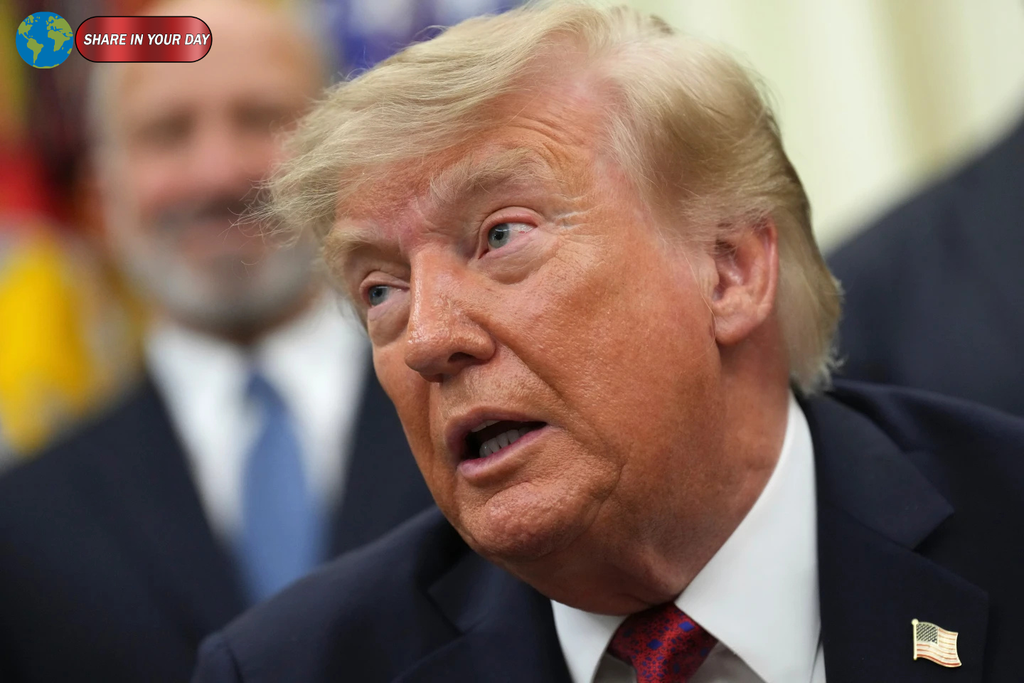
President Donald Trump also offered a specific explanation for the operation, saying U.S. forces had targeted Iranian radar systems that Tehran was attempting to rebuild.
The strikes followed an earlier U.S. operation on Sunday. American officials said that attack targeted Iranian rocket launchers that could be used to deploy sea mines in the Strait of Hormuz.
A
AP News
The sequence is significant because it suggests the conflict is no longer limited to isolated exchanges. Instead, military action is once again becoming a central part of the confrontation between Washington and Tehran.
That raises the possibility of additional strikes if Iran continues attacking U.S. interests or commercial vessels.
Iran Retaliates With Missiles and Drones
Iran’s response came quickly.
After the American attacks, Iran launched ballistic missiles toward Jordan. Iran’s Revolutionary Guard claimed it had targeted a U.S. military installation along Jordan’s Gulf of Aqaba coast.
Jordan’s military said it intercepted 10 of the missiles, while three others landed in unpopulated areas. Explosions associated with the interceptions were reported over Aqaba.
A
AP News
Iran also reported drone attacks against U.S. forces in Bahrain. Kuwait separately said its air defenses intercepted Iranian drones following what it described as Iranian aggression. There was no immediate independent confirmation of every Iranian claim.
A
AP News
The exchange illustrates one of the biggest risks in the conflict: retaliation can rapidly expand beyond the immediate battlefield.
U.S. forces are spread across multiple Middle Eastern countries. Iran also has the ability to threaten shipping and regional infrastructure. As a result, a strike inside Iran can quickly produce consequences in Jordan, Bahrain, Kuwait or other countries hosting American forces.
That creates a complicated security environment for governments throughout the Gulf.
Civilian Casualties Add to the Pressure
The latest attacks have also generated new concerns about civilian casualties.
Iranian state media reported that a U.S. strike hit a home in Kuhestak, southern Iran, where a wedding ceremony was taking place. According to Iranian officials cited by The Associated Press, five people were killed, including a child, and at least 68 others were wounded.
A
AP News
U.S. Central Command said it was aware of the reports but noted that the casualty information originated with Iranian state media. A CENTCOM spokesman said the U.S. military does not target civilians.
A
AP News
The incident could nevertheless become an important political issue.
Civilian casualties have historically increased pressure on governments to justify military operations and can make negotiations more difficult. In a conflict already marked by deep mistrust, reports of civilian deaths can also become part of competing narratives from Washington and Tehran.
Iranian officials have already promised retaliation.
The Iranian parliament’s National Security and Foreign Policy Committee chairman said the reported deaths would not go unanswered. Meanwhile, Iran’s military leadership warned of further attacks against the United States.
A
AP News
The Strait of Hormuz Is the Biggest Economic Risk
Perhaps the most important consequence of the US strikes on Iran is not limited to military targets.
The conflict is increasingly tied to the Strait of Hormuz, a narrow waterway connecting the Persian Gulf with the Gulf of Oman.
The strait is one of the world’s most important energy chokepoints. AP reported that roughly 20% of the world’s oil normally passes through the waterway. Iran has effectively restricted access to the strait during the conflict, increasing concerns about global energy supplies.
The economic consequences are already visible.
AP reported that crude prices had risen about 7% during the week as fighting intensified. Oil prices have also risen more than 50% since the beginning of the year, contributing to higher gasoline costs in the United States.
That means the consequences of the conflict can extend far beyond the Middle East.
Higher oil prices can increase transportation costs, raise the price of consumer goods and add to inflationary pressure. Central banks may then face a difficult choice between supporting economic growth and maintaining tighter monetary policy to control inflation.
For businesses and consumers, a prolonged disruption in the Strait of Hormuz could therefore become a major economic problem.
Why the Strait of Hormuz Matters So Much
The geography of the Strait of Hormuz explains why it has become such an important part of the conflict.
The waterway lies between Iran to the north and the Arabian Peninsula to the south. It provides a critical maritime connection between the Persian Gulf and the Gulf of Oman.
W
Wikimedia Commons
Because of its geography, even relatively limited military activity can have an outsized effect on shipping.
Tankers and commercial vessels need predictable access to the waterway. Any threat of mines, missiles, drones or attacks on ships can force operators to reconsider routes, insurance coverage and schedules.
Recent Reuters reporting also indicated that shipping traffic through the strait remained below normal levels amid continuing tensions, highlighting the economic sensitivity of the area.
R
Reuters
For Washington, protecting commercial shipping has therefore become closely connected to military strategy.
For Tehran, the strait provides one of the strongest forms of economic and strategic leverage available to it.
That makes the waterway a potential flashpoint for further escalation.
Trump Warns of an Even Stronger Response
The rhetoric from Washington has also become sharper.
Trump warned that Iran would face an even stronger American response if it retaliated against the latest U.S. strikes. He indicated that additional military action could be considerably larger.
That warning creates a clear escalation ladder.
If Iran launches another attack, Washington could respond with additional strikes. Tehran could then retaliate again, potentially targeting U.S. bases, allied infrastructure or commercial shipping.
Each step would increase the pressure on both governments to demonstrate strength.
The danger is that neither side may want a full-scale expansion of the conflict while still believing that backing down could weaken its position.
This is one reason the current situation is particularly unstable.
A Ceasefire Remains Possible, but Trust Is Weak
Diplomacy has not completely disappeared.
Before the latest U.S. strikes, Iranian President Masoud Pezeshkian said Tehran was prepared to return to an interim ceasefire arrangement reached with Washington in June if the United States also honored its commitments.
The June agreement was intended to create a temporary halt in fighting and open a period for negotiations toward a broader settlement.
However, the arrangement collapsed.
The return to military action makes a new diplomatic breakthrough more difficult. Both governments now have fresh grievances, while military commanders on both sides face pressure to respond to attacks.
Still, the existence of previous ceasefire arrangements suggests diplomacy could eventually return to the center of the conflict.
The immediate challenge is stopping another cycle of retaliation.
Five Major Risks to Watch
The renewed US strikes on Iran create several risks that could determine what happens next.
- A wider regional war
The first danger is geographic expansion.
Iran has already targeted or threatened U.S. interests across the region. More American strikes could lead to additional attacks in countries hosting U.S. military forces.
- A prolonged Strait of Hormuz crisis
Any continued disruption to shipping could keep oil prices elevated.
Because the strait handles a significant share of global energy shipments, prolonged instability could affect markets far beyond the Middle East.
- More civilian casualties
As military operations intensify, the possibility of civilian deaths and damage to civilian infrastructure increases.
Such incidents could make diplomacy harder and strengthen demands for retaliation.
- Pressure on the global economy
Higher crude prices could translate into higher transportation and energy costs.
That could increase inflationary pressure at a time when economies are already dealing with elevated borrowing costs.
- A breakdown in diplomacy
Perhaps the most serious long-term risk is the disappearance of a credible diplomatic path.
If military retaliation replaces negotiations entirely, the conflict could become increasingly difficult to contain.
What Happens Next?
The immediate question is whether Iran will respond to the latest American strikes with another major military operation.
Washington has already warned that further Iranian retaliation could bring a stronger U.S. response. Iran, for its part, has promised severe retaliation while continuing to emphasize its ability to pressure shipping through the Strait of Hormuz.
That makes the next several days especially important.
Markets will closely watch oil prices and shipping activity. Governments across the Gulf will monitor the security of their airspace and military facilities. Commercial shipping companies will also assess whether the Strait of Hormuz remains safe enough for normal operations.
Meanwhile, diplomats will face the difficult task of finding a way back to negotiations after another round of attacks.
The conflict has already demonstrated how quickly a single military operation can produce consequences across multiple countries and markets.
For now, the US strikes on Iran have reopened a dangerous chapter in the war. The key question is whether the latest exchange remains a limited confrontation or becomes the beginning of another major escalation.
With the Strait of Hormuz at the center of the dispute and both Washington and Tehran signaling that they are prepared to respond forcefully, the stakes are no longer confined to the battlefield.
They extend to global energy markets, international shipping and the broader stability of the Middle East.