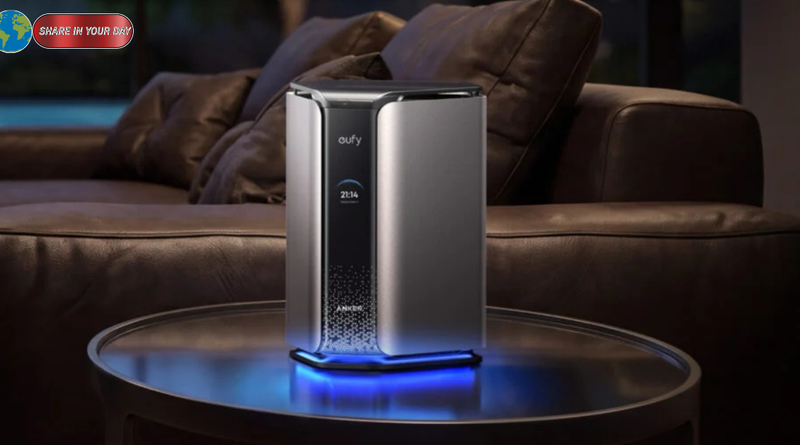
Anker MindBase: 5 Powerful AI Home Features
The Anker MindBase is one of the most ambitious products Anker has unveiled at IFA 2026, transforming the company’s vision of a smart home from a collection of connected gadgets into a centralized system powered by local artificial intelligence.
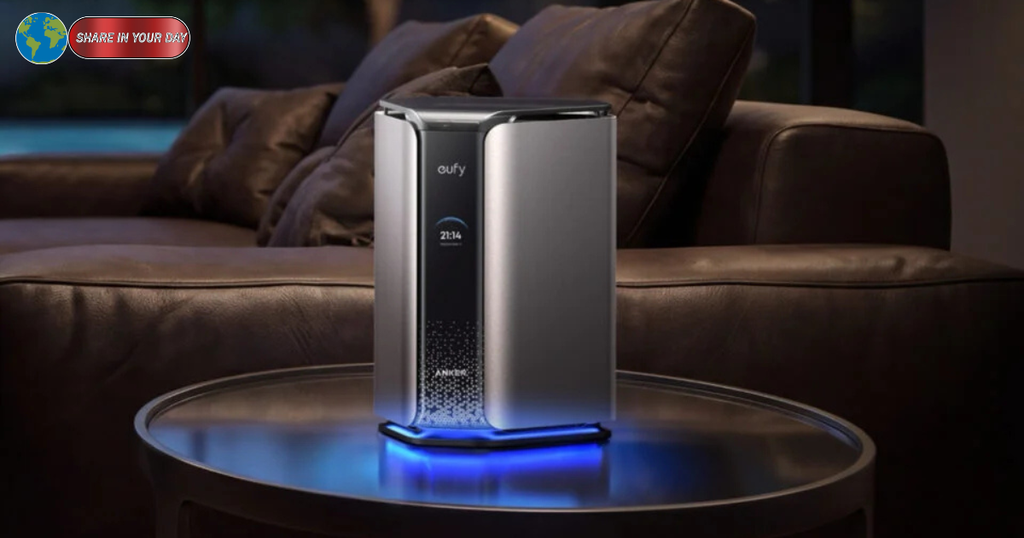
Unveiled in Berlin on September 3, the MindBase is designed to act as a central hub for smart home devices, security cameras, personal files and future AI-powered services. Unlike many cloud-dependent smart home systems, Anker says the device is designed to process much of its information locally.
The approach combines several technologies in one box. MindBase works as a Matter 1.5 controller, supports major smart home platforms, provides expandable NAS-style storage and includes dedicated hardware for on-device AI processing.
Anker is also positioning MindBase as more than a security hub. The company plans to expand its AI capabilities with additional agents designed to manage areas such as home energy and smart cleaning.
Here are five of the most important features that make Anker MindBase stand out.
1. Anker MindBase puts AI directly inside the home
The biggest feature of Anker MindBase is its ability to process AI workloads locally.
The hub uses what Anker calls its TrueSmart Agent, powered by an AI processor capable of 26 TOPS. The company says this system can evaluate events from connected security cameras in real time and determine how to respond.
That could include analyzing activity, identifying potential risks and triggering appropriate actions such as lighting, verbal warnings or active deterrence.
The important distinction is that these capabilities are designed to run on the MindBase rather than relying entirely on remote cloud servers.
Local processing can provide several advantages.
It can reduce the amount of sensitive information sent outside the home. It can also potentially make responses faster because the system does not need to upload every event to a distant server before analyzing it.
For a security system, that distinction is particularly important.
Anker says MindBase can analyze camera events while keeping personal data within the home. The company is clearly making privacy a major part of its pitch. GGizmodo+1
2. It is designed to control an entire smart home
MindBase is not limited to Anker’s security cameras.
The device functions as a Matter 1.5 controller, allowing it to communicate with a wide range of compatible smart home products.
That means a future MindBase setup could potentially include smart lights, sensors, garage door openers, climate-control equipment and robot vacuums alongside security products.
Anker says MindBase supports more than 40 Matter device categories.
The hub can also work with major smart home ecosystems, including Apple Home, Amazon Alexa, Google Home and Home Assistant. GGizmodo+1
This compatibility could be one of the product’s biggest advantages.
Smart homes have traditionally been fragmented. Consumers often buy devices from different manufacturers and then discover that their products do not communicate smoothly with one another.
Matter was created to address part of that problem by establishing a common standard for compatible smart home devices.
By making MindBase a Matter controller, Anker is attempting to position the product as a central layer between different brands and devices.
That could make it considerably more useful than a traditional security camera hub.
3. Anker MindBase doubles as a massive local storage system
Another unusual aspect of the Anker MindBase is its storage capability.
The device comes with 64GB of internal flash storage, but Anker says users will eventually be able to expand storage capacity to as much as 48TB with additional hard drives.
That effectively moves MindBase toward the territory traditionally occupied by network-attached storage systems.
The idea is to create a single local location for photographs, videos, security recordings, documents and other personal files.
More importantly, Anker says users will be able to search stored information using natural language.
Instead of manually browsing folders, users could theoretically ask the system to locate a particular photo, recording or document.
This is where the combination of storage and local AI becomes especially interesting.
A conventional NAS gives users local storage. An AI-powered NAS-like hub can potentially understand the content stored on it.
That could make large personal archives much easier to search.
For consumers concerned about putting personal photographs and documents into cloud services, local storage also offers another option.
Anker says personal data will not need to be offloaded to the cloud for these capabilities, while the company is also emphasizing local processing. GGizmodo+1
4. Security cameras are the first major use case
Although Anker wants MindBase to become the center of the entire smart home, security is clearly its first major application.
The hub can support up to 16 wireless security cameras and another four cameras connected through Power over Ethernet when an external PoE network switch is used.
Existing HomeBase S380 users will also be able to transfer their footage to MindBase, according to Gizmodo’s report. GGizmodo
The system can use AI to analyze security events and provide features such as people, vehicle, pet and stranger detection.
Anker is also introducing a new security ecosystem designed around MindBase.
The upcoming MindBase Security Kit includes products such as the TrackLight Cam S1, Video Doorbell S4 and multiple sensors.
The TrackLight Cam S1 is designed as an active-deterrence security camera with 4K resolution, tracking capabilities and lighting intended to discourage unwanted activity. TThe Verge
The broader concept is important.
Instead of treating cameras as isolated products, Anker wants MindBase to understand what multiple devices are seeing and use that information to make decisions.
That moves the system closer to the company’s vision of an autonomous home.
5. Anker plans to build an AI-powered home ecosystem
The most ambitious part of the MindBase announcement may not be what it can do today.
It is what Anker says it wants the platform to do next.
The company plans to introduce additional AI agents for the hub.
One planned agent is focused on home energy management. Another is intended to work with smart cleaning products and appliances.
That suggests Anker sees MindBase as the foundation for a much larger AI ecosystem.
Imagine a system that can understand when the home is occupied, coordinate security cameras and sensors, manage connected appliances and eventually optimize energy use.
The company has not yet demonstrated every part of that vision, but the strategy is clear.
MindBase is intended to become the central computing and intelligence layer for Anker’s growing portfolio of connected home products.
That ambition is also consistent with Anker’s broader IFA strategy.
At the show, the company announced that its five brands, including eufy and soundcore, will be unified under the Anker name. GGlobeNewswire
The change could make the MindBase strategy easier to understand.
Rather than presenting its products as separate ecosystems, Anker increasingly wants consumers to see them as parts of one larger technology platform.
Why local AI matters for smart homes
Cloud computing has played a major role in the development of smart homes.
It allows relatively inexpensive devices to access powerful processing without requiring expensive hardware inside every camera or sensor.
However, cloud-based systems also create concerns about privacy, latency and long-term service costs.
A local AI hub takes a different approach.
Instead of sending every event to an external server, a device such as MindBase can perform at least some processing inside the home.
For security cameras, that can be particularly valuable.
Video footage can contain highly sensitive information about people’s movements, homes and daily routines.
Keeping more of that information local can reduce exposure to external services.
Anker is also emphasizing the absence of a subscription requirement for MindBase’s core capabilities. The company says the hub’s AI and storage functions will not require a monthly fee. TThe Verge+1
That could become an important selling point if competitors continue to place advanced AI security features behind subscriptions.
The MindBase Security Kit expands the concept
The MindBase Security Kit provides an early example of how Anker wants the system to work.
Alongside the hub, the company is introducing security cameras and sensors that can feed information into the centralized platform.
One of the more unusual components is the Smart Security Shield.
Anker says the sensor can detect strangers from up to 15 meters away and can use its DSKey digital credential system to recognize family members from farther away. Gizmodo noted that the exact mechanism behind this recognition was not immediately clear. GGizmodo
The system is therefore attempting to move beyond basic motion detection.
Traditional security cameras generally react when something moves through a predefined area.
An AI-powered system can potentially consider more information before deciding whether an event is important.
That could reduce unnecessary notifications while making serious alerts more meaningful.
What about price and availability?
There is one major unanswered question.
Anker has not yet announced the price or release date for MindBase.
The company has presented the product and its capabilities at IFA 2026, but consumers will need to wait for more information about when and where they can actually purchase it. GGizmodo+1
That makes it difficult to determine how competitive MindBase will ultimately be.
The hardware could be extremely compelling if Anker can offer substantial local AI processing, expandable storage and smart home control at an accessible price.
However, a high price could push it toward enthusiasts and professional smart home users rather than mainstream consumers.
The eventual cost will therefore be critical.
Anker MindBase could change the smart home hub
The Anker MindBase represents a broader shift in how companies are approaching smart homes.
Instead of adding another voice assistant or another basic controller, Anker is attempting to combine several technologies into one centralized system.
It is simultaneously a Matter controller, security hub, local AI computer and expandable storage platform.
That combination is what makes the device particularly interesting.
The biggest question is whether Anker can make all of those functions work together seamlessly.
If it succeeds, MindBase could become more than another smart home accessory. It could become the central computer that understands what is happening inside a connected home and helps coordinate the devices around it.
The local-first strategy also gives Anker a potentially powerful privacy argument.
Instead of requiring consumers to send their personal data to the cloud for every intelligent feature, MindBase is designed to perform much of that work at home.
That does not automatically make the system perfect or guarantee absolute privacy. Consumers will still need to examine Anker’s security practices, software policies and update commitments once the product becomes available.
But the direction is notable.
Final thoughts
Anker is betting that the next generation of smart homes will need more than dozens of connected gadgets.
They will need a central intelligence layer.
The Anker MindBase is the company’s attempt to provide that layer.
With Matter 1.5 support, compatibility with major smart home platforms, up to 48TB of expandable local storage and an on-device AI system capable of analyzing security events, MindBase has a much broader ambition than the typical smart home hub.
Its success will ultimately depend on three things: price, reliability and how well its AI performs in real-world homes.
For now, however, Anker has introduced one of the more ambitious smart home products at IFA 2026.
If the company can deliver on its promise of a private, locally intelligent and genuinely interconnected home, MindBase could become an important step toward the AI-powered smart home Anker is envisioning.
Image ALT Text
Anker MindBase AI smart home hub with local storage and Matter support
Suggested Image
Use the official Anker MindBase promotional product image from the supplied Gizmodo article or Anker’s IFA 2026 press materials. Anker’s official IFA profile confirms its presence at the show and its focus on smart home, security and connected appliances. Iifa-berlin.com+1
SEO Note
The article is structured around the primary keyword “Anker MindBase”, with the keyword in the title, meta description, slug, introduction, H2 structure and body. I have kept the usage natural rather than forcing a fixed 1% density, since excessive repetition can hurt readability and search quality.