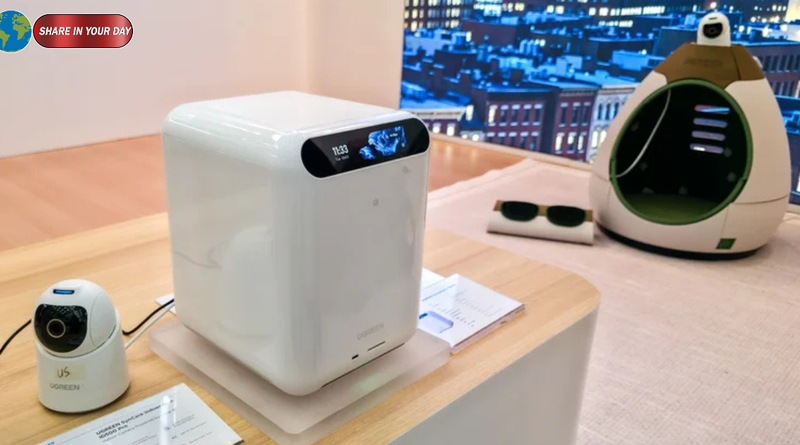
UGREEN HomeAgent brings local AI to the smart home
UGREEN HomeAgent is the company’s biggest push yet into the smart home market, turning the familiar accessories and NAS brand into a potential competitor to established smart-home platforms from Amazon and Google.
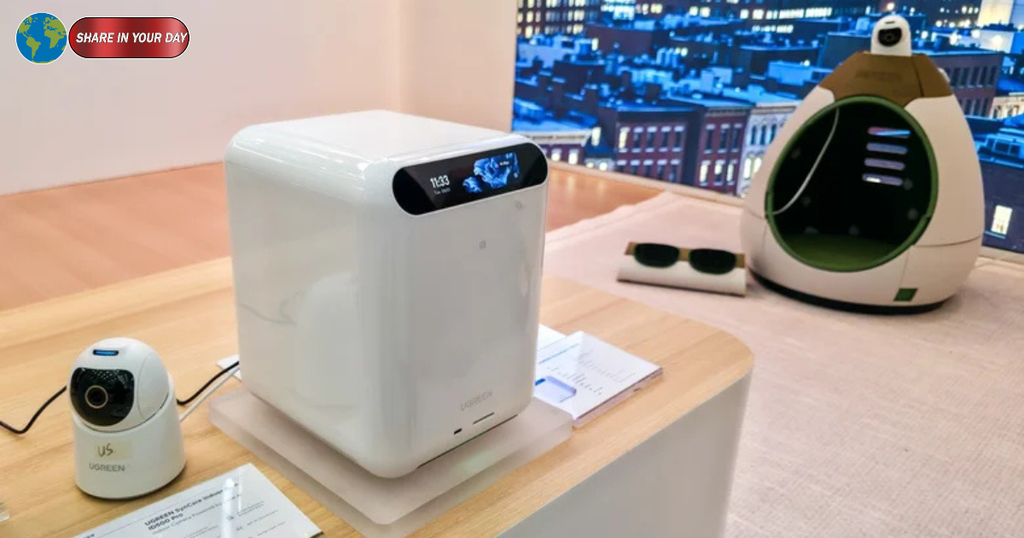
Unveiled at UGREEN’s Smart Living launch event in Foxborough, Massachusetts, the new platform is built around local artificial intelligence. Instead of relying primarily on remote cloud servers to understand voice commands, analyze camera footage or manage connected devices, UGREEN wants those tasks to happen inside the home.
The strategy is significant because privacy has become one of the biggest concerns surrounding AI-powered home technology. Smart cameras and microphones can collect some of the most sensitive information about people’s daily lives. UGREEN’s answer is to put the processing hardware closer to the data.
The company’s new ecosystem includes three AI-powered home hubs, SynCare security cameras, a smart speaker and an electronic picture frame. Together, they are intended to form a connected AIoT environment rather than a collection of unrelated gadgets. YYahoo Tech+1
What is UGREEN HomeAgent?
At its core, UGREEN HomeAgent is a local AI hub designed to combine computing, storage and smart-home control in a single system.
UGREEN describes HomeAgent as a form of local intelligence for the home. The platform is designed to understand natural-language requests, interact with connected devices and process information without sending everything to the cloud.
That approach makes the HomeAgent concept different from a traditional smart speaker.
Instead of simply acting as a voice interface for cloud services, the hub is intended to become the central computing system for the household.
The HomeAgent platform can connect with UGREEN’s own AIoT products while also supporting third-party smart-home devices. UGREEN says the system is designed around local storage and local AI processing, with the goal of reducing dependence on cloud services and recurring cloud fees. UUGREEN NAS US
The result is closer to a private AI server for the home than a conventional smart speaker.
1. Local AI keeps sensitive data closer to home
The most important feature of UGREEN HomeAgent is arguably where its AI processing takes place.
Cloud-based smart-home systems can send voice recordings, images or other information to remote servers for processing. That can make advanced AI features easier to deploy, but it also raises obvious privacy questions.
UGREEN is taking the opposite approach.
The company says HomeAgent stores data at home and runs AI locally. That means features such as event recognition and certain forms of smart-home intelligence can operate without depending on a remote AI service. UUGREEN NAS US
This local-first model could be particularly useful for security cameras.
A camera constantly watching a home generates a huge amount of sensitive visual information. Keeping that footage and its AI analysis inside the home can give users greater control over their data.
However, local processing does not automatically eliminate every privacy risk. Users still need to consider device security, network protection, software updates and which features require an internet connection.
Still, the local architecture is one of UGREEN’s clearest differentiators.
2. Three hubs target different levels of AI performance
UGREEN is not launching just one HomeAgent.
The company currently lists three models: the HomeAgent HA100, HomeAgent HA100 Pro and MasterAgent MA100.
The HA100 is positioned as the entry point, with a current Super Early Bird price of $899 and a listed MSRP of $1,799.
The HA100 Pro moves significantly higher, with a Super Early Bird price of $2,999 and a $5,999 MSRP.
At the top of the lineup is the MasterAgent MA100, which is designed around NVIDIA-powered AI processing. UGREEN lists a $9,999 Super Early Bird price and a $19,999 MSRP. UUGREEN NAS US
Those prices immediately show that UGREEN is targeting more than casual smart-home buyers.
The company appears to be positioning HomeAgent as serious computing infrastructure for people who want local AI, storage, security monitoring and automation in one ecosystem.
That could make the platform especially interesting to enthusiasts, creators and privacy-conscious users who already understand the value of local storage and network-attached computing.
3. SynCare cameras turn the hub into a security system
The HomeAgent ecosystem becomes more interesting when UGREEN’s new SynCare cameras are added.
The lineup includes indoor and outdoor cameras designed to use local AI for recognizing people, vehicles, pets and packages.
The SynCare OD800 Pro, for example, combines local AI recognition with a solar panel, a 10,000mAh battery, PIR and radar detection, plus a triple-lens camera system with up to 9x zoom. UGREEN says it can also create cross-camera timelines and generate event summaries. UUGREEN NAS US
The OD600 Pro takes a wired PoE approach.
It offers 4K and dual-3K imaging, triple-lens coverage and 9x zoom. Like the other cameras, it is designed to use local AI to identify activity and provide more contextual alerts.
For indoor monitoring, the ID500 Pro offers 4K video, night vision and full pan-and-tilt coverage. It can also work with Uliya, UGREEN’s AI assistant, to answer questions about live status and event history. UUGREEN NAS US
This is where the HomeAgent concept starts to make practical sense.
Rather than forcing users to search manually through hours of security footage, the system is intended to understand what happened and make that information easier to retrieve.
4. Uliya becomes the voice of the ecosystem
UGREEN is also introducing an AI assistant called Uliya.
The idea is familiar: users can communicate with their home using natural language instead of navigating multiple apps and menus.
But Uliya is designed to work within UGREEN’s local AI environment.
That means the assistant can potentially connect the different parts of the system. A user could interact with cameras, smart-home devices and stored information through a conversational interface rather than treating each product as a separate system.
UGREEN’s approach reflects a broader change in smart-home design.
The traditional smart home required users to create automation rules manually. AI promises to make those systems more understandable by allowing people to describe what they want in everyday language.
The challenge will be making that intelligence reliable.
A smart assistant that misunderstands a simple request can quickly become frustrating. Local AI also has to balance processing power against response speed, especially when more demanding models are involved.
5. The platform expands beyond cameras
UGREEN does not want HomeAgent to become just another security-camera hub.
The company has also introduced a smart speaker designed for Uliya and the UGREEN Gallery E-Paper Smart Frame.
The current UGREEN HomeAgent page lists the smart speaker at $69 and the Gallery E-Paper Smart Frame at $299, although those products are positioned as optional additions to the wider ecosystem. UUGREEN NAS US
That broader hardware strategy is important.
The more devices connected to the same AI system, the more useful a centralized local intelligence layer can become.
In theory, the HomeAgent could eventually sit at the center of cameras, speakers, displays, storage and other smart-home devices.
That is also where UGREEN’s experience with NAS products becomes relevant.
The company already has experience building hardware designed to store and manage large quantities of personal data. Its 2026 AI NAS strategy has emphasized on-device AI, natural-language file search and private local processing. UUGREEN Official Site
HomeAgent extends that philosophy from personal files into the broader home.
Why local AI could become a major smart-home trend
The launch of UGREEN HomeAgent comes at an important moment for smart-home technology.
AI is rapidly changing what cameras, speakers and home controllers can do. Instead of simply detecting motion or responding to a predefined command, newer systems can interpret more complicated events.
But greater intelligence also means greater data requirements.
A camera capable of recognizing faces, objects, packages and unusual behavior needs to process far more information than a basic motion detector.
That creates a fundamental choice.
Companies can send the information to the cloud, where large data centers provide enormous computing resources.
Or they can move more of that computing power into the home.
UGREEN is betting on the second option.
The company is not alone. Local AI has become an increasingly important direction across consumer technology as manufacturers look for ways to reduce latency, improve privacy and give users more control over personal data.
UGREEN’s advantage is that it can combine local AI with storage.
That combination could become particularly powerful.
The biggest challenge may be compatibility
There is, however, an important question surrounding the HomeAgent strategy: how broad will its ecosystem become?
A smart-home hub is only as useful as the devices it can control.
Consumers already own products from many manufacturers, and they may not want to replace everything simply to adopt a new AI platform.
UGREEN therefore needs strong compatibility with third-party devices if it wants HomeAgent to become a genuine alternative to established smart-home ecosystems.
The company says HomeAgent can connect with third-party devices, which is an important step.
Standards such as Matter could also help reduce the traditional fragmentation problem that has affected smart-home products for years.
But compatibility on paper is not necessarily the same as seamless integration.
UGREEN will need to demonstrate that devices from different brands can work reliably together while still delivering the advanced AI features that make HomeAgent attractive.
Pricing could limit HomeAgent’s appeal
The other major challenge is cost.
The entry-level HA100 is already positioned at a high price compared with a conventional smart-home hub.
The HA100 Pro and MA100 move into enthusiast and professional territory.
That pricing may make sense when the hardware is viewed as a local AI computer, storage server and smart-home controller combined.
But mainstream consumers may not see the value immediately.
Amazon, Google and other companies have spent years training consumers to expect inexpensive smart speakers and relatively affordable hubs.
UGREEN is asking buyers to think differently.
Instead of buying a cheap controller that relies on cloud infrastructure, customers are being offered a much more powerful local computing system.
Whether consumers are willing to pay the premium will be one of the most important tests for the platform.
Crowdfunding will be the next major step
UGREEN is currently taking reservations ahead of its crowdfunding campaign.
The company says reservations opened in September, with Kickstarter pledges scheduled to begin October 27. Shipping is currently expected to begin in late January 2027, with timing varying by product and region. UUGREEN NAS US
UGREEN’s current reservation system starts at a $50 deposit for the HA100 and HA100 Pro, while the MasterAgent MA100 requires a $200 deposit for access to the early-bird reward process.
The company makes clear that the deposit is not the final purchase. Customers will need to complete their pledge through Kickstarter. UUGREEN NAS US
That means the platform remains a forward-looking product rather than an established mass-market smart-home system.
Real-world performance will ultimately determine whether the ambitious hardware can deliver on its promises.
UGREEN is moving far beyond chargers
For years, UGREEN has been best known for chargers, cables, hubs and other accessories.
Its expansion into NAS products already represented a move toward more sophisticated computing hardware.
The arrival of UGREEN HomeAgent takes that evolution another step.
The company is now attempting to combine storage, AI, security and smart-home control into a unified ecosystem.
That is an ambitious strategy.
If UGREEN succeeds, HomeAgent could become the central computer for a new type of privacy-focused smart home, where cameras, speakers and connected devices communicate with an AI system that runs primarily inside the house.
If the company fails to establish strong compatibility and a smooth user experience, however, the expensive hardware could remain a niche product for technology enthusiasts.
Final verdict: UGREEN is betting on a smarter private home
UGREEN HomeAgent represents a notable shift in the company’s ambitions.
Rather than simply selling the accessories that connect smart devices, UGREEN wants to provide the intelligence behind those devices.
Its local-first AI approach addresses one of the biggest concerns surrounding modern smart homes: what happens to the enormous amount of personal data generated by cameras, microphones and connected devices?
The answer proposed by UGREEN is straightforward.
Keep more of the data at home. Put the AI processing at home. And use a powerful central hub to make the entire ecosystem work together.
The concept is compelling, particularly for users who already value NAS storage and local computing.
But the real test begins when HomeAgent reaches customers.
Its success will depend on AI performance, reliability, third-party compatibility, security and whether consumers believe the benefits justify the considerable hardware cost.
For now, though, UGREEN has made its intentions clear.
The company is no longer simply trying to make the devices around your home smarter.
It wants to build the local AI brain that controls them.
Image ALT Text
UGREEN HomeAgent local AI smart home hub with SynCare security cameras
Suggested Featured Image
Use an official UGREEN HomeAgent product image showing the AI hub alongside SynCare cameras or other connected-home devices. UGREEN’s official HomeAgent page provides product imagery and the current product lineup. UUGREEN NAS US
Suggested External Links
- Original source: Engadget — Ugreen’s New Smart Home Ecosystem Is Built Around Local AI Hubs
- Official product information: UGREEN HomeAgent
- UGREEN’s CES 2026 AI ecosystem announcement: UGREEN Official Site
Suggested Internal Links
- UGREEN NAS buying guide
- Best local AI devices
- Smart home security camera guide
- NAS vs cloud storage comparison
- Best AI home assistants
The UGREEN HomeAgent focus keyword is deliberately used in the title, meta description, slug, opening paragraph, subheadings and body without forcing excessive repetition. For WordPress, replace the suggested internal-link topics with your site’s actual URLs. UUGREEN NAS US