US Iran War Stalled: GOP Lawmaker Sounds Alarm
The US Iran war stalled assessment from a senior House Republican has added new pressure on the Trump administration to explain how it intends to end the conflict. Rep. Pat Harrigan, a Republican member of the House Armed Services Committee, said the United States has reached a military impasse after achieving some of its initial objectives.
Speaking to Bloomberg, Harrigan delivered an unusually blunt assessment of the situation. He said the United States is “very clearly” stalled militarily and argued that Washington cannot continue a limited conflict indefinitely while expecting unlimited results. MMediaite+1
His comments come as the conflict continues to generate uncertainty over America’s military strategy, diplomatic options and economic consequences. Fighting has resumed after periods of relative calm, while negotiations between Washington and Tehran remain unresolved.
For the Trump administration, the comments are significant because Harrigan is not a Democratic critic of the president. He is a Republican member of the House Armed Services Committee, giving his warning additional weight within the broader debate over America’s Iran strategy.
US Iran War Stalled, Republican Says
Harrigan’s central argument is straightforward: the United States has accomplished some of what it initially set out to do, but the military campaign now lacks a clearly defined path toward an acceptable conclusion.
In his Bloomberg interview, Harrigan said the conflict has effectively become stuck.
He warned that continuing to fight a limited war indefinitely is not a sustainable strategy if the administration ultimately wants to achieve much broader political or strategic outcomes. AAOL.com
That distinction is crucial.
Military operations can achieve tactical objectives without necessarily producing a durable political settlement. Destroying military infrastructure, disrupting an adversary’s capabilities or imposing economic costs may alter the balance of power, but those actions do not automatically create a workable end to a conflict.
Harrigan’s comments suggest that this gap between military action and political objectives has become increasingly difficult to ignore.
Why the US Iran Conflict Has Become Difficult
The US Iran war stalled warning comes after months of uncertainty surrounding the future of the conflict.
Washington has pursued military and economic pressure against Tehran, while Iran has continued to respond through attacks and other forms of retaliation.
According to the Mediaite report, Iran recently targeted merchant vessels, prompting U.S. strikes against Islamic Revolutionary Guard Corps sites. Tehran subsequently launched missiles and drones toward U.S. positions in the region, including bases in Jordan, Kuwait and Bahrain. AAOL.com
The pattern creates a difficult strategic problem.
If Washington reduces military pressure, Iran could interpret the move as an opportunity to rebuild its position. If the United States intensifies the campaign, however, the conflict could become longer and more expensive.
That creates the kind of strategic dilemma Harrigan was highlighting.
The United States may possess considerable military capabilities, but military superiority does not necessarily provide an easy route to ending a war.
Pat Harrigan Calls for a Decision
Harrigan did not simply criticize the current strategy. He argued that the administration needs to make a decision about where the conflict is going.
His warning centered on the danger of maintaining an open-ended military campaign without a realistic definition of success.
The Republican lawmaker’s position reflects a broader question facing the White House: What does victory in Iran actually look like?
A military campaign can have measurable short-term objectives. But if those objectives are completed while the broader conflict continues, policymakers must decide whether to negotiate, withdraw, escalate or maintain pressure.
Each option carries significant risks.
Negotiations could produce a diplomatic breakthrough but might require concessions. Withdrawal could reduce American exposure but potentially weaken U.S. leverage. Escalation could increase pressure on Iran while also raising the possibility of a wider regional war.
Maintaining the current approach could avoid an immediate strategic reversal, but it could also prolong the uncertainty Harrigan criticized.
Trump Says Strikes Will Not Continue Too Long
President Donald Trump has offered a somewhat different public message.
According to the report, Trump said Wednesday that he did not expect the latest round of strikes to continue for “too long.” AAOL.com
That statement suggests the administration may not view the current military phase as an open-ended commitment.
However, ending military operations and resolving the underlying conflict are two different challenges.
A temporary reduction in fighting does not necessarily mean Washington and Tehran have reached a settlement. Without an agreement addressing the fundamental issues driving the confrontation, another escalation could remain possible.
That is one reason Harrigan’s comments are important.
His criticism is not simply about whether the United States should conduct another strike. It is about whether the broader strategy has a realistic endpoint.
Diplomacy Remains Unresolved
The military stalemate is occurring alongside diplomatic uncertainty.
The Mediaite report said formal negotiations remain unresolved after a June memorandum of understanding expired without producing a permanent agreement. MMediaite+1
That leaves the administration facing a difficult combination of military and diplomatic problems.
The absence of a lasting agreement means there is no clear political framework for ending the confrontation. Meanwhile, continued military pressure creates incentives for Iran to retaliate.
Diplomacy could potentially provide a way out, but negotiations are complicated by the continuing hostilities.
This creates a cycle in which military action makes diplomacy more difficult while the lack of diplomatic progress encourages further military pressure.
Economic Pressure Adds Another Layer
The conflict is also producing consequences beyond the battlefield.
Brent crude reportedly climbed more than 6% during the week to around $95 per barrel. U.S. diesel prices also reached a four-year high, according to Bloomberg as cited by Mediaite. AAOL.com
Higher energy prices can quickly become a political issue in the United States.
When fuel becomes more expensive, households and businesses can face higher transportation and operating costs. Those increases can also contribute to broader inflationary pressure.
That makes the duration of the Iran conflict particularly important for the administration.
A prolonged confrontation could create economic problems at the same time that Washington is attempting to demonstrate that its foreign-policy strategy is producing results.
The economic consequences therefore add another reason policymakers may want a clearly defined path toward de-escalation.
Economic Pressure Campaign Continues
Alongside military operations, the administration has continued to pursue economic pressure against Tehran.
Treasury Secretary Scott Bessent has been involved in a renewed pressure campaign, while the United States has maintained a naval blockade as part of its strategy toward Iran, according to the Mediaite report. AAOL.com
Economic sanctions and maritime pressure can provide alternatives to direct military escalation.
However, they also have limitations.
Economic pressure may take time to influence government decision-making, and sanctions can have consequences beyond the intended target. Meanwhile, maintaining military readiness in the region requires substantial resources.
The challenge for the administration is therefore not merely choosing between military force and diplomacy.
It is determining how those tools can be combined to achieve a sustainable outcome.
A Warning From Inside the Republican Party
Harrigan’s comments are especially notable because they come from within Trump’s own political coalition.
Republicans have not been uniformly aligned on the Iran conflict.
Some have supported a tougher military approach, while others have expressed concern about the possibility of another prolonged Middle Eastern war.
Earlier this year, Republican Rep. Tim Burchett also urged voters concerned about a potential “forever war” to remain vigilant and hold political leaders accountable. MMediaite
That suggests the debate is not simply a conventional partisan dispute between Democrats and Republicans.
There is also an internal Republican argument about what America’s foreign policy should look like.
For some Republicans, confronting Iran is necessary to protect American interests and regional security. For others, prolonged military involvement conflicts with the desire to avoid another open-ended war.
Harrigan’s comments place him firmly among Republicans questioning whether the current military strategy has reached its limits.
What Happens Next in the Iran War?
The next stage of the conflict could depend on whether Washington and Tehran can return to meaningful negotiations.
If diplomacy resumes successfully, the United States could have an opportunity to reduce military operations while maintaining some of its leverage.
If talks fail, however, the administration could face pressure to decide whether to intensify the campaign or accept a prolonged stalemate.
Neither outcome is simple.
The United States must also consider the safety of its personnel and partners throughout the region. Continued Iranian missile and drone attacks against U.S. bases could create additional pressure for retaliation.
At the same time, further American attacks could generate another round of Iranian responses.
This escalation cycle is precisely what makes an exit strategy so difficult.
The Bigger Question Is the Endgame
The phrase US Iran war stalled captures only part of the current problem.
The deeper question is what Washington ultimately wants to accomplish.
If the goal is to degrade Iran’s military capabilities, officials must determine when that objective has been sufficiently achieved.
If the objective is to force a broader political change in Tehran, policymakers face a much more difficult challenge.
And if the goal is a negotiated settlement, then military operations ultimately need to be connected to a diplomatic strategy.
Without clarity on those questions, even successful military operations can leave the United States facing the same strategic dilemma afterward.
That is the concern at the heart of Harrigan’s warning.
Why Harrigan’s Comments Matter
A Republican lawmaker publicly describing the United States as militarily stalled is significant because it challenges the assumption that continued pressure will necessarily produce a favorable outcome.
Harrigan acknowledged that the United States had accomplished some of its initial objectives. His concern was what happens after those objectives have been reached.
The warning is particularly relevant as the administration weighs military operations against the economic and political costs of continuing the conflict.
It also raises questions for Congress.
Lawmakers will have to consider how long the United States should remain militarily engaged, what objectives justify continued operations and what conditions should trigger negotiations or withdrawal.
Those questions are likely to become more important if the conflict continues.
Conclusion
The US Iran war stalled warning from Rep. Pat Harrigan represents a significant moment in the growing debate over America’s strategy toward Tehran.
Harrigan, a Republican member of the House Armed Services Committee, says Washington has reached a military impasse despite achieving some of its original objectives. He argues that the United States cannot continue fighting indefinitely without a clear definition of what it hopes to accomplish. MMediaite+1
The administration, meanwhile, continues to combine military action with economic pressure while diplomatic negotiations remain unresolved.
Trump has indicated that the latest strikes are not expected to continue indefinitely. Yet the absence of a permanent agreement with Iran leaves the broader conflict uncertain.
For now, the central issue is no longer simply whether the United States can continue fighting.
It is whether continued fighting can produce a better strategic outcome.
That is the difficult question facing the Trump administration — and increasingly, members of its own party.
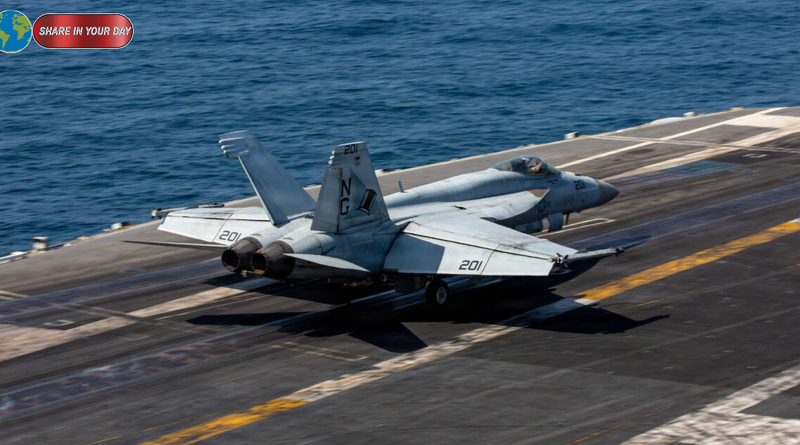
Image ALT Text: US Iran war stalled as Pat Harrigan warns of military deadlock
Suggested internal links: Link to existing articles on your site about Donald Trump, Iran, U.S. foreign policy, Pat Harrigan, and the Iran conflict. Since you have not provided your target domain, I have not fabricated internal URLs.
External-source suggestion: The supplied Mediaite article can be cited as the source report, while Bloomberg can be referenced for the underlying interview and economic figures. MMediaite+1